
![[등록] 2026-09-01 15:48:31](/support/_updata/banner2/tl181982910_6749.png)


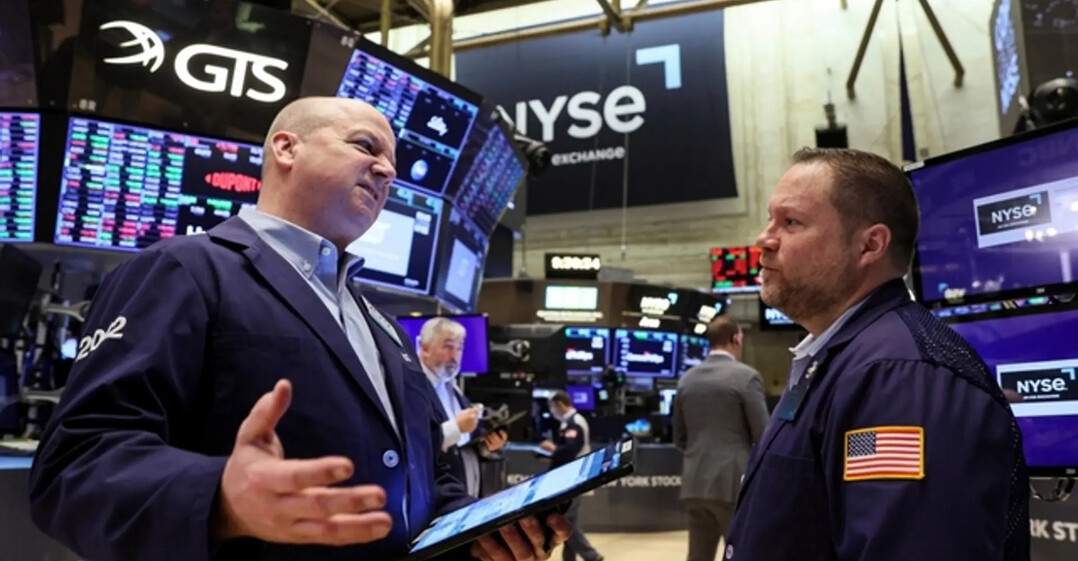
New York – The U.S. stock market experienced a day of seesaw trading on Wednesday, ultimately closing in positive territory as late-session gains in semiconductor stocks overshadowed earlier concerns regarding the Federal Reserve's monetary policy stance and ongoing trade tensions. The Dow Jones Industrial Average, the S&P 500, and the Nasdaq Composite all finished higher, marking a volatile yet ultimately optimistic session driven by a significant development in AI chip export regulations.
The Dow Jones Industrial Average concluded the day at 41,113.97, adding a robust 284.97 points or 0.70%. The broader S&P 500 index climbed 24.37 points, a 0.43% increase, to settle at 5,631.28. The technology-heavy Nasdaq Composite also reversed earlier losses to close at 17,738.16, up 48.50 points or 0.27%.
For the majority of the trading day, the market lacked a clear direction following the Federal Reserve's decision to maintain the benchmark interest rate at its current level. Investors grappled with interpreting the Fed's statement and Chairman Jerome Powell's subsequent remarks, which painted a picture of a resilient yet potentially softening economy. While Powell acknowledged a decline in consumer and business sentiment, he emphasized the underlying strength of the economy. Notably, he kept the door open for future interest rate cuts, contingent on incoming economic data, while firmly stating that any pre-emptive policy shifts were unlikely.
Adding to the market's uncertainty was the Fed's assessment of rising risks of both elevated inflation and increased unemployment. This cautious outlook was widely interpreted as a veiled reference to the potential adverse impacts of President Trump's proposed tariff policies on the U.S. economy. The prospect of higher import costs leading to inflationary pressures, coupled with potential job losses due to reduced trade activity, cast a shadow over the otherwise steady economic landscape.
Ellen Hazen, a seasoned Chief Market Strategist at F.L. Putnam Investment Management, offered a sharp analysis of the Fed's communication. "The Fed's statement is telegraphing a message to the White House that recent policy maneuvers are complicating the economic outlook," Hazen commented. "Their explicit mention of the dual risks of higher unemployment and inflation strongly suggests a concern over the implications of the proposed tariffs."
Despite the Fed's cautious tone, market participants continue to price in a significant probability of an interest rate cut at the central bank's July meeting. This expectation underscores the market's sensitivity to any signs of economic weakness and the persistent hope for monetary easing to support growth.
Earlier in the trading session, news of a diplomatic engagement between the United States and China in Switzerland had provided a brief lift to investor sentiment, hinting at a potential de-escalation of trade tensions. However, this optimism was swiftly tempered by President Trump's firm declaration, made just before the Fed's announcement, that the substantial 145% tariffs currently in place would not be withdrawn. This resolute stance reiterated the potential for continued trade friction and its potential drag on economic activity.
The financial markets have exhibited considerable volatility in response to the ongoing tariff rhetoric. Following President Trump's initial announcement of significant tariff hikes in early April, the S&P 500 experienced a sharp decline of approximately 15%. However, the index has since staged a remarkable recovery, recouping nearly all of those losses, demonstrating the market's resilience and its ability to adapt to evolving policy landscapes.
The Dow's solid performance on Wednesday was significantly bolstered by a stellar earnings report from entertainment giant Disney. The company's stock price soared by 10.8% following the release of its quarterly results, which exceeded market expectations and indicated strong performance across its various business segments.
Conversely, the Nasdaq Composite faced headwinds from declines in the shares of two tech behemoths, Apple and Alphabet. Alphabet, the parent company of Google, experienced a sharp sell-off, plummeting by over 7%. This decline weighed heavily on the S&P 500 Communication Services sector, which registered the worst sector performance of the day with a 1.8% drop. Apple's stock also edged lower by 1.1%, despite reports suggesting the company is exploring the integration of AI-powered search functionalities into its native web browser. This muted reaction suggests that investors may be taking a cautious approach to the potential implications of AI integration on Apple's core business.
In terms of broader market dynamics, advancing stocks outnumbered declining stocks by a healthy margin on both major exchanges. On the NYSE, the ratio of advancing to declining issues was 1.56 to 1, while on the Nasdaq, the ratio stood at 1.2 to 1, indicating broad-based buying interest despite the intraday volatility.
Market breadth indicators also provided mixed signals. The S&P 500 witnessed 18 new 52-week highs and 8 new 52-week lows, suggesting pockets of both strength and weakness within the index. The Nasdaq Composite, however, showed a more pronounced divergence, with 52 new 52-week highs and a notable 114 new 52-week lows, highlighting the contrasting performance between different segments of the technology-heavy index.
Overall trading volume on U.S. exchanges amounted to 15.43 billion shares, which was somewhat below the recent 20-day average of 17.55 billion shares. This slightly lower volume could suggest that some investors remained on the sidelines, awaiting further clarity on the economic outlook and policy developments.
The late-day surge that propelled the market into positive territory was directly attributable to breaking news regarding the Trump administration's intention to ease export restrictions on artificial intelligence (AI) semiconductors. Bloomberg News initially reported this development, which was subsequently confirmed by a spokesperson for the U.S. Department of Commerce. This announcement sparked a significant rally in semiconductor stocks, as investors anticipated a boost to the industry from increased access to key technologies. The Philadelphia Semiconductor Index, a crucial barometer of the sector's performance, reversed an earlier 1% decline to close the day with a robust 1.7% gain, underscoring the market's sensitivity to regulatory changes impacting high-growth sectors.
The easing of AI semiconductor export regulations marks a potentially significant shift in the U.S. government's approach to technology trade. While the specifics of the policy change remain to be fully elucidated, the move suggests a possible recalibration of efforts to control the flow of advanced computing technologies, potentially balancing national security concerns with the economic benefits of fostering innovation and trade. This development could have far-reaching implications for the global semiconductor industry and the broader AI ecosystem.
In conclusion, the U.S. stock market navigated a complex landscape of Fed uncertainty and trade tensions on Wednesday, ultimately finding support in the late-breaking news of eased AI semiconductor regulations. While concerns about the economic outlook and potential tariff impacts persist, the market's ability to rally on positive regulatory developments highlights the dynamic and often unpredictable nature of investor sentiment in the current environment. The interplay between monetary policy, trade dynamics, and sector-specific news will likely continue to shape market movements in the sessions to come.
[Copyright (c) Global Economic Times. All Rights Reserved.]














