The Ministry of Foreign Affairs in Seoul announced on August 27, 2026, that 9 out of 10 South Korean nationals who had been stranded in Nepal due to massive, sudden flash floods have been successfully evacuated to safe areas using Nepalese military helicopters.
The catastrophic flooding struck the northern mountainous region of Rasuwa, near the China-Tibet border, triggered by severe environmental ruptures and heavy monsoon downpours that swelled the local rivers, including the Bhotekoshi and Trishuli rivers. The sudden disaster wreaked havoc across local infrastructure, washing away roads, communication networks, and power grids, leaving hundreds of local and foreign individuals unaccounted for across the region.
According to the Ministry's official briefing, the evacuated individuals are affiliated with Doosan Enerbility, working on the Upper Trishuli-1 (UT-1) hydroelectric power plant construction project. Prior to the airlift, these workers, alongside hundreds of local and international personnel, had been sheltering in temporary evacuation camps. Government officials confirmed that their overall health condition remains stable, and they have been continuously provided with essential supplies, including clean drinking water, food, and emergency medical kits.
Despite the successful rescue of the majority of the stranded group, three individuals—specifically the local site manager from Doosan Enerbility and two South Korean Embassy officials, including a consular officer and an administrative staff member—have chosen to remain behind at the site to coordinate ongoing rescue and safety measures.
Meanwhile, deep concerns persist regarding the remaining South Koreans in the disaster zone. Authorities reported that nine South Korean nationals remain out of contact and unaccounted for. This missing group includes employees from Korea South-East Power Co. (KOEN) and Doosan Enerbility who were deployed to the hydro-power construction sites. The sudden nature of the torrents and the vast scale of the destruction have severely hindered immediate rescue access to certain areas, where hundreds of other foreign tourists and local residents are also reported missing.
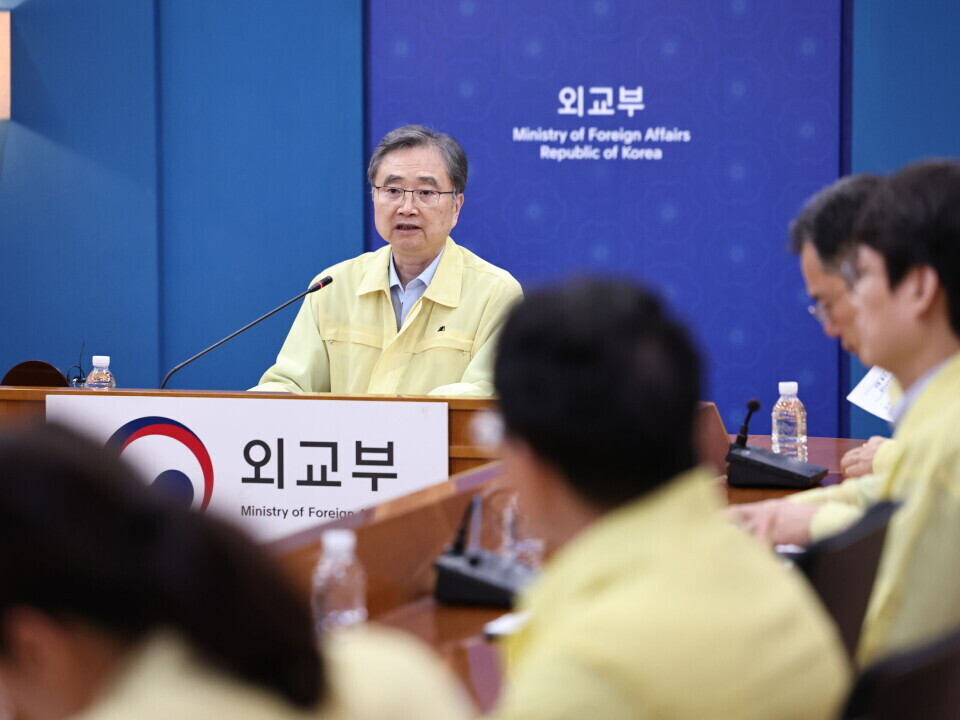
In response to the escalating crisis, South Korean Foreign Minister Cho Hyun presided over an emergency meeting of the Overseas Koreans Protection Countermeasures Headquarters at the ministry complex in Jongno-gu, Seoul. Demonstrating high-level diplomatic engagement, Minister Cho held a telephone conversation with Nepalese Foreign Minister Sisir Kanal later that afternoon. During the call, Minister Minister Cho formally requested the Nepalese government’s special attention and active cooperation to ensure a swift, thorough, and safe search-and-rescue operation for the missing South Korean citizens.
Furthermore, the South Korean government has mobilized a whole-of-government response. Following direct directives from President Lee Jae-myung to prioritize the lives and safety of citizens by deploying all available resources, a joint government rapid response team—comprising elite personnel from the Ministry of Foreign Affairs, the National Fire Agency, and the National Police Agency, and headed by Im Sang-woo, Ambassador for Overseas Koreans and Consular Protection—was dispatched to Nepal on August 27.
As search-and-rescue operations expand with the deployment of Nepalese military units and specialized rescue teams, international organizations and partner nations are also stepping up assistance. The World Health Organization (WHO) and regional bodies have started routing emergency medical supplies, heavy-duty tents, and essential provisions to support the victims and relief workers operating in the disaster-stricken Himalayan region. The Ministry of Foreign Affairs stated that it will continue to provide real-time updates while maintaining close coordination with local Nepalese authorities and affected corporate families to ensure the safe repatriation and protection of all remaining nationals.
[Copyright (c) Global Economic Times. All Rights Reserved.]