![[등록] 2026-09-01 15:48:31](/support/_updata/banner2/tl181982910_6749.png)


(C) VnExpress International
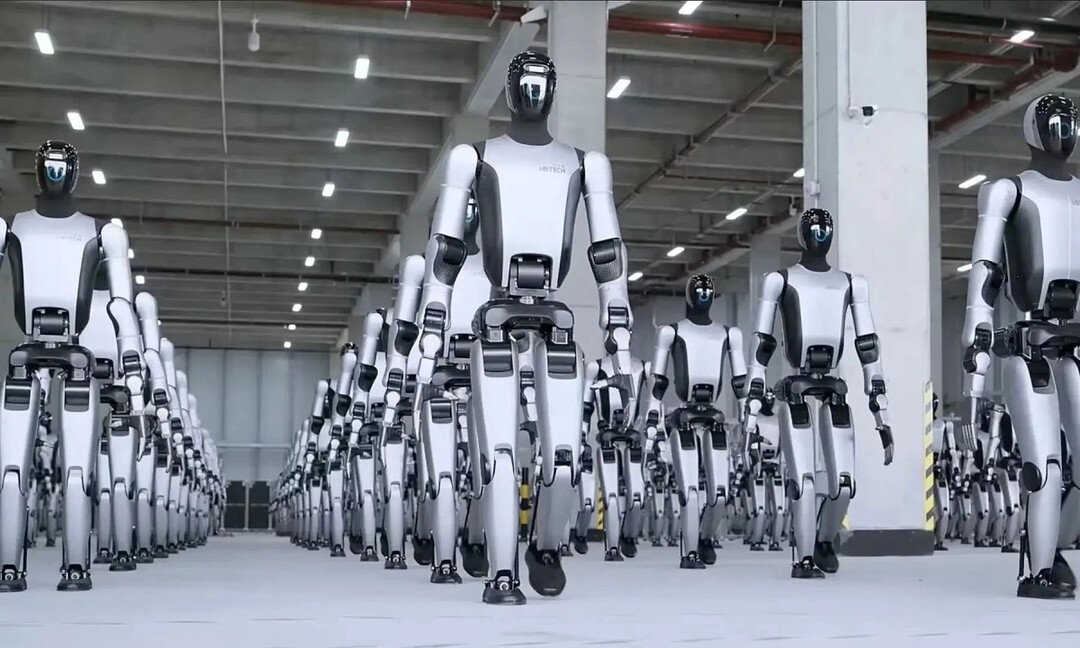
SEOUL – At the "AW Summit China Humanoid" conference held at COEX in Samseong-dong on March 4, 2026, industry experts painted a staggering picture of China’s robotics evolution. The consensus? China is no longer just experimenting with humanoid robots; it is rapidly moving toward hyper-scale mass production.
A Leap in Production Volume
Shin Hyeong-kwan, Director of the China Capital Market Research Institute, delivered a keynote highlighting the explosive growth in output. "Last year, China produced between 13,000 and 25,000 humanoid units," Shin stated. "For 2026, while conservative estimates sit around 28,000, industry insiders are confidently projecting figures as high as 100,000 units."
According to Shin, the mere fact that a six-figure annual production volume is being discussed signals a fundamental structural shift in the global industrial hierarchy.
The Power of the "Data Factory"
A key driver behind this growth is the transition from general AI models to data-centric learning. In hubs like Shanghai, "Data Factories" are now operational, where over 100 robots simultaneously collect real-world "embodied data." This raw physical data is combined with synthetic and internet-based datasets to accelerate machine learning at an unprecedented pace.
Ecosystem and Investment
The scale of the Chinese ecosystem is currently unrivaled:
Complete Robot Manufacturers: ~160 companies.
Core Component Suppliers (Motors, Actuators, Batteries): 600+ companies.
Total Robot-Related Entities: Over 10,000 including startups.
The capital flow matches this ambition. Investment in the sector reached approximately 30 billion yuan ($4.5 billion) last year, a fourfold increase in volume compared to the previous year. While the actual sales market currently sits at 9 billion yuan, the gap indicates a massive "bet" on the future dominance of the industry.
"Shenzhen Speed" vs. Global Competition
Shin identified China's core competitive edge as "Speed and Mass Production Strategy." Rather than focusing on perfecting a single high-end "masterpiece," Chinese firms prioritize rapid deployment and iterative learning through trial and error.
This is supported by a hyper-efficient supply chain. "In the U.S., a broken part might take three to four weeks to replace. In China, that same part is replaced in a few hours," Shin noted. This "Shenzhen Speed" allows for a continuous feedback loop that Western competitors struggle to match.
A Multi-Layered Policy Engine
The report concluded that China’s success is not accidental. It is the result of a "quad-engine" structure where policy, technology, demand, and capital move in perfect synchronicity. With the central government setting the direction and local governments providing the infrastructure, China has built a multi-layered ecosystem that is now prepared to flood the global market with humanoid labor.
[Copyright (c) Global Economic Times. All Rights Reserved.]