• 2026.05.08 (Fri)
  • All articles
  • LOGIN
  • JOIN
Global Economic Times
fashionrunwayshow2026
  • Synthesis
  • World
  • Business
  • Industry
  • ICT
  • Distribution Economy
  • Well+Being
  • Travel
  • Eco-News
  • Education
  • Korean Wave News
  • Opinion
  • Arts&Culture
  • Sports
  • People & Life
    • International Student Report
    • With Ambassador
  • Column
    • Cho Kijo Column
    • Cherry Garden Story
    • Ko Yong-chul Column
    • Kim Seul-Ong Column
    • Lee Yeon-sil Column
  • Photo News
  • New Book Guide
MENU
 
Home > Distribution Economy

Wealth Gap Widens in Korea: Top 20% of Multi-Homeowners Hold 78% of Housing Assets

Desk / Updated : 2026-02-23 19:50:53
  • -
  • +
  • Print


SEOUL – South Korea’s economic divide has reached a critical tipping point, with real estate concentration and a shrinking social safety net driving inequality to historic levels. According to the "2026 Oxfam Doughnut Report" released by Oxfam Korea on February 23, the nation’s wealthiest property owners now control the vast majority of housing assets, while public support for the poorest households has paradoxically declined.

The Real Estate Monopoly
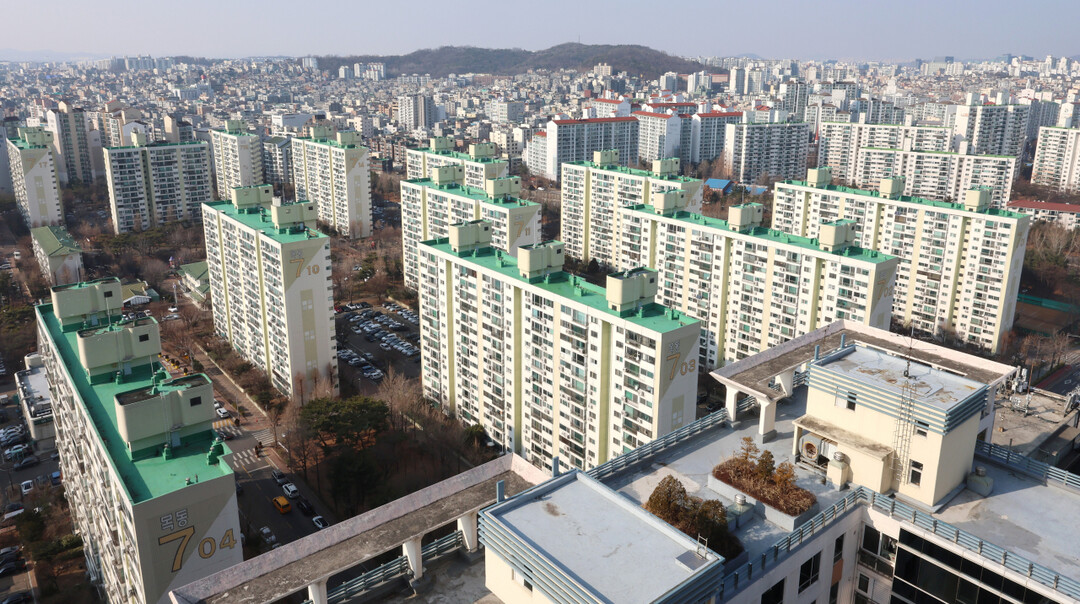
The report identifies real estate as the primary engine of inequality. As of 2024, the top 20% of households own 63.1% of all net assets. The disparity is even more pronounced in the housing market: the top 20% of multi-homeowners now possess 78% of the nation’s total housing value.

Oxfam attributes this surge to the post-2022 recovery in property prices, noting that the value of luxury high-end homes rose significantly faster than average housing, further insulating the wealthy from economic volatility.

A Growing Income Chasm
The gap between the "haves" and "have-nots" is no longer just a trend—it is an accelerating structural shift.

Multiplier Effect: In 2009, the top 10% earned 2.4 times more than the bottom 40%. By 2023, that ratio surged to 4.1 times.
Labor Inequality: The average annual income for the bottom 50% of workers stands at a meager 8.58 million KRW.
The 165-Year Climb: A worker in the bottom half would need to work for 165 years to match the annual salary of a top 0.1% earner (1.42 billion KRW).
The report also highlights persistent discrimination in the labor market. To earn the same annual salary as their counterparts, women must work 130 days more than men, and non-regular workers must work 267 days more than regular employees.

The Failure of Redistribution
Perhaps the most alarming finding is the retreat of the welfare state. Despite rising inequality, public transfer income for the bottom 20% of households dropped by nearly 10 percentage points, falling from 45.2% in 2009 to 35.8% in 2023.

Oxfam critiques Korea's "low-burden, low-welfare" model. Korea’s national tax burden stands at 28.9% of GDP, significantly lower than the OECD average of 33.9%. Furthermore, public social spending remains at just 72% of the OECD average.

"The irony of the Korean welfare system is that it remains centered on social insurance for regular employees," the report states. "As the number of precarious, non-regular workers grows, public benefits are increasingly concentrated on those who already have stable jobs and income."

Calls for Policy Overhaul
To combat this "inequality trap," Oxfam recommends that the Korean government aggressively increase public transfers to the bottom 40% and raise social spending to match OECD standards.

Professor Kim Yun-tae of Korea University, the lead author of the report, proposed radical structural changes:

Dedicated Task Force: Establishing a permanent body within the Presidential office and economic ministries to address inequality.
Automatic Adjusters: Legislating an "Inequality Auto-Adjustment Act" that links tax rates directly to fluctuations in the inequality index.
Without such intervention, the report warns, the social fabric of the nation may continue to weaken, leaving the most vulnerable further behind in an increasingly bifurcated economy.

[Copyright (c) Global Economic Times. All Rights Reserved.]

  • #Globaleconomictimes
  • #Korea
  • #Seoul
  • #Samsung
  • #LG
  • #Bitcoin
  • #Meta
  • #Business
  • #Economic
  • #The Woori Bank
  • #Elon Musk
  • #C
Desk
Desk

Popular articles

  • ASML Sees Surge in South Korean Revenue as Samsung and SK Hynix Accelerate Next-Gen Fab Operations

  • “Printing Lenses Like Newspapers”: Korean Researchers Unveil Game-Changing Mass Production for Metalenses

  • South Korea Leads World in AI Patents per Capita, Narrowing Gap with U.S. and China 

I like it
Share
  • Facebook
  • X
  • Kakaotalk
  • LINE
  • BAND
  • NAVER
  • https://www.globaleconomictimes.kr/article/1065610145698137 Copy URL copied.
Comments >

Comments 0

Weekly Hot Issue

  • South Korea’s KOSPI Surges to 7th in Global Market Cap, Overtaking Canada and UK
  • Global Pay Parity Demands Shaking Tech Giants: Samsung and SK Hynix Face Rising Labor Unrest in China
  • the 28th Overseas Koreans Literary Awards
  • Ambassador Hyuk-sang Sohn attended the "2026 Educational Community Sports Day" held at the Korean School of Paraguay on Friday, May 1.
  • Official Presentation of Credentials in Paraguay
  • U.S. World Cup "Host City Boom" Fizzles: Hotel Bookings Slump One Month Before Kickoff

Most Viewed

1
Korea and Vietnam Forge Strategic Partnership in Science, Technology, and Innovation
2
Iran Imposes Transit Fees on Strait of Hormuz Amid Escalating Maritime Tensions
3
80% of Enterprises Hit by 'AI Agent Anomalies': SailPoint Calls for Integrated Identity Governance
4
Tradition Meets the Public: Chungju’s Gugak Busking
5
Kurly Abandons 'All-Paper' Packaging Strategy Amid Rising Cost Pressures
광고문의
임시1
임시3
임시2

Hot Issue

Hyundai Motor Group Bets $700 Million on Mexico Amid Trade Policy Volatility

Honda Halts $15B Canada EV Plant Plans Amid Strategic Pivot to Hybrids

Digital Ghosts: The Rise of AI Ex-Partner Replicas and the Ethics of "Technological Mourning"

Kakao Hits Record Q1 Performance: Operating Profit Surges 66% as Focus Shifts to "Agentic AI"

Fashion Runway Show 2026

Global Economic Times
korocamia@naver.com
CEO : LEE YEON-SIL
Publisher : KO YONG-CHUL
Registration number : Seoul, A55681
Registration Date : 2024-10-24
Youth Protection Manager: KO YONG-CHUL
Singapore Headquarters
5A Woodlands Road #11-34 The Tennery. S'677728
Korean Branch
Phone : +82(0)10 4724 5264
#304, 6 Nonhyeon-ro 111-gil, Gangnam-gu, Seoul
Copyright © Global Economic Times All Rights Reserved
  • 에이펙2025
  • APEC2025가이드북TV
  • 반달곰 프로젝트
Search
Category
  • All articles
  • Synthesis
  • World
  • Business
  • Industry
  • ICT
  • Distribution Economy
  • Well+Being
  • Travel
  • Eco-News
  • Education
  • Korean Wave News
  • Opinion
  • Arts&Culture
  • Sports
  • People & Life 
    • 전체
    • International Student Report
    • With Ambassador
  • Column 
    • 전체
    • Cho Kijo Column
    • Cherry Garden Story
    • Ko Yong-chul Column
    • Kim Seul-Ong Column
    • Lee Yeon-sil Column
  • Photo News
  • New Book Guide
  • Multicultural News
  • Jobs & Workers