• 2026.03.22 (Sun)
  • All articles
  • LOGIN
  • JOIN
Global Economic Times
fashionrunwayshow2026
  • Synthesis
  • World
  • Business
  • Industry
  • ICT
  • Distribution Economy
  • Well+Being
  • Travel
  • Eco-News
  • Education
  • Korean Wave News
  • Opinion
  • Arts&Culture
  • Sports
  • People & Life
    • International Student Report
    • With Ambassador
  • Column
    • Cho Kijo Column
    • Cherry Garden Story
    • Ko Yong-chul Column
    • Kim Seul-Ong Column
    • Lee Yeon-sil Column
  • Photo News
  • New Book Guide
MENU
 
Home > Synthesis

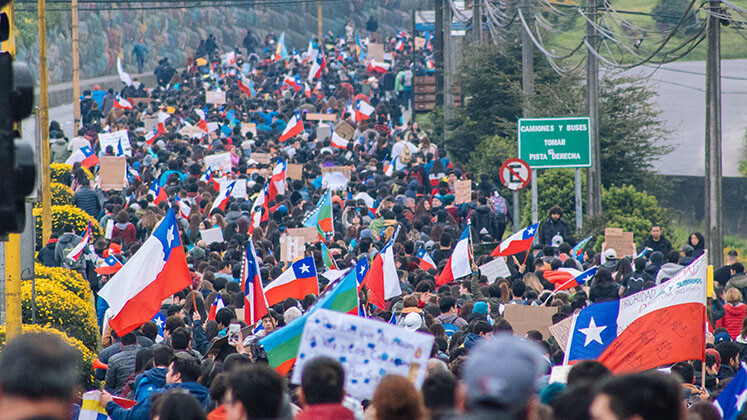
Chile: Progress in Gender Equality and Social Inclusion Amidst Shadows: Women's Economic Empowerment and Inequality Reduction as Core Challenges

ONLINE TEAM / Updated : 2025-10-08 20:02:08
  • -
  • +
  • Print


SANTIAGO — A new study reveals that while Chile has achieved remarkable success in the field of Gender Equality, Disability, and Social Inclusion (GEDSI), it faces the dual challenges of inadequate women's economic empowerment and deepening socioeconomic inequality. The research report, published on October 6, 2025, clearly demonstrates that despite the Chilean government's declaration of a 'Feminist Government' and a sharp decline in poverty rates over the past decade, structural inequalities still persist.

Economic Progress and Persistent Inequality 

Over the past decade, Chile has made notable strides in socioeconomic indicators. The poverty rate significantly dropped from 21.7% in 2011 to 6.5% in 2022. Furthermore, the country is relatively advantaged in several gender equality indices, including registering the second-lowest femicide rate in the Latin America and Caribbean region. Since 2023, by adopting a Feminist Foreign Policy, Chile aims to be an international leader in gender equality.

However, the benefits of this progress have not been equally distributed across all groups. Socioeconomic inequalities based on geography, gender, and ethnicity remain pronounced. A detailed look at the 2022 poverty rate shows significantly higher figures for certain groups compared to the overall 6.5%: rural populations stood at 9.9%, women at 6.9%, Indigenous groups at 8.8%, and migrants at 11.1%. This poses a significant hurdle to Chile's complete achievement of GEDSI goals.

Women's Economic Empowerment: A 19 Percentage Point Barrier 

One of the areas where equality realization is most delayed is women's economic empowerment. According to the latest 2025 data, women's labor force participation rate is 53%, showing a considerable gap of 19 percentage points compared to the 72% rate for men. This figure is below the regional average. This gap is directly linked to deeply rooted gender norms regarding traditional division of labor within households. In fact, as of 2021, while the average mother employment rate in OECD countries was 71%, Chile lagged behind at 60%. Consequently, women face limitations in overall labor market accessibility, including participation in top executive positions.

Other Key Issues: Foreign Policy, Anti-Gender Movements, and Child Welfare 

The research report addressed three topics relevant to the Chilean social context in separate country summary reports.

Feminist Foreign Policy (FFP): The adoption of the FFP in 2023 signals Chile's commitment to democracy, multilateralism, and gender equality. It has shown initial results in strengthening alliances, receiving positive responses from partner countries in key areas like trade agreements, care, climate, and human rights.

Anti-Gender Backlash: Similar to global trends, Chile has seen movements by conservative political, religious, and civil society actors opposing LGBTQI+ rights. These activities are linked to transnational funding networks and utilize divisive narratives to gain political influence and public support. This has resulted in legislative efforts to restrict LGBTQI+ rights and an increase in hostility.

Child Protection System: Despite undergoing major reforms, Chile's child protection system continues to face structural challenges. The number of children passing through family courts is continuously rising due to an increase in reports of child rights violations, such as violence and neglect.

In conclusion, while Chile has achieved significant social progress, the future core challenges for the complete realization of gender equality and social inclusion are projected to be closing the gender-based economic gap and developing comprehensive support measures for vulnerable groups.

[Copyright (c) Global Economic Times. All Rights Reserved.]

  • #globaleconomictimes
  • #micorea
  • #mykorea
  • #Lifeplaza
  • #nammidonganews
  • #singaporenewsk
  • #Samsung
  • #Daewoo
  • #Hyosung
  • #A
ONLINE TEAM
ONLINE TEAM
Reporter Page

Popular articles

  • Over 1,800 Companies Sue Trump Administration for $129 Billion in Tariff Refunds

  • Samsung Doubles DRAM Prices in Q1 Amid Unprecedented AI Demand Surge

  • Yujin Robot Evolves Industrial Automation: Integrating Autonomous Mobility and Collaborative Robotics

I like it
Share
  • Facebook
  • X
  • Kakaotalk
  • LINE
  • BAND
  • NAVER
  • https://www.globaleconomictimes.kr/article/1065610880774225 Copy URL copied.
Comments >

Comments 0

Weekly Hot Issue

  • Coway Clinches Top Honor at "Water Taste Awards" for 7th Consecutive Year
  • HP Targets Korea as Strategic Hub for 'Edge AI' Expansion, Seeking Startup Partnerships
  • Pearl Abyss’s 'Crimson Desert' Shatters Records with 2 Million Copies Sold on Day One
  • "BTS Over Books?" Indian Academies Issue Emergency Notices as Students Plot Mass Absences for Comeback Live
  • Naver to Shut Down Men's Fashion Service 'MR.' to Launch Expanded AI-Driven Fashion Platform
  • JBNU and SKKU Researchers Achieve Breakthrough in "Dream Material" MXene, Setting New World Records in Performance

Most Viewed

1
An Open Letter to BTS On the Eve of a Historic Performance
2
From Industrial Capital to Tourism Mecca... Ulsan Makes a Bold Move with ‘Experiential Content’ in 2026
3
Ko Sang-goo, President of World Federation of Korean Associations, Elected as First Private Sector Chair of World Korean Community Leaders Convention
4
It is Time for BTS’s Fandom, ARMY, to Step Forward
5
Korean Stock Market Plunges: Circuit Breaker and Sidecar Triggered Amid Geopolitical Crisis
광고문의
임시1
임시3
임시2

Hot Issue

Vishay Unveils Ultra-Compact 0404 RGB LED with Independent Chip Control for Enhanced Color Precision

Coway Clinches Top Honor at "Water Taste Awards" for 7th Consecutive Year

AI Medical Ecosystem in Focus: KIMES 2026 Opens in Seoul as Global Healthcare Hub

Netanyahu Declares Decisive Blow to Iran’s Nuclear and Missile Programs, Signals Early End to War

Let’s recycle the old blankets in Jeju Island’s closet instead of incinerating them.

Global Economic Times
korocamia@naver.com
CEO : LEE YEON-SIL
Publisher : KO YONG-CHUL
Registration number : Seoul, A55681
Registration Date : 2024-10-24
Youth Protection Manager: KO YONG-CHUL
Singapore Headquarters
5A Woodlands Road #11-34 The Tennery. S'677728
Korean Branch
Phone : +82(0)10 4724 5264
#304, 6 Nonhyeon-ro 111-gil, Gangnam-gu, Seoul
Copyright © Global Economic Times All Rights Reserved
  • 에이펙2025
  • APEC2025가이드북TV
  • 독도는우리땅
Search
Category
  • All articles
  • Synthesis
  • World
  • Business
  • Industry
  • ICT
  • Distribution Economy
  • Well+Being
  • Travel
  • Eco-News
  • Education
  • Korean Wave News
  • Opinion
  • Arts&Culture
  • Sports
  • People & Life 
    • 전체
    • International Student Report
    • With Ambassador
  • Column 
    • 전체
    • Cho Kijo Column
    • Cherry Garden Story
    • Ko Yong-chul Column
    • Kim Seul-Ong Column
    • Lee Yeon-sil Column
  • Photo News
  • New Book Guide
  • Multicultural News
  • Jobs & Workers