![[등록] 2026-09-01 15:48:31](/support/_updata/banner2/tl181982910_6749.png)


(C) X.com
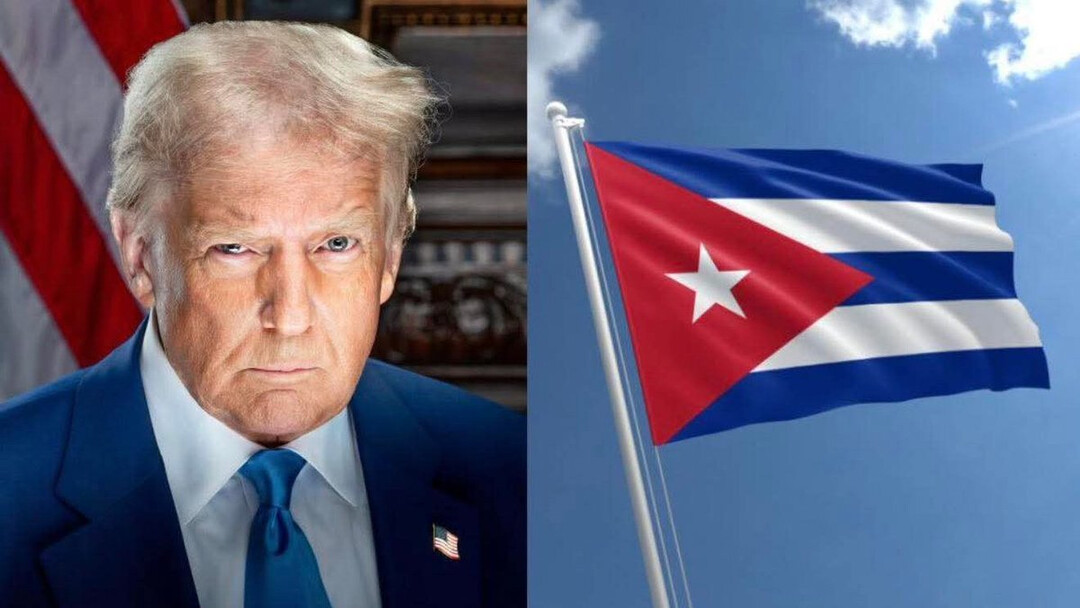
WASHINGTON D.C. — Following the successful ousting of Venezuelan President Nicolás Maduro, the Trump administration is reportedly shifting its focus toward a decisive confrontation with Havana. According to a report by Politico on the 23rd, U.S. officials are actively considering a "naval blockade" to cut off Cuba’s oil imports, a move designed to paralyze the island’s economy and force a collapse of the long-standing communist government.
The escalation signals a renewed "domino effect" strategy by President Trump, targeting anti-American leftist regimes in Latin America. With the momentum gained from the political transition in Caracas, Washington now views the dismantling of the Cuban regime as a primary foreign policy objective for the current year.
Legal Justification and Internal Deliberations
High-ranking officials within the administration, including Secretary of State Marco Rubio—a long-time hawk on Cuban affairs—are spearheading the discussions. Proponents of the blockade argue that the measure is legally sound under the Libertad Act of 1994 (also known as the Helms-Burton Act), which codified the U.S. embargo against Cuba. They contend that because the law targets the financial and commercial lifelines of the regime, a physical blockade to intercept energy supplies would be a justifiable extension of existing policy.
"For the United States, the subversion of the Cuban communist regime is being treated as a task that must be executed within this year," an administration official told Politico.
Energy: The "Achilles' Heel" of Havana
The strategy hinges on Cuba’s extreme vulnerability to energy shortages. According to the International Energy Agency (IEA), Cuba relies on imports for approximately 60% of its crude oil consumption. Historically, the island survived on heavily subsidized shipments from Venezuela. However, since the fall of the Maduro regime, Havana has been forced to pivot to Mexican crude, which comes at a significantly higher market price.
The financial strain of these purchases has already triggered a domestic crisis, characterized by chronic blackouts and a deteriorating power grid.
"Energy is the most powerful weapon we have to bring down the regime," a White House official stated. "If the thermal power plants stop running and the national grid collapses, the state’s functional capacity will be completely paralyzed."
The "Discombobulator": A New Era of Electronic Warfare
In a separate but related revelation, President Trump detailed the methods used during the recent operations in Venezuela. Speaking with the New York Post on the 24th, Trump claimed that U.S. Special Forces utilized a secret new weapon codenamed the "Discombobulator."
The President described the device as an advanced electronic warfare tool capable of neutralizing enemy surveillance and communication hardware. "This weapon made their equipment stop working," Trump said, implying that the technological superiority of the U.S. military played a silent but pivotal role in the collapse of Maduro’s defense infrastructure.
Regional Ripple Effects
The pressure from Washington is already being felt in Mexico City. Sources within the Mexican government told Reuters that the administration of President Claudia Sheinbaum is reconsidering its oil exports to Cuba. "There is growing anxiety that continuing to supply oil to Havana will unnecessarily provoke President Trump," a high-ranking Mexican source noted.
Despite the aggressive stance, the White House remains divided. Some officials have expressed concerns that a total blockade could trigger a humanitarian catastrophe, potentially leading to a mass migration crisis that would ultimately become a burden for the United States. President Trump has yet to sign off on the final order, though his recent rhetoric suggests he believes the end of the Cuban regime is imminent.
"Cuba cannot survive without Venezuelan oil," Trump told Fox News earlier this month. "The flow of oil and money to Havana is over."
[Copyright (c) Global Economic Times. All Rights Reserved.]