![[등록] 2026-09-01 15:48:31](/support/_updata/banner2/tl181982910_6749.png)


- 70% local content requirement for EVs poses massive hurdle for Korean exporters
- Looming Life Cycle Assessment (LCA) rules threaten to decouple unprepared suppliers
(C) Battery News
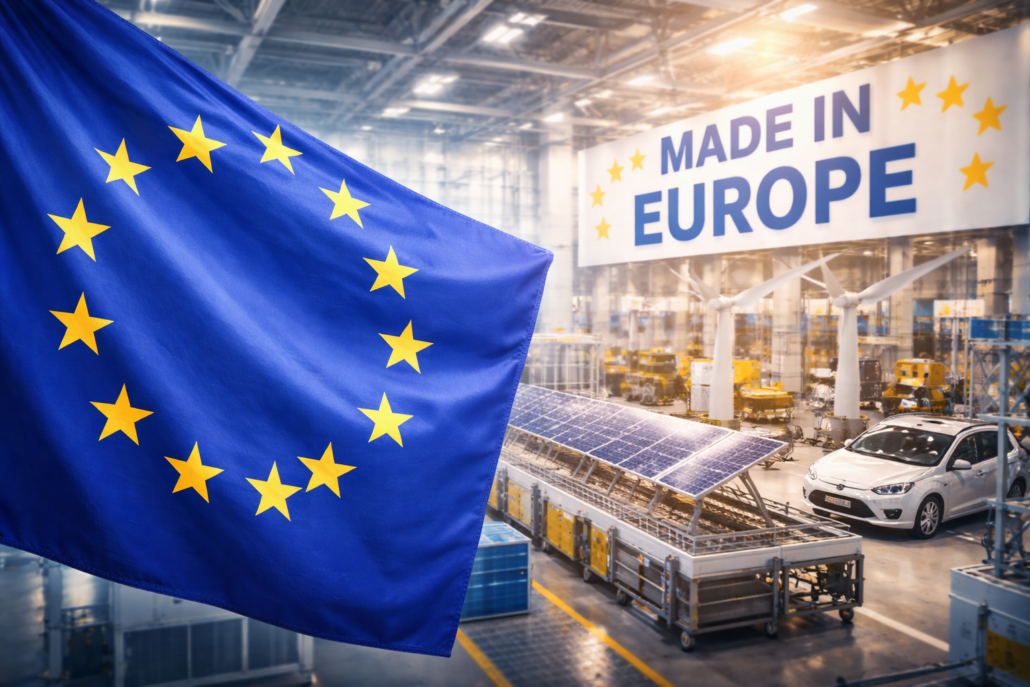
The South Korean automotive industry has entered a state of high alert following the European Union’s official announcement of the "Industry Acceleration Act" (IAA). The new legislative framework, unveiled on March 4, signals a shift toward aggressive "Made in Europe" protectionism, specifically targeting the electric vehicle (EV) sector through localized subsidies and stringent environmental reporting.
The 70% Threshold: A New Trade Barrier
The IAA is widely interpreted as a strategic maneuver to curb the dominance of Chinese EVs while bolstering domestic European manufacturers. Under the new rules, EV subsidies will only be granted to vehicles where at least 70% of the assembly and parts production (excluding battery components) occurs within the EU.
While South Korea has secured a temporary reprieve by being recognized as a "trusted trade partner" under the existing Korea-EU Free Trade Agreement (FTA), the core challenge remains: the physical location of production. Major Korean automakers, such as Hyundai and Kia, which still export a significant volume of vehicles from domestic plants to Europe, now face an urgent choice—expand local European manufacturing or risk losing price competitiveness in one of their most vital markets.
The LCA Shadow: Decarbonizing the Entire Supply Chain
Adding to the regulatory pressure is the imminent introduction of the Automotive Greenhouse Gas Life Cycle Assessment (LCA). Unlike current tailpipe emission standards, the LCA evaluates the total carbon footprint of a vehicle—from raw material extraction and manufacturing to usage and final disposal.
The EU is expected to finalize the LCA methodology this month and issue formal recommendations to manufacturers by June. Experts warn that LCA data will soon become a mandatory prerequisite for EV subsidies and may be linked to the Carbon Border Adjustment Mechanism (CBAM).
"The LCA is essentially a mandate to purge carbon-intensive or non-transparent suppliers from the global value chain," noted a trade analyst in Seoul. "If a parts manufacturer cannot provide verified carbon data, they face immediate exclusion from the supply network."
The Supplier Gap: A Crisis for SMEs
The most precarious link in the Korean automotive ecosystem is the Small and Medium Enterprise (Sized) (SME) supply base. According to the National Institute of Environmental Research (NIER), of the approximately 2,000 Korean companies exporting parts to Europe, only about 500 (25%) are currently prepared for LCA reporting.
While Tier 1 and Tier 2 suppliers under Hyundai and Kia are beginning to implement tracking systems, Tier 3 and Tier 4 suppliers remain largely in the dark.
"The capacity for domestic SME parts manufacturers to respond to these requirements is extremely fragile," stated Park Yeon-jae, President of NIER. "Failure to calculate carbon emissions will lead to an exit from the global supply chain. The Ministry of Environment is currently expanding support programs to bolster their competitiveness."
Government and Industry Response
In response to the EU's announcement, the Ministry of Trade, Industry and Energy held an emergency meeting on March 5 with top executives from the automotive and battery sectors.
While Hyundai Motor Group expressed relief that South Korea was included in the "trusted partner" list, the company urged the government to negotiate for more flexible local assembly requirements. Industry leaders warned that without diplomatic intervention or significant subsidies for localizing production, the "Made in Korea" label may become a liability in the European EV market.
As the EU moves toward a "Green Protectionism" era, the Korean auto industry finds itself at a crossroads, forced to navigate a complex landscape of localized production mandates and rigorous environmental transparency.
[Copyright (c) Global Economic Times. All Rights Reserved.]