• 2026.05.08 (Fri)
  • All articles
  • LOGIN
  • JOIN
Global Economic Times
fashionrunwayshow2026
  • Synthesis
  • World
  • Business
  • Industry
  • ICT
  • Distribution Economy
  • Well+Being
  • Travel
  • Eco-News
  • Education
  • Korean Wave News
  • Opinion
  • Arts&Culture
  • Sports
  • People & Life
    • International Student Report
    • With Ambassador
  • Column
    • Cho Kijo Column
    • Cherry Garden Story
    • Ko Yong-chul Column
    • Kim Seul-Ong Column
    • Lee Yeon-sil Column
  • Photo News
  • New Book Guide
MENU
 
Home > Synthesis

Singaporean Researchers Develop Sustainable Rice Farming Method to Combat Climate Change

Graciela Maria Reporter / Updated : 2025-03-24 20:31:21
  • -
  • +
  • Print

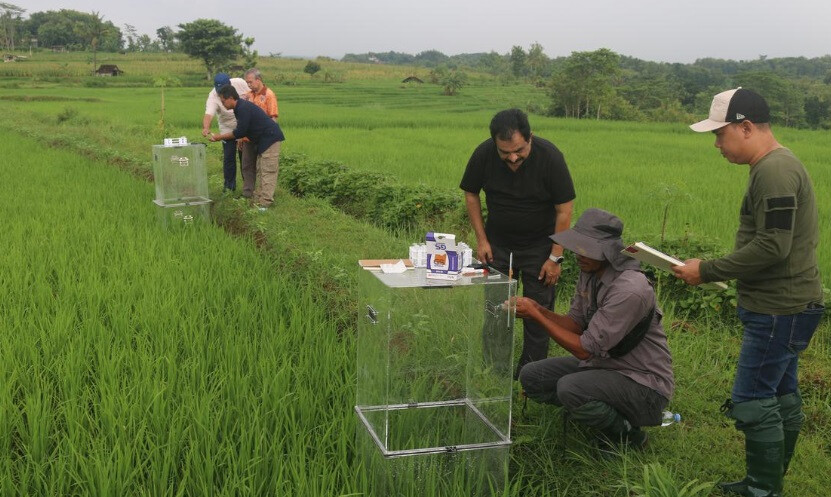
Researchers at Temasek Life Sciences Laboratory (TLL) in Singapore have developed a sustainable rice farming method to reduce the impact of rice cultivation on climate change and meet the growing demand for rice. The project, named "Decarbonising Rice," aims to reduce methane emissions, conserve water, and increase rice yields. This innovative project was recognized for its value by receiving the Global Alliance for Action (GAEA) Prize from the World Economic Forum (WEF) in January in the category of Climate, Nature, and Resilience Science.

Key Research Findings and Achievements:

Reduction of Methane Emissions: Traditional paddy rice cultivation accounts for approximately 10% of global human-induced methane emissions. Researchers have successfully reduced methane emissions by up to 50% through the use of climate-resilient rice varieties, improved water management, enhanced soil microbial communities, and methane emission monitoring.
Water Conservation: The introduction of drip irrigation has reduced water consumption by up to 50%.
Increased Yields: Optimized fertilizer practices and climate-resilient rice varieties have increased rice yields by up to 10%.
Development of Climate-Resilient Rice Varieties: Rice varieties such as Temasek Rice, which are resistant to flooding and can survive without water, have been developed.
Test Cultivation in Diverse Environments: Test cultivation has been conducted in various countries, including Singapore, Tamil Nadu in India, Laos, India, and Indonesia, to confirm applicability in diverse environments.

Future Plans:

Researchers aim to validate decarbonized rice cultivation methods on small-scale farms and establish sustainable, low-carbon rice cultivation practices.
Plans are in place to expand the project in collaboration with farmer groups, growers, millers, businesses, and governments.

Expected Impacts:

Effective response to climate change through the reduction of greenhouse gas emissions.
Enhanced sustainability of agriculture through increased productivity and improved resilience to extreme climates.
Improvement of livelihoods and economic stability for small-scale farmers by providing them with technology.

[Copyright (c) Global Economic Times. All Rights Reserved.]

  • #globaleconomictimes
  • #글로벌이코노믹타임즈
  • #한국
  • #중기청
  • #재외동포청
  • #외교부
  • #micorea
  • #mykorea
  • #newsk
  • #nammidonganews
  • #singaporenewsk
Graciela Maria Reporter

Popular articles

  • BRILS Establishes Michigan Subsidiary to Spearhead North American Robotics Supply Chain Expansion

  • IMO Chief Denounces Tolls on International Straits as "Illegal" and a "Dangerous Precedent"

  • British Schools Pilot AI Grading: Pursuit of Impartiality and Speed

I like it
Share
  • Facebook
  • X
  • Kakaotalk
  • LINE
  • BAND
  • NAVER
  • https://www.globaleconomictimes.kr/article/1065612641708808 Copy URL copied.
Comments >

Comments 0

Weekly Hot Issue

  • Samsung Electronics Shifts Strategy in China: Moving from Hardware Sales to Platform-Based Business
  • Banking War 2.0: South Korean Banks Race to Transition into 'AI-First' Institutions
  • Tesla Model Y Becomes First to Pass Grueling New U.S. Autonomous Safety Tests
  • Celltrion’s Zymfentra Sees Explosive 300% Growth, Hits Record Quarterly Prescriptions in the U.S.
  • BMW Korea Ignites May with Exclusive 9-Model Online Limited Edition Lineup
  • Hyundai Mobis Completes Independent EV 'Heart' Lineup: A Major Leap Toward Global Leadership in Power Electric Systems

Most Viewed

1
Iran Imposes Transit Fees on Strait of Hormuz Amid Escalating Maritime Tensions
2
Korea and Vietnam Forge Strategic Partnership in Science, Technology, and Innovation
3
80% of Enterprises Hit by 'AI Agent Anomalies': SailPoint Calls for Integrated Identity Governance
4
Kurly Abandons 'All-Paper' Packaging Strategy Amid Rising Cost Pressures
5
Tradition Meets the Public: Chungju’s Gugak Busking
광고문의
임시1
임시3
임시2

Hot Issue

Tensions Flare in Strait of Hormuz: U.S.-Iran Clashes Threaten Fragile Truce

Tesla Model Y Becomes First to Pass Grueling New U.S. Autonomous Safety Tests

U.S. Trade Court Strikes Down Trump’s ‘Global 10% Tariff,’ Citing Executive Overreach

Hyundai Motor Group Bets $700 Million on Mexico Amid Trade Policy Volatility

Fashion Runway Show 2026

Global Economic Times
korocamia@naver.com
CEO : LEE YEON-SIL
Publisher : KO YONG-CHUL
Registration number : Seoul, A55681
Registration Date : 2024-10-24
Youth Protection Manager: KO YONG-CHUL
Singapore Headquarters
5A Woodlands Road #11-34 The Tennery. S'677728
Korean Branch
Phone : +82(0)10 4724 5264
#304, 6 Nonhyeon-ro 111-gil, Gangnam-gu, Seoul
Copyright © Global Economic Times All Rights Reserved
  • 에이펙2025
  • APEC2025가이드북TV
  • 반달곰 프로젝트
Search
Category
  • All articles
  • Synthesis
  • World
  • Business
  • Industry
  • ICT
  • Distribution Economy
  • Well+Being
  • Travel
  • Eco-News
  • Education
  • Korean Wave News
  • Opinion
  • Arts&Culture
  • Sports
  • People & Life 
    • 전체
    • International Student Report
    • With Ambassador
  • Column 
    • 전체
    • Cho Kijo Column
    • Cherry Garden Story
    • Ko Yong-chul Column
    • Kim Seul-Ong Column
    • Lee Yeon-sil Column
  • Photo News
  • New Book Guide
  • Multicultural News
  • Jobs & Workers