![[등록] 2026-09-01 15:48:31](/support/_updata/banner2/tl181982910_6749.png)


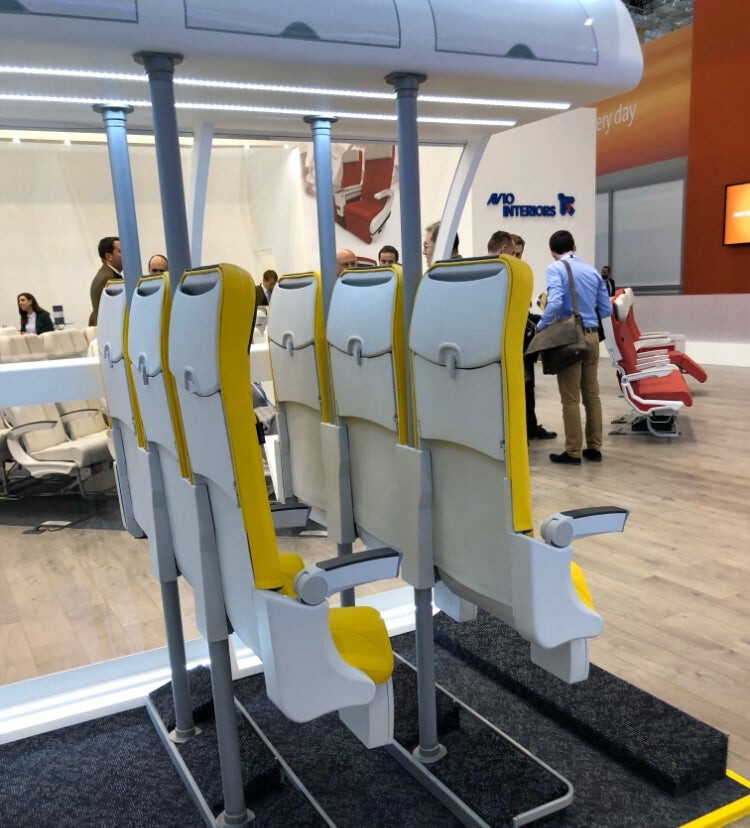
When discussing the future of air travel, the two values of cost-efficiency and passenger comfort invariably clash. The recent resurgence of discussions regarding the introduction of 'Standing Seats' or 'Vertical Seats' vividly illustrates this dilemma. This groundbreaking idea, primarily proposed by Low-Cost Carriers (LCCs), raises a critical question: Is it truly feasible, and what is the price we might have to pay?
The concept of standing seats itself is unfamiliar by its very name. A representative form is the 'Skyrider' proposed by Aviointeriors, an Italian aircraft seat manufacturer. This design involves leaning against a narrow, saddle-like space, making "leaning while standing" a more apt description than "sitting." Such seats are reportedly capable of saving up to 50% more space compared to conventional seats. For example, the calculation suggests that a standard seat pitch of 28 inches could be reduced to 23 inches, allowing more passengers to be accommodated in the same cabin space.
Proponents of standing seats primarily advocate for lower airfares and increased airline profitability. The logic is that an increased number of seats would allow airlines to maximize profits by carrying more passengers, which in turn would create room for lower ticket prices. This could be an attractive option, especially for passengers prioritizing affordability on short-haul routes or commuter flights. From an airline's perspective, given the industry's vulnerability to external factors like fluctuating fuel prices or pandemics, exploring new revenue models is a crucial survival imperative. Maximizing space efficiency to enhance transportation efficiency relative to fixed costs is a natural corporate objective.
However, opposition to the introduction of standing seats is stronger and more realistic. The biggest obstacle, without a doubt, is safety. How to ensure passenger safety during takeoff and landing impacts, and in the event of unexpected turbulence during flight, remains a serious question. Current aircraft seats are intricately designed to protect passengers in emergency situations. Doubts persist as to whether standing seats can meet these stringent safety standards, and issues such as increased chaos during emergency evacuations and the difficulty of donning oxygen masks cannot be overlooked. The likelihood of aviation safety authorities in various countries approving this appears very slim at present.
The decline in passenger comfort is also a significant concern that cannot be ignored. Standing, even for short-haul flights, let alone long-haul ones, would cause extreme fatigue for passengers. It could also lead to health problems such as leg swelling and back pain, and severely restrict normal in-flight activities like using restrooms or meal services. This would ultimately lead to decreased passenger satisfaction and could negatively impact the airline's image in the long run.
Furthermore, aviation safety regulatory bodies worldwide have laws and regulations that prioritize passenger safety and comfort. Standing seats are highly likely to directly violate existing aircraft seat design and safety standards, making their introduction impossible without prior revision of relevant regulations. The process of obtaining approval from national aviation authorities would be highly complex and time-consuming.
Questions also arise from a practical standpoint. There is skepticism as to whether passengers would be willing to endure the discomfort to choose standing seats, and whether there would be sufficient advantages for airlines to warrant introducing such a controversial concept.
To date, standing seats remain in the conceptual design phase, with no actual instances of their application in aircraft. While several manufacturers have proposed ideas and filed patents, they have failed to receive approval from aviation authorities due to safety and comfort concerns.
However, as long as the aviation industry continuously pursues cost reduction and efficiency improvements, innovative ideas like standing seats are likely to continue to be discussed. It cannot be entirely ruled out that they might be introduced in a limited capacity, especially targeting specific demand segments seeking ultra-low-cost tickets on extremely short-haul routes. However, this would require prior development of innovative technologies that can meet current stringent aviation safety standards and ensure at least minimal passenger comfort.
In conclusion, aircraft standing seats appear to be an idea unlikely to materialize in the foreseeable future. Passenger safety and comfort are paramount values in the aviation industry, and pursuing cost reductions at the expense of these values is bound to face significant backlash. Nevertheless, how the future of air travel will evolve remains unknown, and the possibility of the standing seat concept reappearing in a modified form, driven by technological advancements and the creation of new demands, remains open. Whether the day will come when we travel standing in the sky remains a question.
[Copyright (c) Global Economic Times. All Rights Reserved.]