• 2026.05.08 (Fri)
  • All articles
  • LOGIN
  • JOIN
Global Economic Times
fashionrunwayshow2026
  • Synthesis
  • World
  • Business
  • Industry
  • ICT
  • Distribution Economy
  • Well+Being
  • Travel
  • Eco-News
  • Education
  • Korean Wave News
  • Opinion
  • Arts&Culture
  • Sports
  • People & Life
    • International Student Report
    • With Ambassador
  • Column
    • Cho Kijo Column
    • Cherry Garden Story
    • Ko Yong-chul Column
    • Kim Seul-Ong Column
    • Lee Yeon-sil Column
  • Photo News
  • New Book Guide
MENU
 
Home > Business

Hungary Caps Guest Worker Permits to 35,000 in 2025

Eugenio Rodolfo Sanabria Reporter / Updated : 2024-12-27 21:11:53
  • -
  • +
  • Print

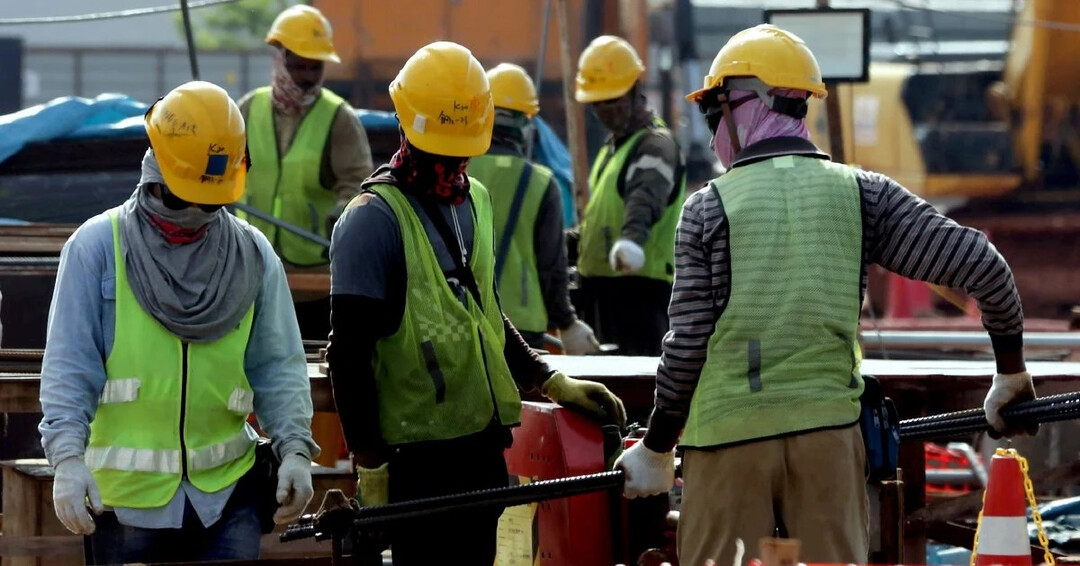
Budapest – Minister for National Economy Márton Nagy has decided to cap the maximum number of guest worker residence permits and residence permits for employment purposes at 35,000 in 2025.

"Hungary will be a country of Hungarians, neither a country of guest workers nor a country of migrants, and it will only be possible to reside and work temporarily for the purposes and under the title defined by the Hungarian state, subject to the fulfillment of the conditions defined by the state and the state’s decision to that effect. The government protects Hungarian families and Hungarian jobs, therefore the legislation stipulates that foreign workers can only be employed if Hungarian workers can no longer fill the vacancies," the statement said.

Hungary has maintained a quota system for two decades to regulate the number of workers from third countries. The theoretical maximum of this quota is typically based on the average number of vacancies in the previous four quarters.

According to data from the Hungarian Central Statistical Office (KSH), the maximum value of the quota for 2025 could potentially reach around 71,000. However, Minister Nagy has opted for a stricter approach, capping the total number of permits at 35,000.

"This means that the number of permits that can be issued will not even reach half of the theoretical maximum," the ministry emphasized.

As previously reported by Hungary Today, the government has announced plans to further tighten regulations on guest worker employment. These proposed measures include:

Automatic rejection of work permit applications: Employers fined for labor or health and safety offenses in the previous year may have their work permit applications automatically rejected.
Prioritizing Hungarian workers: Employers may have their applications rejected if they refuse to hire Hungarian workers without justification or act in bad faith during the mediation process.
Ban on private recruitment agencies: To prevent potential abuse, the government will prohibit private recruitment agencies from recruiting third-country nationals from outside the EU.
These measures underscore the government's commitment to protecting Hungarian workers and ensuring that foreign workers are only employed when there is a genuine labor shortage.

[Copyright (c) Global Economic Times. All Rights Reserved.]

  • #globaleconomictimes
  • #koyongchul
  • #cherrylee
  • #seoulkorea
  • #periodicoeconomico
  • #글로벌이코노믹타임즈
  • #GET
  • #GETtv
  • #liderdel
Eugenio Rodolfo Sanabria Reporter

Popular articles

  • South Korean OTAs Pivot to Inbound and Domestic Tourism Amid Middle East Conflict Despite Record 2025 Earnings

  • Trump Warns Iran Against Hormuz Tolls as "Joint Venture" Talk Recedes

  • Vance Leaves Islamabad Talks, Citing Iranian Negotiators' Lack of Authority: "The Ball is in Their Court"

I like it
Share
  • Facebook
  • X
  • Kakaotalk
  • LINE
  • BAND
  • NAVER
  • https://www.globaleconomictimes.kr/article/1065615048195825 Copy URL copied.
Comments >

Comments 0

Weekly Hot Issue

  • Celltrion’s Zymfentra Sees Explosive 300% Growth, Hits Record Quarterly Prescriptions in the U.S.
  • BMW Korea Ignites May with Exclusive 9-Model Online Limited Edition Lineup
  • Hyundai Mobis Completes Independent EV 'Heart' Lineup: A Major Leap Toward Global Leadership in Power Electric Systems
  • OpenAI Redefines Human-AI Interaction with ‘GPT-Realtime-2’ and New Suite of Live Voice Models
  • Tensions Flare in Strait of Hormuz: U.S.-Iran Clashes Threaten Fragile Truce
  • UAE Sovereign Wealth Giants Descend on Seoul to Forge Strategic AI Alliance

Most Viewed

1
Iran Imposes Transit Fees on Strait of Hormuz Amid Escalating Maritime Tensions
2
Korea and Vietnam Forge Strategic Partnership in Science, Technology, and Innovation
3
80% of Enterprises Hit by 'AI Agent Anomalies': SailPoint Calls for Integrated Identity Governance
4
Kurly Abandons 'All-Paper' Packaging Strategy Amid Rising Cost Pressures
5
Tradition Meets the Public: Chungju’s Gugak Busking
광고문의
임시1
임시3
임시2

Hot Issue

Tensions Flare in Strait of Hormuz: U.S.-Iran Clashes Threaten Fragile Truce

Tesla Model Y Becomes First to Pass Grueling New U.S. Autonomous Safety Tests

U.S. Trade Court Strikes Down Trump’s ‘Global 10% Tariff,’ Citing Executive Overreach

Hyundai Motor Group Bets $700 Million on Mexico Amid Trade Policy Volatility

Fashion Runway Show 2026

Global Economic Times
korocamia@naver.com
CEO : LEE YEON-SIL
Publisher : KO YONG-CHUL
Registration number : Seoul, A55681
Registration Date : 2024-10-24
Youth Protection Manager: KO YONG-CHUL
Singapore Headquarters
5A Woodlands Road #11-34 The Tennery. S'677728
Korean Branch
Phone : +82(0)10 4724 5264
#304, 6 Nonhyeon-ro 111-gil, Gangnam-gu, Seoul
Copyright © Global Economic Times All Rights Reserved
  • 에이펙2025
  • APEC2025가이드북TV
  • 반달곰 프로젝트
Search
Category
  • All articles
  • Synthesis
  • World
  • Business
  • Industry
  • ICT
  • Distribution Economy
  • Well+Being
  • Travel
  • Eco-News
  • Education
  • Korean Wave News
  • Opinion
  • Arts&Culture
  • Sports
  • People & Life 
    • 전체
    • International Student Report
    • With Ambassador
  • Column 
    • 전체
    • Cho Kijo Column
    • Cherry Garden Story
    • Ko Yong-chul Column
    • Kim Seul-Ong Column
    • Lee Yeon-sil Column
  • Photo News
  • New Book Guide
  • Multicultural News
  • Jobs & Workers