![[등록] 2026-09-01 15:48:31](/support/_updata/banner2/tl181982910_6749.png)


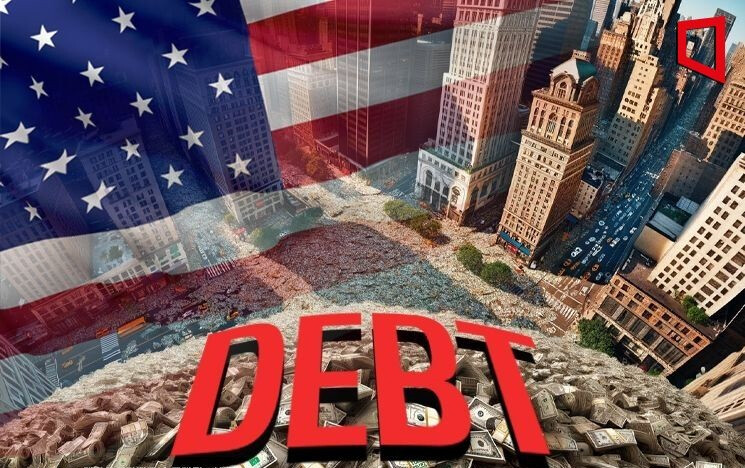
International credit rating agency Moody's Investors Service recently downgraded the United States' sovereign credit rating, highlighting the persistent issue of the nation's fiscal deficit. This action aligns with repeated warnings from prominent figures within the U.S. regarding the escalating financial imbalance. While assessments of the downgrade's immediate impact vary, ranging from negligible to potentially triggering a decline in U.S. Treasury bond prices and broader market turmoil in the long term, the underlying concern about the fiscal trajectory remains significant.
On May 16th, Moody's lowered the U.S. credit rating by one notch from 'Aaa' to 'Aa1'. The agency cited the comparatively high levels of government debt and the proportion of government expenditure allocated to interest payments as key factors distinguishing the U.S. from other nations holding the 'Aaa' rating. Moody's projections indicate a concerning trend: without significant policy adjustments, mandatory spending, including interest payments on national debt, is expected to rise from 73% of the federal budget in the previous year to 78% by 2035. Furthermore, the report underscored the substantial burden of U.S. government interest payments, which accounted for approximately 12% of tax revenues last year, a stark contrast to the 1.6% average observed among other 'Aaa' rated countries.
The issue of the U.S. fiscal deficit has been a recurring point of concern within Wall Street circles. Howard Marks, co-founder and co-chairman of Oaktree Capital Management, a figure often referred to as a "Wall Street legend," has consistently identified the federal government's fiscal deficit as a primary risk to the U.S. economy. He has likened the U.S.'s spending habits to "someone with a credit card that has no limit and never gets a bill," cautioning that "when the bill comes, it will be a very serious problem." Ray Dalio, the founder of the hedge fund Bridgewater Associates, renowned for predicting the 2008 financial crisis, has also voiced concerns, stating that "the trajectory of increasing U.S. government debt appears unsustainable." Dalio has advocated for a policy shift aimed at reducing the fiscal deficit to approximately 3% of the Gross Domestic Product (GDP) to address this challenge.
Reactions to Moody's recent credit rating downgrade have been mixed. The Financial Times (FT) suggested that "if you ask whether the downgrade matters, the answer from a technical perspective is almost certainly no." The FT pointed out that the lowered rating does not impact the risk-weighted capital asset calculations for banks or significantly alter collateral management practices. However, a broader analysis suggests the potential for market repercussions. Spencer Hakimian, CEO of hedge fund Tolou Capital Management, told Reuters that "Moody's downgrade is a continuation of a long period of U.S. fiscal irresponsibility," adding that "this will ultimately lead to higher borrowing costs for the U.S. public sector, as well as the private sector."
Further Context and Analysis:
The U.S. national debt has steadily climbed over the past several decades, fueled by a combination of factors including tax cuts, increased government spending on defense and social programs, and economic downturns that necessitate fiscal stimulus. The COVID-19 pandemic, in particular, led to a significant surge in government spending to mitigate economic fallout.
The implications of a high fiscal deficit are multifaceted. Firstly, it increases the national debt, leading to higher interest payments that consume a larger portion of the federal budget, as highlighted by Moody's. This can crowd out spending on other crucial areas such as infrastructure, education, and research and development, potentially hindering long-term economic growth.
Secondly, persistent fiscal deficits can erode investor confidence in the U.S. economy and the value of the dollar. While the U.S. dollar currently holds its position as the world's reserve currency, sustained fiscal irresponsibility could eventually lead to a decline in its global standing and potentially higher inflation.
Thirdly, a large national debt can limit the government's ability to respond effectively to future economic crises. With less fiscal space, policymakers may be constrained in their ability to implement necessary stimulus measures during recessions or other economic shocks.
The debate surrounding the appropriate level of fiscal deficit and national debt is ongoing. Some economists argue that moderate levels of debt are manageable, particularly when interest rates are low and economic growth is robust. However, there is a general consensus that a rapidly growing debt-to-GDP ratio poses significant risks to long-term economic stability.
Addressing the U.S. fiscal deficit will likely require a combination of measures, including spending cuts and revenue increases. However, achieving political consensus on such measures has historically proven challenging. The current political climate in the U.S., characterized by partisan divisions, further complicates the prospects for meaningful fiscal reform.
Conclusion:
Moody's downgrade serves as a stark reminder of the growing concerns surrounding the U.S. fiscal deficit, echoing warnings from prominent financial figures. While the immediate market impact may be limited, the long-term implications of unchecked fiscal imbalances pose a significant risk to the U.S. economy. Addressing this challenge will require difficult policy choices and a concerted effort to ensure the nation's long-term financial stability. The international community will be closely watching how the U.S. navigates this critical economic juncture.
[Copyright (c) Global Economic Times. All Rights Reserved.]