• 2026.02.04 (Wed)
  • All articles
  • LOGIN
  • JOIN
Global Economic Times
APEC2025KOREA가이드북
  • Synthesis
  • World
  • Business
  • Industry
  • ICT
  • Distribution Economy
  • Well+Being
  • Travel
  • Eco-News
  • Education
  • Korean Wave News
  • Opinion
  • Arts&Culture
  • Sports
  • People & Life
  • Column
    • Cho Kijo Column
    • Lee Yeon-sil Column
    • Ko Yong-chul Column
    • Cherry Garden Story
  • Photo News
  • New Book Guide
MENU
 
Home > New Book Guide

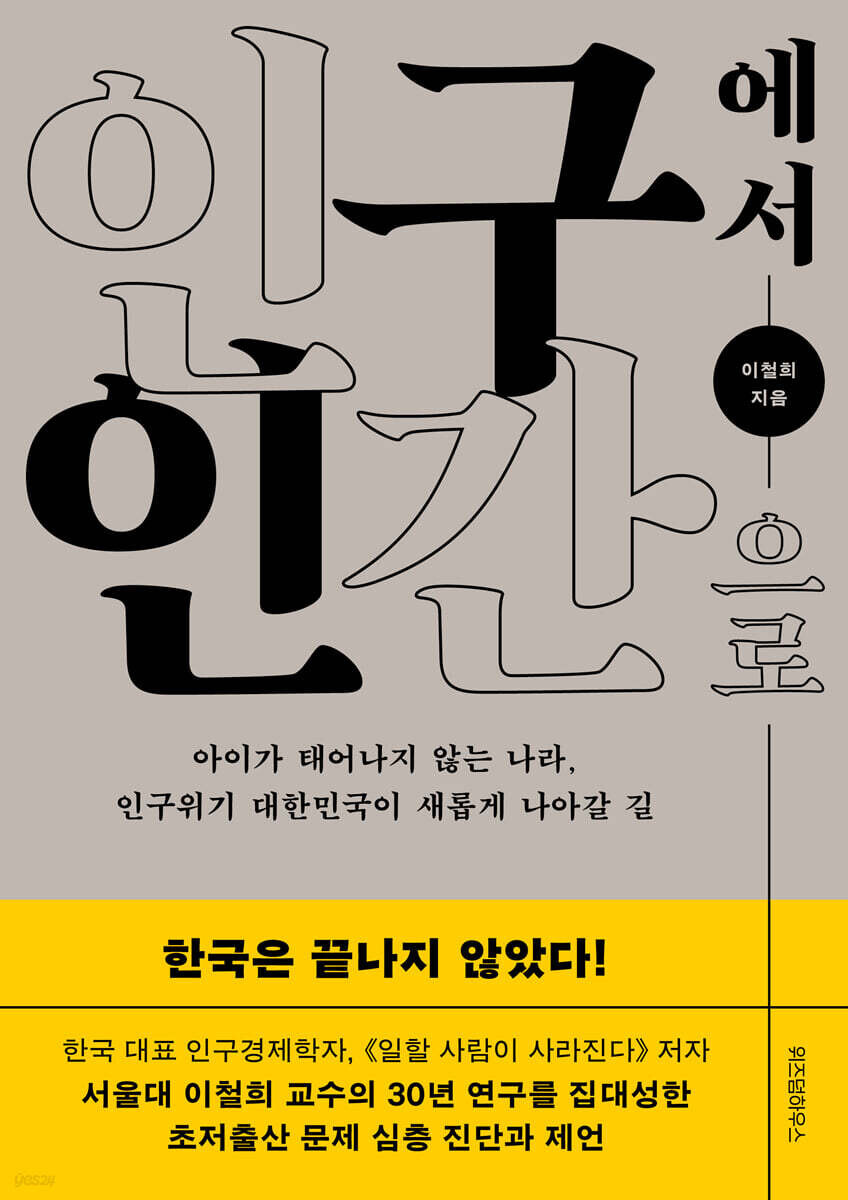
Beyond Numbers to Humanity: The Structural Trap of South Korea's Low Birth Rate

KO YONG-CHUL Reporter / Updated : 2025-12-21 21:26:46
  • -
  • +
  • Print


Oxford Professor David Coleman once designated South Korea as the first candidate for "national extinction," while Elon Musk warned of a "population collapse." For years, South Korean society has been obsessed with the "numbers" of total fertility rates. However, Professor Lee Chul-hee’s new book, From Population to Humans, argues that the essence of the problem lies not in statistics, but in the "structural reality" of the youth's lives.

The author identifies the sharp decline in marriage and the plummeting rate of first-child births as the decisive factors. Specifically, housing costs and private education expenses are analyzed as the two main pillars obstructing childbirth. Rising real estate prices act as a critical barrier, forcing non-homeowning youth to abandon marriage and children altogether. Meanwhile, exorbitant private education costs exert economic pressure that discourages even those with one child from having a second. As the cost of raising a single child exceeds household capacities, multi-child families are becoming a rarity in Korean society.

Furthermore, the dual structure of the labor market, employment instability, and insufficient gender equality lead individuals to perceive childbirth as an "irrational choice." The critique that government policies over the last 20 years have disproportionately benefited middle-to-upper-class households, leaving many in the "blind spot" of policy support, is particularly stinging.

Ultimately, the key to addressing the low birth rate begins with discarding the goal of "increasing the fertility rate" itself. Moving away from viewing children as mere figures to fill a population pyramid, society must create a foundation where young people can feel stable in their present lives and plan for their futures. Unless housing stability, educational innovation, and improvements in the labor environment are prioritized, even the most radical support measures will fall short of reversing the tide of demographic collapse.

[Copyright (c) Global Economic Times. All Rights Reserved.]

  • #Globaleconomictimes
  • #Korea
  • #Seoul
  • #Samsung
  • #LG
  • #Bitcoin
  • #Meta
  • #Business
  • #Economic
  • #The Woori Bank
  • #Elon Musk
KO YONG-CHUL Reporter
Reporter Page

Popular articles

  • 22-Hour Blitz: Reconstructing Operation 'Resolute Resolve' and the Capture of Maduro

  • Crisis in Hypermarkets: Structural Shifting and the Impact of Homeplus Closures

  • Hanwha Ocean Aims for 100% Robotic Welding by 2030: Accelerating the AX Revolution in Shipbuilding

I like it
Share
  • Facebook
  • X
  • Kakaotalk
  • LINE
  • BAND
  • NAVER
  • https://www.globaleconomictimes.kr/article/1065615978590969 Copy URL copied.
Comments >

Comments 0

Weekly Hot Issue

  • U.S. Launches $12 Billion ‘Project Vault’ to Stockpile Critical Minerals and Break Dependence on China
  • Musk Announces SpaceX Acquisition of xAI: A $1.25 Trillion "Interstellar Engine"
  • South Korea’s Inflation Hits 5-Month Low at 2.0% in January, but Grocery Costs Remain High
  • The Return of the King: Lee Soo-man to Relaunch K-Pop Career as Non-Compete Clause Expires
  • Wall Street Rebounds on AI Optimism and Earnings; Gold and Silver Continue Sharp Decline
  • Long-term Exposure to Cell Phone Radiation Shows No Link to Cancer, Joint Study Finds

Most Viewed

1
From Serene Tables to Absolute Chaos: Lee Hee-jun’s ‘Rectangle, Triangle’
2
Secretary General Oh Jin-Ki: “2026 Taean International Horticultural Healing Expo will deliver ‘Mental Recovery’ beyond spectacular sights”
3
Top Japanese Actress Ryoko Yonekura Referred to Prosecutors Over Drug Use Allegations
4
The Cruelty Behind the Mask of the Rule of Law: Condemning Unconstitutional Crackdowns by U.S. State Governments and ICE
5
Jeju Air Implements Total Ban on In-Flight Power Bank Usage Amid Fire Concerns
광고문의
임시1
임시3
임시2

Hot Issue

Musk Announces SpaceX Acquisition of xAI: A $1.25 Trillion "Interstellar Engine"

AI Boom Ignites Memory Super Cycle: DRAM and NAND Prices Set to Skyrocket

Wall Street Rebounds on AI Optimism and Earnings; Gold and Silver Continue Sharp Decline

The Return of the King: Lee Soo-man to Relaunch K-Pop Career as Non-Compete Clause Expires

Let’s recycle the old blankets in Jeju Island’s closet instead of incinerating them.

Global Economic Times
korocamia@naver.com
CEO : LEE YEON-SIL
Publisher : KO YONG-CHUL
Registration number : Seoul, A55681
Registration Date : 2024-10-24
Youth Protection Manager: KO YONG-CHUL
Singapore Headquarters
5A Woodlands Road #11-34 The Tennery. S'677728
Korean Branch
Phone : +82(0)10 4724 5264
#304, 6 Nonhyeon-ro 111-gil, Gangnam-gu, Seoul
Copyright © Global Economic Times All Rights Reserved
  • 에이펙2025
  • APEC2025가이드북TV
  • 독도는우리땅
Search
Category
  • All articles
  • Synthesis
  • World
  • Business
  • Industry
  • ICT
  • Distribution Economy
  • Well+Being
  • Travel
  • Eco-News
  • Education
  • Korean Wave News
  • Opinion
  • Arts&Culture
  • Sports
  • People & Life
  • Column 
    • 전체
    • Cho Kijo Column
    • Lee Yeon-sil Column
    • Ko Yong-chul Column
    • Cherry Garden Story
  • Photo News
  • New Book Guide
  • Multicultural News
  • Jobs & Workers