![[등록] 2026-09-01 15:48:31](/support/_updata/banner2/tl181982910_6749.png)


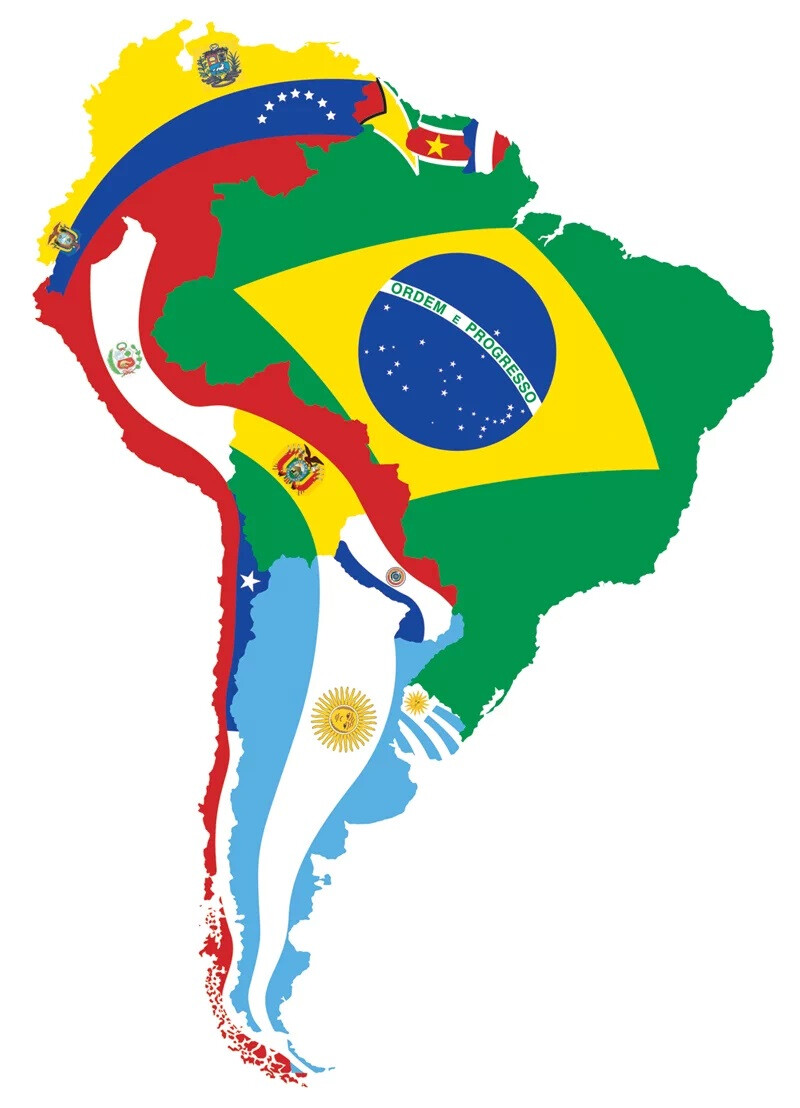
A recent contribution by Professor John Boden of Oregon State University clearly outlines the fluctuating landscape of international relations in South America. His analysis persuasively argues that a new order is forming in Latin America, a region long considered the United States' backyard, as US influence gradually wanes and China establishes a strong economic foothold. The movement of South American countries to diversify their trade away from a protectionist United States has already become a significant trend, accelerated by mutually beneficial trade relations with China.
Several examples provided by Professor Boden clearly illustrate this shift. The Comprehensive Free Trade Agreement between Mercosur, South America's largest economic cooperation body, and the European Union (EU) demonstrates the willingness of South American countries to no longer rely solely on the United States. Chile's negotiation of a Comprehensive Economic Partnership Agreement with India is another example of active efforts to diversify trade partners. In particular, the fact that Chinese car sales account for 40% of the total in Chile indicates that China has already secured strong competitiveness in the South American market. This is a clear example showing that the penetration goes beyond simple economic exchange, reaching deep into South America's consumer market and industrial structure.
Professor Boden points out the change in the US's standing, something unimaginable just 20 years ago, and diagnoses that the US no longer wields the overwhelming influence it once did. He emphasizes that the rise of China is at the center of this change. Indeed, China has steadily expanded its influence in South America over the past two decades, becoming the region's largest trading partner in 2020. The analysis that China's economic growth has had a positive impact on the overall South American economy is noteworthy.
China's rapid industrialization in the early 21st century created enormous demand for South America's major commodities such as copper, tin, oil, iron ore, timber, and soybeans. This led to a rise in the prices of South American goods, consequently contributing to lifting millions of South Americans out of poverty. According to data from the International Monetary Fund (IMF), the poverty rate in Latin America decreased from 27% to 12% between 2000 and 2014, a remarkable achievement that Professor Boden closely links to China's rise.
Conversely, during the same period, the United States experienced severe dysfunction in its political system and extreme polarization due to the wars in Iraq and Afghanistan, as well as the serious social problem of the opioid epidemic. This likely negatively impacted South American countries' trust in the US and their willingness to strengthen economic partnerships.
Recently, economic exchange between South America and China has evolved beyond simple commodity trade, becoming more profound and diversified. Various South American countries are actively participating in President Xi Jinping's Belt and Road Initiative, strengthening cooperation in diverse fields such as infrastructure construction and digital transformation. The development of the Port of Chancay in Peru shows its potential as a logistics hub on South America's Pacific coast, and the El Mutún iron and steel mill project in Bolivia is expected to be an important driving force for South America's industrial development. In addition, cooperation in high-tech fields such as the construction of hydroelectric dams and the installation of 5G internet is expected to contribute to securing future growth engines for the South American economy.
Professor Boden analyzes that the past suspicion of South American governments towards European or American capital was due not only to ideological reasons but also to the lack of alternatives. However, in a multipolar world, trade and investment are no longer the exclusive domain of Western countries, which presents a much more balanced economic outlook for South American countries. The emergence of China as a new alternative provides South American countries with the opportunity to secure economic autonomy and participate in international trade on more favorable terms.
Professor Boden's prediction that the deepening US-China trade war could actually promote the diversification and balance of the South American economy is interesting. The EU's acceleration of the ratification of the agreement with Mercosur amidst the unpredictable trade policies of the United States, and the surge in Brazil's exports of meat and grains to China, support this possibility. This shows that South American countries are no longer unilaterally dependent on a particular superpower but are making strategic choices to maximize their interests in a complex international situation.
In conclusion, Professor John Boden's analysis clearly illustrates a significant turning point in South American international relations. Amid the massive trends of declining US influence and the rise of China, South American countries are breaking away from past dependent relationships and pursuing economic prosperity and political autonomy through their own efforts. Amid the unpredictable trade policies of the United States, South American countries will diversify their trade partners, seek new cooperation opportunities, and create a more balanced economic structure. This is not just a change in the South American region but an important case showing how countries are redefining their positions in a multipolar world order.
[Copyright (c) Global Economic Times. All Rights Reserved.]