• 2026.08.21 (Fri)
  • All articles
  • LOGIN
  • JOIN
Global Economic Times
fashionrunwayshow2026
  • Synthesis
  • World
  • Business
  • Industry
  • ICT
  • Distribution Economy
  • Well+Being
  • Travel
  • Eco-News
  • Education
  • Korean Wave News
  • Opinion
  • Arts&Culture
  • Sports
  • People & Life
    • International Student Report
    • With Ambassador
  • Column
    • Cho Kijo Column
    • Cherry Garden Story
    • Ko Yong-chul Column
    • Kim Seul-Ong Column
    • Lee Yeon-sil Column
  • Photo News
  • New Book Guide
MENU
 
Home > Distribution Economy

South Korea’s Net External Assets Hit 12-Year Low Amid Historic KOSPI Rally

Desk / Updated : 2026-08-20 22:04:31
  • -
  • +
  • Print


South Korea's net international investment position (NIIP)—often referred to as the country’s "second foreign exchange reserves"—suffered a historic drop in the second quarter of 2026, plunging by over 90% to its lowest level in 12 years. According to preliminary data released by the Bank of Korea (BOK) on Thursday, the country's net external financial assets plummeted to $64 billion at the end of June, down $689.5 billion from three months earlier. 

This marks the largest quarterly reduction since the central bank began compiling related statistics in 1994, driving the net asset figure down to its lowest point since the third quarter of 2014, when South Korea officially transitioned into a net external creditor nation. 

KOSPI Surge Swells Foreign Liabilities 

The primary driver behind the dramatic contraction was an unprecedented expansion in external financial liabilities, which surged by $891.2 billion on-quarter to $3.02 trillion—crossing the $3 trillion threshold for the first time. 

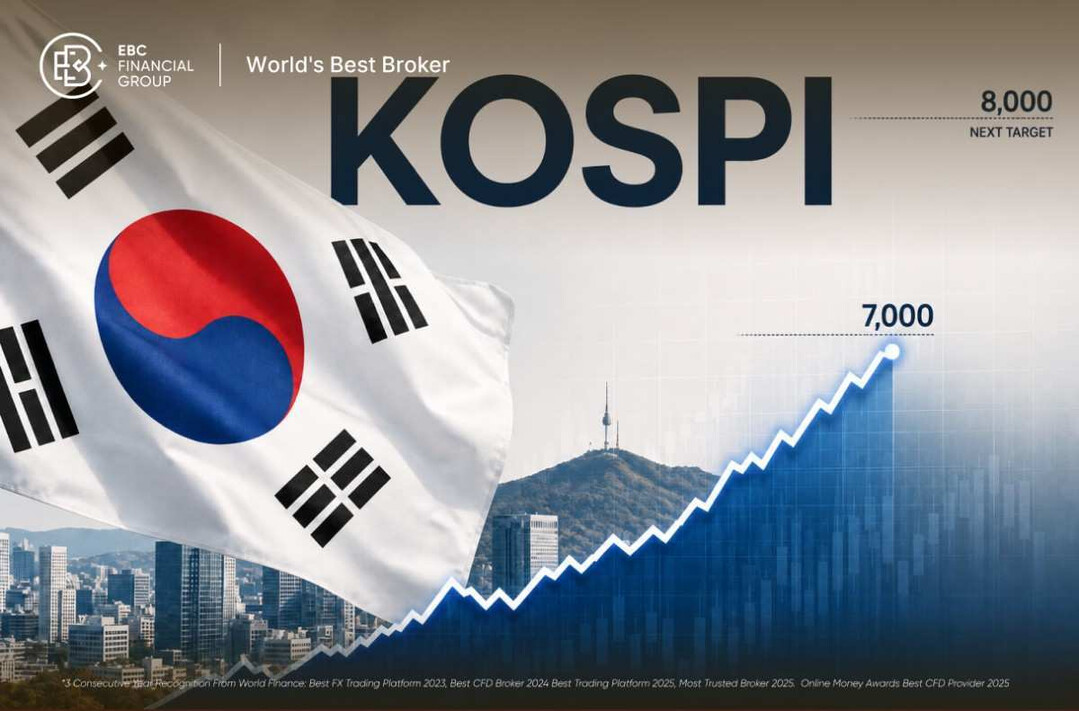
While actual capital inflows from foreign investors saw a net decrease of $23.5 billion, non-transactional factors such as soaring stock valuations and currency shifts drove a staggering $914.7 billion increase in liabilities. Most notably, the benchmark KOSPI skyrocketed 67.8% during the April–June period, jumping from 5,052.5 to 8,476.5. This vastly outperformed major global indexes like the U.S. Dow Jones Industrial Average (12.9%) and the Nasdaq composite (21.4%). 

Consequently, the valuation of equities held by foreign investors in domestic markets spiked from $1.03 trillion to $1.88 trillion, easily overshadowing $63.9 billion in net stock sales by non-residents during the quarter.

External Assets Also Reach Record Highs

On the other side of the ledger, South Korean residents' overseas investments also hit new milestones. External financial assets grew by $201.7 billion to reach $3.08 trillion, surpassing the $3 trillion mark for the first time. 

Outward securities investments rose by $142.7 billion to $1.38 trillion, fueled by continued retail and institutional purchases of foreign equities amid favorable global market conditions. Furthermore, robust export performance bolstered trade credit and overseas deposits, lifting overall other-investment assets by $31.8 billion. 

However, because the growth rate of foreign liabilities quadrupled that of external assets, the net balance narrowed drastically. 

BOK Dismisses Debt Alarm, Cites Robust Fundamentals

The sharp contraction has sparked concerns over potential vulnerability, as a shrinking buffer of net external assets could amplify volatility in the domestic foreign exchange market depending on local stock fluctuations.

Despite these anxieties, the Bank of Korea has urged calm, emphasizing that the plunge is driven by equity valuation gains rather than capital depletion or external borrowing. BOK officials noted that unlike traditional external debt, higher stock prices do not translate to an actual obligation for local corporations to pay out extra cash to foreign shareholders.

Reinforcing this perspective, the country’s net external debt—the difference between formal debt obligations and credit—actually increased by $2.3 billion to $367.8 billion, snapping a three-quarter slide. Although short-term debt metrics ticked up slightly, the central bank attributed this primarily to un-remitted proceeds from foreign stock sales sitting as local currency deposits rather than risky short-term borrowings.

The central bank maintains that while the high sensitivity of net external assets to the stock market warrants careful monitoring of foreign exchange supply and demand, the country’s overall external payment capacity remains fundamentally sound.

[Copyright (c) Global Economic Times. All Rights Reserved.]

  • #globaleconomictimes
  • #micorea
  • #mykorea
  • #Lifeplaza
  • #nammidonganews
  • #singaporenewsk
  • #Taiwanpost
  • #Samsung
  • #Doosa
Desk
Desk

Popular articles

  • Memory Boom Drives Samsung Electronics to Record $65 Billion Q2 Profit, Offsetting Heavy Set Losses

  • South Korea Launches Comprehensive ‘Agentic AI Initiative’ to Secure Global Leadership in Execution-Centric AI Ecosystems

  • “Buy the Dip Despite the Panic Crash?”: Semiconductor Bottom Thesis Gains Traction Amid 'Samjon-Nix' Rout

I like it
Share
  • Facebook
  • X
  • Kakaotalk
  • LINE
  • BAND
  • NAVER
  • https://www.globaleconomictimes.kr/article/1065618195737768 Copy URL copied.
Comments >

Comments 0

Weekly Hot Issue

  • Genesis Unveils the GV90: A New Benchmark for Future Luxury Mobility 
  • The Sunset of an Era: 3G Network Fades into History
  • A New Chapter in Oncology: Moderna’s mRNA Cancer Vaccine Achieves Landmark Phase 3 Success 
  • Trump Shifts Strategy: Acknowledges North Korea’s Nuclear Status, Prioritizes Capability Limits over Denuclearization
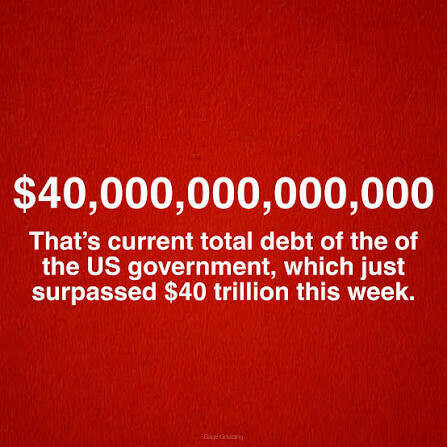
  • U.S. National Debt Crosses $40 Trillion Milestone, Raising Fiscal Alarm
  • Japan Eases Overtime Rules to Boost Industrial Competitiveness; Korea Remains Stuck in 52-Hour "Trap"

Most Viewed

1
The 16th Ethiopia-gil World Festival & Meskel Festival
2
Goldman Sachs Maintains KOSPI Target at 12,000, Citing "Excessive Market Fear"
3
Nable Communications Secures 5G Private Network Upgrade Deal with LG Uplus
4
'Delisting Countdown' Becomes Reality as Mass Administrative Stock Designations Hit Listed Companies
5
TSMC Accelerates 3nm Capacity Expansion: Monthly Output Set to Exceed 180,000 Wafers by Year-End
광고문의
임시1
임시3
임시2

Hot Issue

"The Era of Automatic Alliance Protection is Over": South Korea’s New 'Four-Pillar' Survival Strategy

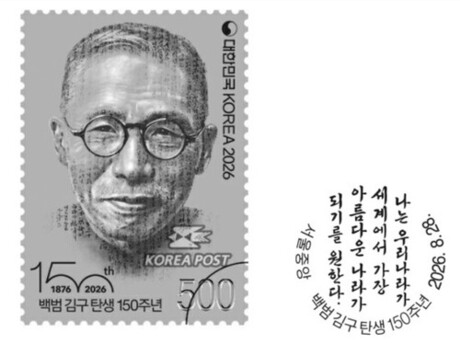
Korea Post to Issue Commemorative Stamps Marking 150th Birth Anniversary of Baekbeom Kim Gu 

Korean fintech expertise is making significant strides in the Vietnamese financial market, signaling a new era where "work records" serve as a foundation for credit.

Advancing the Era of ‘Green Ammonia’: KIST Develops High-Efficiency Catalyst for Ambient Ammonia Production

Fashion Runway Show 2026

Global Economic Times
korocamia@naver.com
CEO : LEE YEON-SIL
Publisher : KO YONG-CHUL
Registration number : Seoul, A55681
Registration Date : 2024-10-24
Youth Protection Manager: KO YONG-CHUL
Singapore Headquarters
5A Woodlands Road #11-34 The Tennery. S'677728
Korean Branch
Phone : +82(0)10 4724 5264
#304, 6 Nonhyeon-ro 111-gil, Gangnam-gu, Seoul
Copyright © Global Economic Times All Rights Reserved
  • 향기네무료급식
  • BCB부천방송
  • 반달곰 프로젝트
Search
Category
  • All articles
  • Synthesis
  • World
  • Business
  • Industry
  • ICT
  • Distribution Economy
  • Well+Being
  • Travel
  • Eco-News
  • Education
  • Korean Wave News
  • Opinion
  • Arts&Culture
  • Sports
  • People & Life 
    • 전체
    • International Student Report
    • With Ambassador
  • Column 
    • 전체
    • Cho Kijo Column
    • Cherry Garden Story
    • Ko Yong-chul Column
    • Kim Seul-Ong Column
    • Lee Yeon-sil Column
  • Photo News
  • New Book Guide
  • Multicultural News
  • Jobs & Workers