• 2026.03.22 (Sun)
  • All articles
  • LOGIN
  • JOIN
Global Economic Times
fashionrunwayshow2026
  • Synthesis
  • World
  • Business
  • Industry
  • ICT
  • Distribution Economy
  • Well+Being
  • Travel
  • Eco-News
  • Education
  • Korean Wave News
  • Opinion
  • Arts&Culture
  • Sports
  • People & Life
    • International Student Report
    • With Ambassador
  • Column
    • Cho Kijo Column
    • Cherry Garden Story
    • Ko Yong-chul Column
    • Kim Seul-Ong Column
    • Lee Yeon-sil Column
  • Photo News
  • New Book Guide
MENU
 
Home > World

Mexico Imposes Sharp Tariffs on Korean Imports Amid US Trade Pressure

Ana Fernanda Reporter / Updated : 2026-01-01 03:44:04
  • -
  • +
  • Print

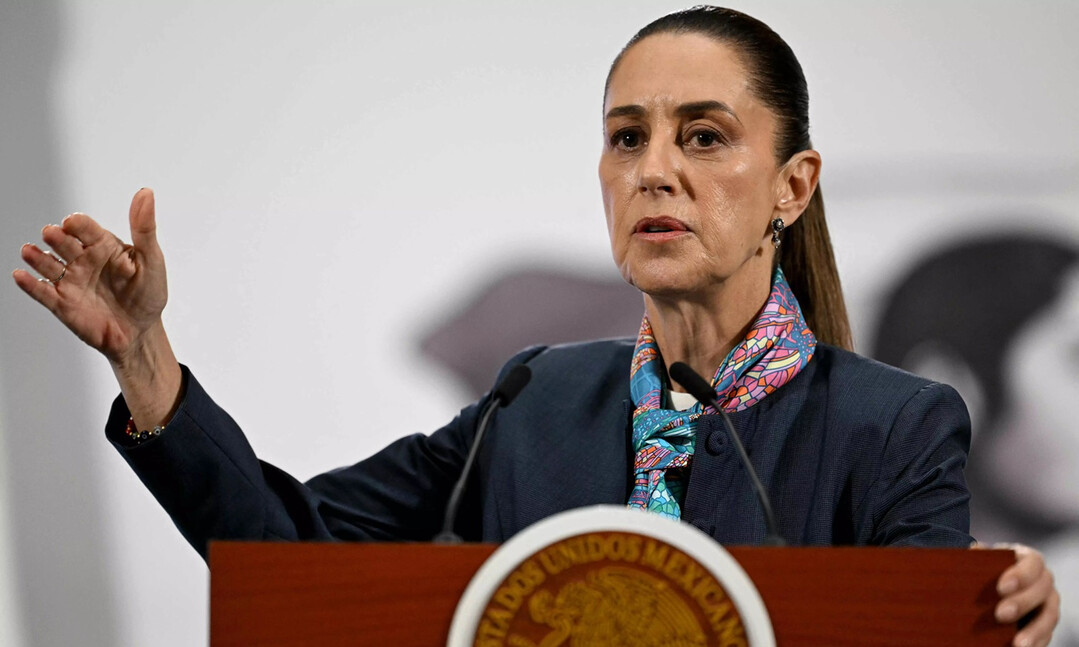
(C) Deccan Chronicle

MEXICO CITY — Starting January 1, 2026, Mexico will implement a sweeping tariff hike on 1,463 strategic items from countries with which it does not have a Free Trade Agreement (FTA), including South Korea, China, and India. The move, seen as a response to U.S. pressure to curb transshipments, significantly impacts sectors such as automobiles, steel, and machinery.

Strategic Protectionism: "Plan Mexico"
The Mexican Office of the Presidency announced an amendment to the General Import and Export Tax Law (LIGIE), raising tariffs mostly between 5% to 35%, with certain steel products facing a staggering 50% levy.

The government justifies the hike as part of its "Plan Mexico" initiative, aimed at:

Protecting approximately 350,000 local jobs.
Increasing the domestic component ratio to 15%.
Encouraging foreign firms to shift from simple exporting to local manufacturing.

Navigating the US-China Tug-of-War
Analysts suggest the timing is no coincidence. As the U.S. threatens to renegotiate or exit the USMCA, Mexico is under intense pressure to limit Chinese-origin goods entering the North American market. By imposing these tariffs, Mexico signals its alignment with U.S. trade interests while attempting to reduce its own $113.1 billion trade deficit with China.

Impact on South Korean Industry
While South Korea lacks a bilateral FTA with Mexico, many Korean firms operate via PROSEC or IMMEX (maquiladora) programs. Though these specific incentives are expected to remain intact, the broader industry faces heightened uncertainty and increased costs in supply chain logistics.

The South Korean government has officially requested that Mexico minimize the impact on its exporters. Meanwhile, other affected nations are reacting differently: China has demanded a reversal of the "protectionist" measures, while India has proposed a new preferential trade agreement.

[Copyright (c) Global Economic Times. All Rights Reserved.]

  • #Globaleconomictimes
  • #Korea
  • #Seoul
  • #Samsung
  • #LG
  • #Bitcoin
  • #Meta
  • #Business
  • #Economic
  • #The Woori Bank
  • #Elon Musk
Ana Fernanda Reporter

Popular articles

  • Tehran on the Brink: Scenarios of a U.S. Strike and the Looming Global Fallout

  • Google Unveils ‘Nano Banana 2’: Pro-Level Image AI Now Free for All

  • Samsung Display Resumes Development of Next-Gen 'QNED' Technology

I like it
Share
  • Facebook
  • X
  • Kakaotalk
  • LINE
  • BAND
  • NAVER
  • https://www.globaleconomictimes.kr/article/1065552061094276 Copy URL copied.
Comments >

Comments 0

Weekly Hot Issue

  • Appellate Court Begins Review of Kakao Founder’s Acquittal in SM Entertainment Stock Rigging Case
  • AI Supercycle Propels Global Semiconductor Market Toward $1 Trillion Milestone
  • Naver Suspends Election Comments to Combat Cyberbullying and Misinformation Ahead of June Polls
  • Lotte Town Myeongdong Lights Up with 'Welcome Light' to Greet Global K-Pop Fans
  • K-Beauty SMEs Join Forces with Distributors: A New Paradigm for Global Expansion through Strategic Consortiums
  • BMW ‘The New i3’ Next-Gen EV: 900km Range 

Most Viewed

1
An Open Letter to BTS On the Eve of a Historic Performance
2
From Industrial Capital to Tourism Mecca... Ulsan Makes a Bold Move with ‘Experiential Content’ in 2026
3
Ko Sang-goo, President of World Federation of Korean Associations, Elected as First Private Sector Chair of World Korean Community Leaders Convention
4
It is Time for BTS’s Fandom, ARMY, to Step Forward
5
Korean Stock Market Plunges: Circuit Breaker and Sidecar Triggered Amid Geopolitical Crisis
광고문의
임시1
임시3
임시2

Hot Issue

Netflix Declares BTS Comeback Live “ARIRANG” as the Year’s Biggest Global Event

AI Medical Ecosystem in Focus: KIMES 2026 Opens in Seoul as Global Healthcare Hub

Netanyahu Declares Decisive Blow to Iran’s Nuclear and Missile Programs, Signals Early End to War

Intel Announces 10% Price Hike on CPUs: PC Manufacturers Bracing for Massive Production Cost Spikes

Let’s recycle the old blankets in Jeju Island’s closet instead of incinerating them.

Global Economic Times
korocamia@naver.com
CEO : LEE YEON-SIL
Publisher : KO YONG-CHUL
Registration number : Seoul, A55681
Registration Date : 2024-10-24
Youth Protection Manager: KO YONG-CHUL
Singapore Headquarters
5A Woodlands Road #11-34 The Tennery. S'677728
Korean Branch
Phone : +82(0)10 4724 5264
#304, 6 Nonhyeon-ro 111-gil, Gangnam-gu, Seoul
Copyright © Global Economic Times All Rights Reserved
  • 에이펙2025
  • APEC2025가이드북TV
  • 독도는우리땅
Search
Category
  • All articles
  • Synthesis
  • World
  • Business
  • Industry
  • ICT
  • Distribution Economy
  • Well+Being
  • Travel
  • Eco-News
  • Education
  • Korean Wave News
  • Opinion
  • Arts&Culture
  • Sports
  • People & Life 
    • 전체
    • International Student Report
    • With Ambassador
  • Column 
    • 전체
    • Cho Kijo Column
    • Cherry Garden Story
    • Ko Yong-chul Column
    • Kim Seul-Ong Column
    • Lee Yeon-sil Column
  • Photo News
  • New Book Guide
  • Multicultural News
  • Jobs & Workers