![[등록] 2026-09-01 15:48:31](/support/_updata/banner2/tl181982910_6749.png)


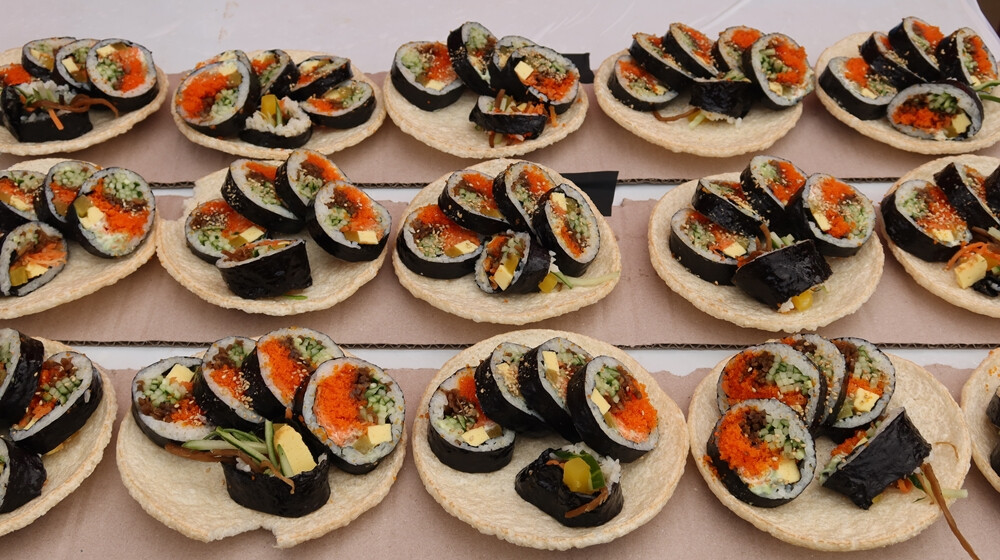
GIMCHEON, South Korea – The city of Kimcheon, North Gyeongsang Province, was overwhelmed this past weekend as the second annual 'Kimcheon Gimbap Festival' drew an unprecedented crowd, far exceeding its population. What started as a whimsical idea sparked by the local moniker "Kimcheon means Gimbap Cheonguk (Gimbap Heaven)" has quickly evolved into a massive regional phenomenon, attracting 150,000 visitors over two days—a number greater than the city's entire population of approximately 134,537 as of August.
The festival, held across Jikjisa Culture Park and Samyeongdaesa Park, experienced an immediate 'gimbap shortage crisis' on its opening day, Saturday, October 25, when 80,000 people converged on the site. An additional 70,000 followed suit on Sunday, creating a vibrant yet chaotic scene. The sheer volume of attendees led Kimcheon City to issue multiple safety alerts via text message, urging citizens and tourists to anticipate massive crowds and traffic congestion, and announcing the control of general vehicle access to the venue.
From Niche Idea to National Hit
The genesis of the festival lies in a recent municipal survey where, surprisingly, a significant portion of the younger "MZ generation" (Millennials and Gen Z) responded that the first thing they associated with Kimcheon was the popular franchise restaurant 'Gimbap Cheonguk,' often shortened to 'Kimcheon' in casual conversation. Embracing this unexpected brand recognition, the city launched its inaugural festival last year, which saw 100,000 visitors.
This year's turnout demonstrated a massive leap in popularity. City officials, who had only expected a similar crowd to the previous year, were forced to implement emergency measures after gimbap supplies sold out quickly on the first day. They began posting real-time gimbap availability updates and even restricted purchases to four rolls per person per booth to manage the overwhelming demand.
Logistical 'Gimbap Chaos' and Visitor Feedback
Beyond the food itself, various gimbap-themed merchandise—including character dolls, keyrings, and chopsticks—also spurred a frenzy. Certain popular items were completely depleted shortly after sales began, with eager customers enduring queues of over an hour, signaling a full-blown 'goods great rush.'
While the economic boost to local businesses was evident, the rapid growth exposed significant logistical challenges. Feedback posted on the city’s official social media channels, while acknowledging improvements from the first year, highlighted severe operational flaws. "The waiting lines and the walking lanes were a mess, but it was better than last year," one attendee commented. However, others complained bitterly about the transportation. "The shuttle bus queue is suffocatingly long. Buses at the intermediate stops can't even pick up waiting passengers," another wrote. A separate comment declared the event a "traffic hell" and suggested extending the festival days to better distribute the demand.
A Culinary Feast Despite Hurdles
Despite the operational issues, the culinary offerings remained the main draw. The festival featured over 50 varieties of the seaweed rice roll, including contributions from local vendors, offerings from national franchises, and even the internationally popular frozen gimbap. A standout was the 'Walnut Mayonnaise Jeyuk Gimbap,' which won the local Gimbap Cooking Contest.
In a proactive move to ensure public safety, especially following the recent discovery of chironomid larvae-like material in the city’s tap water, Kimcheon City confirmed that all water used for drinking and cooking throughout the festival grounds was bottled mineral water.
The astonishing success of the 2025 Kimcheon Gimbap Festival clearly establishes it as a major new fixture in the regional calendar. However, the city now faces the formidable task of drastically scaling up its infrastructure and logistics to smoothly manage the enormous popularity it has unintentionally cultivated, transforming the current 'great rush' into a sustainable and enjoyable experience for all future visitors.
[Copyright (c) Global Economic Times. All Rights Reserved.]