![[등록] 2026-09-01 15:48:31](/support/_updata/banner2/tl181982910_6749.png)


Ahead of China's largest shopping festival, "Singles' Day" (Double 11), e-commerce companies in the country have plunged into a massive discount war. While some say that the festival's excitement falls short of previous years due to China's domestic economic slump, major companies are rolling out special promotions—such as selling smartphones for about 200 won—to encourage consumers to open their wallets.
According to the Chinese state-run English-language newspaper Global Times and other sources on the 14th, major e-commerce platforms including Alibaba's Taobao and Tmall, JD.com, and Douyin have launched pre-discount events ahead of Singles' Day on November 11. Now in its 18th year, Singles' Day was originally a one-day discount event held on November 11, but it has recently established itself as a massive promotional event spanning about a month.
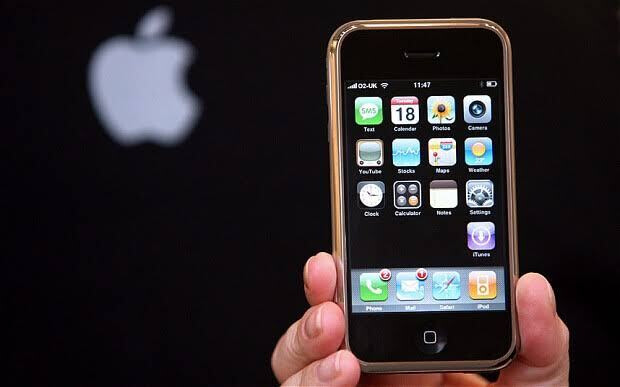
JD.com allowed consumers to purchase products at Singles' Day discount prices starting from the afternoon of the 12th without having to pay a reservation deposit. For some events, they introduced limited-quantity special items, such as the iPhone 16 Pro, Dell laptops, and Sony cameras, selling for just 1 yuan (approximately 200 won). Tmall moved away from the traditional method of requiring multiple purchases for discounts, allowing consumers to receive benefits even when buying a single product. Douyin also jumped into the competition by applying an immediate 15% discount to select products.
The Chinese government's consumption-boosting policies are also adding momentum to the discount competition. For home appliances and smartphones, e-commerce platforms' own discounts can be combined with government subsidies for consumer goods trade-ins.
However, some analyses suggest that the consumption-boosting effect of Singles' Day is not what it used to be. Hu Qimu, a professor at Huaqiao University, pointed out, "As Singles' Day's operational methods have evolved over a long period, there is little room for new innovation. Consumers have also become more rational and do not concentrate their purchases in a short period."
In fact, the growth rate of China's online consumption is slowing down. According to China's National Bureau of Statistics, online retail sales of goods and services from January to August this year reached 13.48 trillion yuan (approximately 2,691 trillion won), an increase of 4.6% compared to the same period last year. This is about half the growth rate recorded in the same period for 2024 (8.9%) and 2025 (9.6%).
Professor Hu noted, "Pre-promotion events are a stage to intensively test consumer trust," adding, "Platforms are trying to transform short-term discount events into a sustainable engine for consumption expansion."
[Copyright (c) Global Economic Times. All Rights Reserved.]