![[등록] 2026-09-01 15:48:31](/support/_updata/banner2/tl181982910_6749.png)


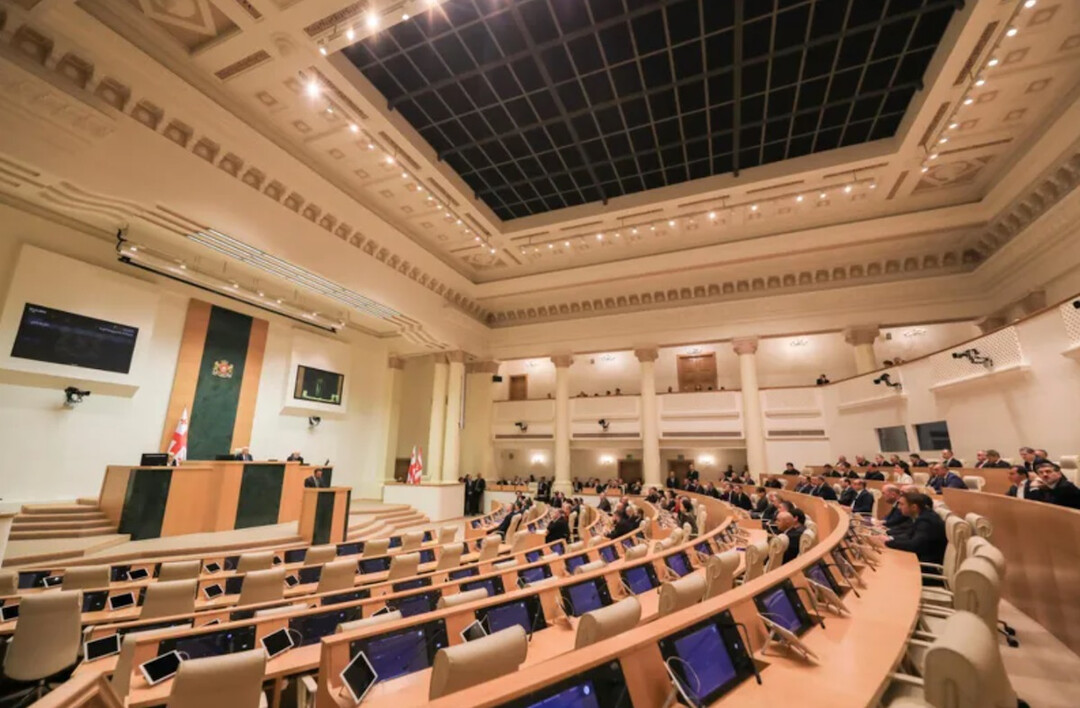
TBILISI, GEORGIA – Controversy surrounding Georgia's 'Law on Transparency of Foreign Influence,' set to take effect on May 31 (local time), is intensifying. Civil society and media outlets are strongly protesting this law, which is modeled after the US Foreign Agents Registration Act (FARA), arguing that the government will exploit it to suppress freedom of expression and freedom of association. Especially concerning is the severe lack of independence of the 'Anti-Corruption Bureau,' which will be responsible for enforcing the law, raising growing fears about Georgia's democratic backslide.
The Core of the 'Foreign Influence Agent Law' and its Controversies
This law, spearheaded by Georgia's ruling party 'Georgian Dream' and passed on April 1, 2025 (actually, final parliamentary approval on May 14, 2024, presidential veto overridden on May 28, and signed into law by the parliamentary speaker on June 3), broadly defines any individual or organization receiving foreign funding and engaging in civic, political, or information activities as a 'foreign influence agent.' These entities are obligated to register, and failure to do so can result in fines or up to five years in prison. The government claims the law aims to limit foreign interference in domestic affairs and enhance the transparency of state institutions.
However, independent legal experts point out that while the text of this bill is almost identical to US FARA, its intent has been completely distorted. US FARA intentionally excludes non-profit organizations (NGOs), media, and public interest groups, applying only to actors under the direct control of foreign governments. Furthermore, while the US enforces its law through an independent judiciary, Georgia's law is to be enforced by an Anti-Corruption Bureau lacking institutional independence, a significant difference.
"Civil Society Police Role"...Concerning Actions of the Anti-Corruption Bureau
Tamta Mikeladze, Director of the Social Justice Center, stated on May 21 (local time) after a meeting between civil society and media representatives and the Anti-Corruption Bureau, that "it has become clear that the Anti-Corruption Bureau has a plan to effectively act as a civil society police, completely outside the legal framework."
Mikeladze criticized, "It appears that 'Georgian Dream' intends to criminalize almost all political and social expressions where a journalist, researcher, lawyer, artist, filmmaker, editor, or civil society representative receiving foreign funding expresses an opinion on government policy." According to her, the law's simplistic approach is: "If you receive foreign funding and express an opinion on government policy (in the broadest sense) and attempt to influence society (e.g., write a post or send an email to two or more people), you will be branded a foreign influence agent, required to declare this in all public communications, and registered in an official database."
Even more concerning, the Anti-Corruption Bureau does not plan to assess whether the expression is genuinely related to the funding or if the donor has any control or directional authority. This differs significantly from the criteria required by US FARA. Mikeladze emphasized, "While it is claimed that this law will be applied in Georgia according to US practice, what Anti-Corruption Bureau representatives explain bears no resemblance to US standards or logic."
Threat to Freedom of Expression and Association
The Organization for Security and Co-operation in Europe (OSCE) has also warned that Georgia's 'Foreign Influence Agent Law' will further restrict civil society, expressing concern that "the new law will strip human rights defenders of the safeguards they need to carry out their work." This suggests that universal values such as freedom of expression and freedom of association could be severely undermined in Georgia.
Mikeladze asserted, "'Georgian Dream' is using this law as a weapon to destroy freedom of expression and association, and they are issuing threats." She added, "The ruling party recognizes that civil society and media are the most powerful source of resistance, based on their diversity and resilience, and is targeting them for full-scale, massive control and criminalization."
Furthermore, Mikeladze stressed the gravity of the situation by stating, "The current threat to dismantle the media and civil society is far more alarming than authoritarian policies in Russia or Azerbaijan, simply because their reach is so rapid and broad."
Georgia's Democratic Crossroads
In conclusion, the common consensus among experts is that Georgia's 'Foreign Influence Agent Law' is highly likely to be used as a political tool beyond mere transparency enhancement. This law appears to be a crucial watershed moment for Georgia, determining whether it will follow the path of a Western-oriented democratic nation or revert to an authoritarian regime like Russia. Mikeladze concluded, "The real question is whether the 'Georgian Dream' regime can make these threats a reality, and what political, geopolitical, and social costs they will incur by doing so."
Georgia's future will depend on the enforcement process of this law, the reaction of the international community, and, most importantly, the ongoing resistance of Georgian citizens.
[Copyright (c) Global Economic Times. All Rights Reserved.]