![[등록] 2026-09-01 15:48:31](/support/_updata/banner2/tl181982910_6749.png)


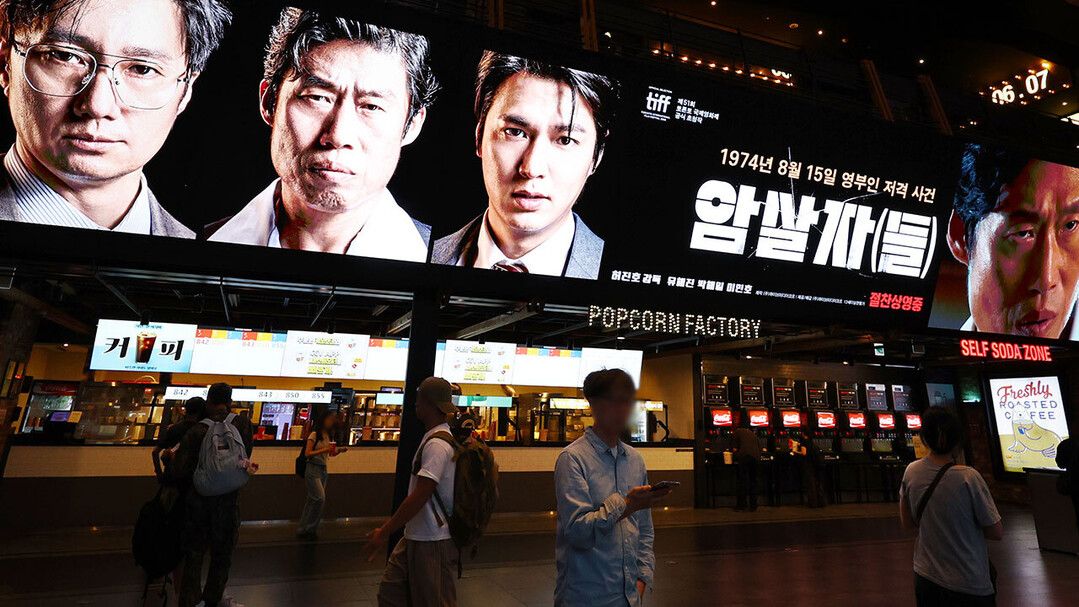
The movie "Assassins," which drew a large audience and generated buzz in theaters during this year's Chuseok holiday, is facing a fierce backlash outside the screen. According to big data emotional keyword analysis (SumTrend, September 27–30, 2026) immediately after its release, "suspicion" stood out as the number one public-related keyword surrounding the film, deeply rooted alongside massive "controversy" and "criticism." While there was initial anticipation, praise from some quarters for a master's new work and well-made production, and intense attention as widely known, the public's reaction instantly chilled into shock and discomfort as the film's perilous distortions were revealed. Furthermore, the surfacing of extreme words like crime, defamation, and unfilial behavior, bordering on social conflict, clearly demonstrates that this work suffers severe flaws and moral improprieties in how it handles historical facts.
The movie "Assassins" takes as its core subject the fatal shooting of the late First Lady Yuk Young-su at the Liberation Day commemorative ceremony on August 15, 1974. The clear historical fact is that the Zainichi Korean Mun Se-gwang, under orders from North Korea and Chongryon, attempted to assassinate President Park Chung-hee, but failed, and in that chaotic process, First Lady Yuk Young-su, sitting on the podium, was fatally struck by Mun's bullet. This is an established historical orthodoxy and settled fact, spanning the suspect's confession arrested at the scene, forensic analysis by judicial authorities, and the court's final ruling and execution. However, under the guise of detectives and reporters digging into the truth of the incident, the movie subtly implies a conspiratorial narrative that the core of the regime at the time instigated or connived at the incident to break through a political crisis and turn the political tide. By arranging unverified hypotheses—such as the possibility of a third assassin, a bodyguard's misfire, or a regime-level operation—in an open-ended format, it distorts the truth and commits secondary harm by defaming national victims and the bereaved family, directing it as if the regime induced the bloodshed.
The logic of the Park Chung-hee self-directed drama theory—which leaked from anti-South Korean media and Chongryon-affiliated weekly magazines in Japan immediately after the 1974 incident—and the Korea Central Intelligence Agency (KCIA) intervention theory dealt with in the 1992 North Korean propaganda film "The Nation and Destiny" directed by Kim Jong Il, has thus been recreated 50 years later on the screen of a contemporary South Korean commercial film wrapped in the packaging of being "well-made." For a film dealing with real-life figures and strict modern history, thorough fact-checking and verification based on historical sources must be the absolute top prerequisite. Despite the existence of clearly completed judicial evidence such as Mun Se-gwang's firearm acquisition route and handgun forensic results, the director and production crew used the excuse of cinematic imagination to inflate provocative questions and whitewash distorted claims as facts. It is an unacceptable dereliction of duty under the name of freedom of art.
The reason the public, critics, and various segments of society are pouring endless criticism onto the movie "Assassins" is clearly confirmed through related words such as concern, "naeronambul" (hypocrisy where it's romance when I do it, crime when others do), unfilial behavior, and defamation found in the big data emotional analysis. Above all, portraying a victim who lost his beloved wife to a North Korean terrorist's bullet as the perpetrator who drove his wife to death or the mastermind of the operation is regarded as an act that fundamentally destroys human morality and ethics. Moreover, the attitude of demanding strict sanctity for certain historical events based on factional logic while committing irresponsible distortions under the cloak of imagination regarding other historical tragedies and figures provokes a sense of unpleasantness of double standards in the public.
Ultimately, when a twisted historical view not grounded in facts is distributed as a commercial film, it inevitably produces heavy side effects of causing massive social conflict and polluting the public's historical perception. The modifiers deeply engraved in the big data analysis results—suspicion, controversy, criticism, defamation, and unfilial behavior—are the cold warnings of the public sentiment that arrive when imagination surpasses facts and human ethics. We must painfully face the reality that the reckless attempt to "assassinate" the truth with groundless conspiracy theories ultimately collided with the solid wall of facts, staining even the film's box office success into a tragic "controversy."
[Copyright (c) Global Economic Times. All Rights Reserved.]