
![[등록] 2026-09-01 15:48:31](/support/_updata/banner2/tl181982910_6749.png)


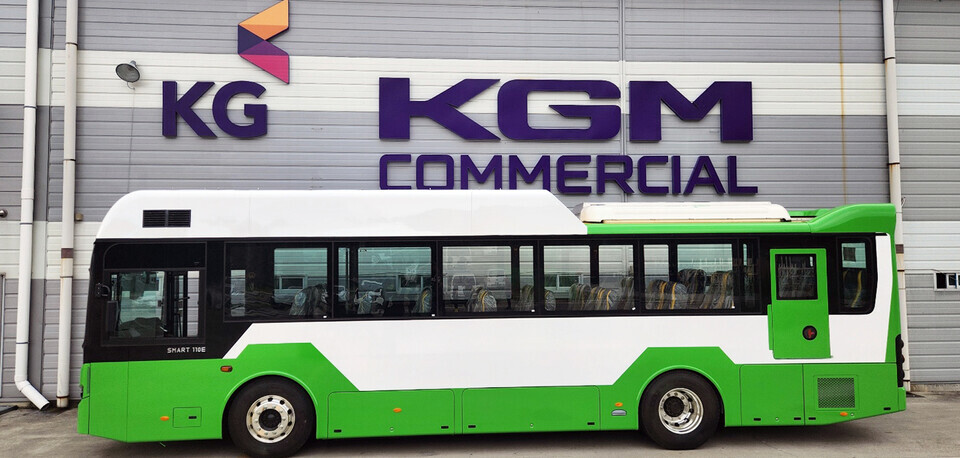
Itaipu, Paraguay – The celebratory cheers echoing from the Itaipu Hydroelectric Power Plant in the heart of Paraguay marked more than just the arrival of five eco-friendly Korean electric buses. It heralded a bright new chapter in energy transition cooperation between South Korea and Paraguay. The partnership, initiated with a warm congratulatory message from Jin Jong-wook, President of the Korea Automotive Technology Institute (KATECH), signifies a strategic alliance between Paraguay, a nation striving to build a green transportation system on its abundant hydroelectric resources, and South Korea, a global leader in electric vehicle technology.
The electric buses that have now arrived in Paraguay are customized eco-friendly public transportation solutions, having undergone rigorous technical verification by KATECH. These buses are expected to become the workhorses for Paraguayan citizens, contributing to improved air quality. Furthermore, they present a model for the efficient utilization of clean energy generated by the Itaipu Hydroelectric Power Plant, potentially setting a significant milestone in South America's shift towards electrification.
Paraguay has long demonstrated a strong commitment to expanding the adoption of electric vehicles, leveraging the abundant and affordable clean electricity produced by the world-renowned Itaipu Hydroelectric Power Plant. The government's proactive support policies and infrastructure development efforts are among the most notable in South America. In this context, the collaboration with KATECH provides a significant boost to Paraguay's electrification vision. The synergy created by combining South Korea's advanced EV technology with Paraguay's green energy resources is projected to yield a successful model for building a sustainable transportation system.
As President Jin Jong-wook emphasized, this collaboration transcends a simple vehicle export, marking the beginning of technological exchange and the establishment of a long-term partnership. KATECH plans to provide tailored electric vehicle technology support, considering local conditions such as climate, road infrastructure, and the transportation system, to drive practical change. This approach demonstrates South Korea's commitment to contributing to the long-term development of the electric vehicle ecosystem in the South American market, rather than focusing solely on short-term gains.
The South American market is emerging as a region with significant growth potential for electric vehicles, driven by increasing awareness of environmental issues and the expansion of eco-friendly policies by various governments. Particularly in large markets like Brazil and Mexico, the demand for electric vehicles is gradually increasing, presenting a prime opportunity for the Korean automotive industry to secure new growth engines. The success of KATECH's partnership with Paraguay is expected to positively influence the expansion of technological cooperation with other South American nations in the future.
Of course, the electrification of the South American market is still in its early stages, and there are considerable challenges to overcome. These include a lack of charging infrastructure, high vehicle prices, and insufficient consumer awareness. However, with the active participation of technology-leading companies like KATECH and the establishment of localized strategies, it is anticipated that these difficulties can be overcome, and the South American market can be cultivated into a crucial hub for the future electric vehicle market.
The electric bus handover ceremony in Itaipu was more than just a technological collaboration; it was a moment to reaffirm the shared commitment of South Korea and Paraguay towards a sustainable future. The synergy between South Korea's eco-friendly automotive technology and Paraguay's abundant green energy has the potential to accelerate the wave of electrification across the South American continent and, furthermore, make a significant contribution to the global transition towards clean energy. The future actions of KATECH and the unfolding green revolution in the South American market will be closely watched.
[Copyright (c) Global Economic Times. All Rights Reserved.]














