![[등록] 2026-09-01 15:48:31](/support/_updata/banner2/tl181982910_6749.png)


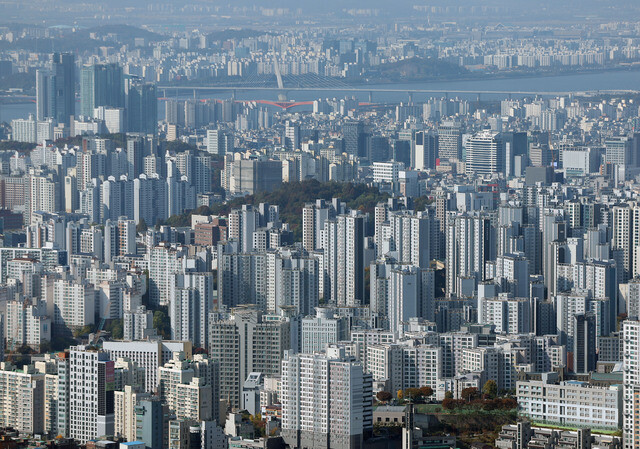
SEOUL — Seoul's apartment prices have broken a historical milestone, marking an unprecedented 86 consecutive weeks of upward movement. This surge surpasses the previous record of 85 weeks set during the Moon Jae-in administration between June 2020 and January 2022, proving the extraordinary resilience of the capital’s housing market despite multiple regulatory hurdles.
According to the weekly apartment price trend data released by the Korea Real Estate Board (REB) on the 1st, Seoul's apartment sales prices edged up by 0.09% compared to the previous week. Although the pace of growth has notably decelerated—shrinking for five consecutive weeks since late August when it peaked at 0.22%—the market has refused to transition into a full-scale downward trend, maintaining a steady positive trajectory.
A Dual Market: High-End Declines vs. Mid-to-Low Tier Resilience
The Seoul property market is currently exhibiting a distinct "mixed trend," characterized by falling prices in high-end districts and steady "catch-up" growth in more affordable, mid-to-low tier neighborhoods.
Tax reforms increasing the burden of comprehensive real estate holding taxes and capital gains taxes have put heavy pressure on sellers, hitting the "Gangnam 3-gu" and major Han River belt districts hardest. Gangnam-gu saw its decline accelerate from -0.42% to -0.56%, particularly centered around prestigious complexes in Apgujeong-dong and Daechi-dong. Songpa-gu similarly deepened its drop (-0.14% to -0.19%), largely driven by Jamsil and Bangi-dong, while Seocho-gu maintained a weak stance (-0.33%).
Conversely, outer and mid-tier residential areas experienced modest increases, albeit with slightly softened momentum. Districts such as Seongbuk and Dongdaemun (both at 0.36%), Jungnang (0.25%), Gangseo and Dobong (both at 0.23%), Gwanak (0.21%), and Eunpyeong (0.07%) all witnessed positive appreciation, driven by buyers seeking cost-effective alternatives.
Expert Outlook: Structural Demand Prevents a Major Downturn
Real estate experts generally agree that a broader, long-term market slump is unlikely due to persistent structural imbalances in supply and demand.
Nam Hyuk-woo, a senior real estate researcher at Woori Bank, noted that while tighter lending regulations have cooled transaction volumes in middle-tier areas, the severe shortage of both sales and jeonse (long-term deposit lease) listings has effectively capped any steep drops in asking prices. "Outer districts remain relatively insulated from recent tax reforms, and we are seeing a thick wall of pent-up demand from first-time homebuyers in their 20s and 30s," Nam explained. "Consequently, the strength of cost-effective, mid-to-lower tier areas in Seoul is expected to persist for the foreseeable future."
Hwang Jong-gyu, a professor of real estate at Myongji University, emphasized the fundamental economics of the market. "For housing prices to truly fall, demand must decrease or supply must increase," Hwang said. "Given the intense, unchanging preference for living in Seoul, demand remains sticky. With limited new housing supply expected aside from a few public housing projects, there is a clear ceiling on how far the market can drop."
Yang Ji-young, a senior researcher at Shinhan Premier Pathfinder, added that even if the current cooling period triggers a temporary correction, it is likely to be short-lived. "Low-priced urgent sales are scarce. Once affordable listings are absorbed, properties will naturally trade back at prevailing market rates, likely reviving the upward momentum," Yang concluded.
[Copyright (c) Global Economic Times. All Rights Reserved.]