![[등록] 2026-09-01 15:48:31](/support/_updata/banner2/tl181982910_6749.png)


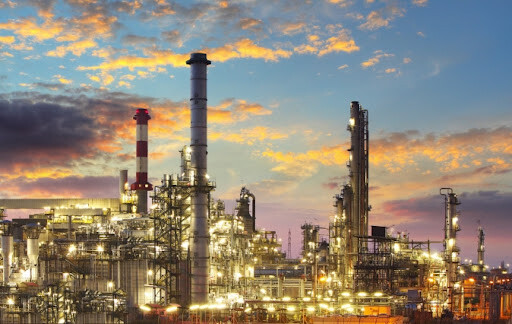
SEOUL—South Korea's petrochemical industry, burdened by an astonishing 32.8 trillion won ($24.6 billion) in bank loans as of the first half of this year, is now at a critical juncture. Faced with a dire need for restructuring, major players like Hanwha Solutions ($6.4 billion in debt), Lotte Chemical ($5.3 billion), S-OIL ($3.2 billion), and DL Chemical ($2.2 billion) are grappling with a downturn, prompting a dual-pronged support initiative from the government and their creditors.
The government's plan, centered around the Enterprise Vitality Enhancement Act, offers tax benefits and regulatory exemptions to companies that submit and receive approval for self-rescue plans. A key objective is to reduce the nation’s naphtha-cracking center (NCC) production capacity by 2.7 to 3.7 million tons this year. Meanwhile, creditors are stepping in to provide much-needed liquidity, offering a lifeline for firms struggling to manage immediate cash flow.
On September 30, a creditors' council will formalize a voluntary agreement to provide financial assistance, including loan maturity extensions and interest payment deferrals. This support is contingent upon companies submitting detailed management and financial restructuring plans, such as facility consolidation or the creation of joint ventures.
A Double-Edged Sword: Creditors' Demands and Industry Resistance
Despite the promise of support, the industry has reacted with dismay, calling the terms for aid "strict." Unlike a legal workout, this voluntary agreement provides more discretion for both parties and avoids the negative impact on a company's credit rating. However, the proposed support options are limited, focusing on extending loan maturities and deferring interest rather than more aggressive measures like debt write-offs or asset reclassification. New funds will only be provided with a super-majority vote from the creditors and under the condition that they are given priority lien rights.
A high-ranking industry official expressed concern that the rigorous conditions from both the government and creditors will make the restructuring process difficult. “It feels less like support and more like a test of endurance designed by the creditors,” the official said. “If the policy is only to assist healthy companies, it goes against the very purpose of restructuring.”
This sentiment highlights a growing disconnect between the industry's need for flexible, robust support and the cautious, stringent approach of financial institutions.
Restructuring Stalls While Government Seeks Alternatives
Even with the impending financial assistance, voluntary restructuring efforts within the industry have been slow. Despite calls from Minister of Trade, Industry and Energy Kim Jeong-kwan for quick action, major players in key petrochemical hubs—such as Yeosu, Daesan, and Ulsan—have struggled to finalize their plans. In Yeosu, a vertical integration with refinery GS Caltex is facing setbacks, while in Daesan, Lotte Chemical and HD Hyundai Oilbank are still negotiating adjustments to their joint venture.
In response to the industry's slow progress and mounting concerns, the government is exploring additional support mechanisms beyond the creditors' agreement. The Korea Development Bank (KDB) is expected to be a primary vehicle, offering a low-interest loan program worth 2 trillion won. This program, which provides a favorable interest rate, is designed for companies undergoing business and facility consolidation.
The government is also considering a separate support fund through policy financial institutions or utilizing the Corporate Restructuring Innovation Fund, managed by the Korea Asset Management Corporation (KAMCO), to help the beleaguered petrochemical sector get back on its feet. The coming weeks will be crucial as companies attempt to meet the strict criteria while navigating a complex and cautious support landscape.
[Copyright (c) Global Economic Times. All Rights Reserved.]