![[등록] 2026-09-01 15:48:31](/support/_updata/banner2/tl181982910_6749.png)


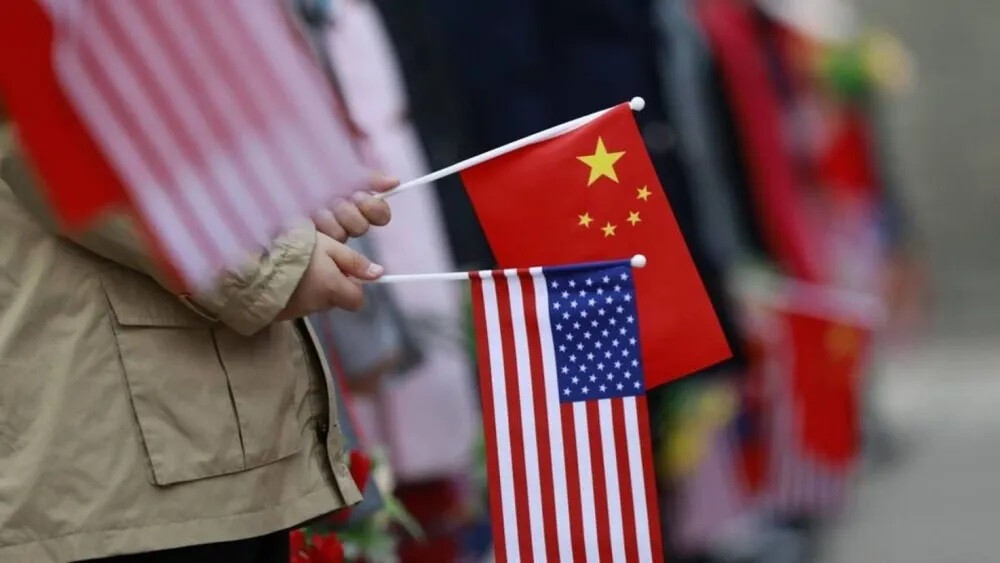
Antigua and Barbuda, Guatemala – The United States and China engaged in a sharp exchange of indirect accusations regarding the influence of external powers in Latin America during the Organization of American States (OAS) General Assembly. This vividly illustrates the escalating competition for regional dominance between the two nations in Latin America.
The clash occurred during discussions between the United States, an OAS member state, and China, a permanent observer. While the U.S. statements did not directly name China, their intent to curb China's expanding economic and political influence in the region was evident.
U.S. Warning: "Malign External Actors"
Michael Kozak, the U.S. Representative, without naming specific countries, emphasized that all observers funding the OAS must "respect the principles" of the Inter-American Democratic Charter. He stated firmly, "We will oppose any attempt by any member state or observer to use their contributions to undermine reform or weaken democracy in the Americas." This can be interpreted as expressing concern that China's massive investments could negatively impact the democratic governance of recipient countries.
Kozak further warned about "the persistent threat posed by malign external actors who seek to manipulate governance, migration, and information," claiming they aim to distort the OAS's historical priorities. He delivered a clear message targeting China, stating, "We know very well who is responsible for this confusion." This U.S. statement is seen as a direct warning regarding China's recent expansion of influence through increased infrastructure investment and economic cooperation with Latin American countries. The U.S. has consistently criticized China's investments, alleging a lack of transparency, potential debt traps, and even infringement on national sovereignty. They particularly argue that China's digital infrastructure investments pose risks of surveillance and data leakage, which could threaten U.S. national security.
China's Rebuttal: "Cooperation Without Hidden Agendas"
Prior to Kozak's remarks, Xie Feng, the Chinese Representative, defended his country's cooperation model, highlighting five programs announced by President Xi Jinping after the China-CELAC (Community of Latin American and Caribbean States) foreign ministers' meeting in May. He stressed that China seeks to build a "community with a promising future" with Latin American and Caribbean countries "without hidden agendas."
While Xie Feng did not directly mention the United States, he retorted, "We don't engage in geopolitical calculations. We don't attack third parties, and therefore, our cooperation should be free from external interference." This aims to emphasize that China's investments in Latin America are purely economic cooperation and not driven by intentions to counter specific countries or pursue geopolitical hegemony. China has made significant investments in the Latin American region through its 'Belt and Road Initiative,' primarily focusing on infrastructure development, energy, mining, and technology sectors. China asserts that these investments contribute to regional economic development and are mutually beneficial.
Panama Canal: A Symbolic Site of US-China Conflict
The tension between the two nations is also evident at the Panama Canal. One of the early actions of the former U.S. administration under Donald Trump was to pressure Panama to restrict the involvement of Chinese companies in port management and to withdraw from China's 'Belt and Road' Initiative. The Panama Canal holds immense strategic importance as a crucial chokepoint for global maritime trade. U.S. perception of Chinese corporate investment in canal and port infrastructure as a security and economic threat demonstrates that the rivalry between the two countries extends beyond mere diplomatic exchanges to a tangible competition for influence within the region.
Deepening US-China Competition in Latin America
The competition for influence between the United States and China in Latin America is expected to intensify. The U.S. is attempting to counter China's influence by presenting alternative development models through initiatives like 'Build Back Better World.' In contrast, China is striving to strengthen economic ties through the 'Belt and Road' and establish comprehensive strategic partnerships with Latin American countries.
This competition could present a dilemma for Latin American nations, forcing them to choose sides. On one hand, China's substantial investments can contribute to much-needed infrastructure development and economic growth. On the other hand, they must consider U.S. pressure and potential issues arising from deepening ties with China. It is increasingly imperative for each country to pursue balanced diplomatic strategies between the U.S. and China, prioritizing their national interests.
The clash at this OAS General Assembly indicates that the U.S.-China strategic competition is becoming more pronounced in the critical geopolitical arena of Latin America. This is expected to significantly impact the future political and economic landscape of the Americas.
[Copyright (c) Global Economic Times. All Rights Reserved.]