![[등록] 2026-09-01 15:48:31](/support/_updata/banner2/tl181982910_6749.png)


(C) PBS
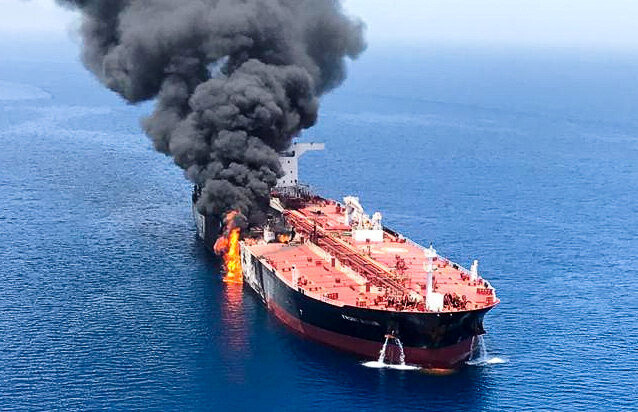
SEOUL — The global energy and financial sectors are bracing for a massive seismic shift as geopolitical tensions in the Middle East escalate into a full-scale maritime crisis. With the Strait of Hormuz effectively paralyzed following military confrontations between the U.S., Israel, and Iran, analysts warn that Brent crude could soon soar past $130 per barrel, triggering a domino effect across international stock markets and central bank policies.
The Chokehold on Global Energy
The Strait of Hormuz is the world’s most critical oil artery, accounting for approximately 20% to 30% of global seaborne petroleum liquids. Following a military exercise and subsequent blockade by the Islamic Revolutionary Guard Corps (IRGC) on February 28, vessel traffic through the passage has plummeted by a staggering 70%.
"The immediate evaporation of liquidity in the physical oil market is unprecedented," noted Dimitris Ampatzidis, an analyst at MarineTraffic. While Brent crude had already climbed 20% this year due to rising tensions, closing at $72.48 on February 27, the blockade has pushed forecasts into uncharted territory. JPMorgan warns that a total, prolonged shutdown could drive prices to the $120–$130 range.
In a pre-emptive strike against supply shortages, OPEC+ (V8) announced an emergency production hike of 206,000 barrels per day starting in April—surpassing the market expectation of 137,000. However, experts remain skeptical that increased production can offset the logistical nightmare of a closed Hormuz.
Inflationary Pressures and the Fed’s Dilemma
The surge in energy costs arrives at a delicate moment for the U.S. Federal Reserve. William Jackson, Chief Emerging Markets Economist at Capital Economics, estimates that a $100+ oil environment could add 0.6 to 0.7 percentage points to global inflation.
This "inflation tax" complicates the Fed's planned pivot to lower interest rates. While safe-haven demand initially pushed the 10-year Treasury yield down to 3.97%, the long-term outlook is clouded. If high energy prices become entrenched, the Fed may be forced to delay rate cuts to combat persistent CPI growth, potentially leading to a "stagflationary" drag on the economy.
Stock Market: Volatility vs. Resilience
Despite the grim headlines, history suggests that equity markets often possess a "war-hardened" resilience. Analysis of the four previous Arab-Israeli conflicts shows that while the S&P 500 typically dips during the onset of hostilities (averaging a 4.0% decline), it tends to recover within a month, posting an average gain of 2.5% regardless of whether the conflict has officially ended.
"The shock value of geopolitical conflict tends to diminish over time as the market prices in the 'new normal'," said Han Ji-young, a strategist at Kiwoom Securities.
In South Korea, the impact might be even more buffered. With a massive "dry powder" reserve of 120 trillion won in investor deposit accounts, retail investors are expected to engage in aggressive "buy the dip" strategies, viewing the geopolitical correction as a long-term entry point.
[Copyright (c) Global Economic Times. All Rights Reserved.]