![[등록] 2026-09-01 15:48:31](/support/_updata/banner2/tl181982910_6749.png)


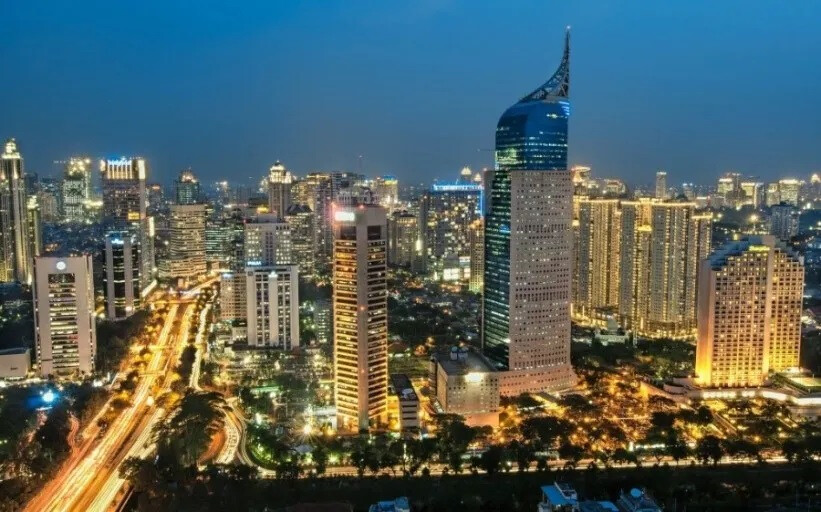
Jakarta, Indonesia – May 16, 2025 – Amidst global political uncertainties, including tariff wars between the United States and China, ongoing conflicts in Ukraine and Gaza, and a de-escalation of tensions between India and Pakistan after days of attacks and counterattacks, Indonesia has two clear objectives concerning international trade: strengthening food security and securing energy sources. In this context, Indonesia, a nation of 280 million people, is looking to Mercosur as a potentially significant trade partner.
This strategic shift was directly communicated by Umar Hadi, Director for Central and South America and Europe at the Indonesian Ministry of Foreign Affairs, to South American journalists invited by the Indonesian government to Jakarta recently. Director Hadi emphasized the current international situation's complexity and unpredictability, which threatens the nation's economic stability, underscoring the urgent need to forge new trade partnerships.
ASEAN's Major Economy, Indonesia, Turns Eyes to South America
Jakarta, Indonesia's capital with over 10 million inhabitants, boasts the second-largest economy in the Association of Southeast Asian Nations (ASEAN) after Singapore. Leveraging this economic influence, Indonesia aims to expand its global reach beyond Southeast Asia.
Already last year, Indonesia expressed interest in importing Paraguayan beef, and Indonesian diplomats have reiterated that Paraguay could become an important future partner in the food and energy sectors. One of the current goals of the Indonesian Ministry of Foreign Affairs is to re-engage in dialogue with the entire Mercosur bloc to advance a trade agreement.
In the past, Brazil had expressed the most concerns about implementing an agreement with this Asian economic giant, particularly due to the potential impact on Brazil's market from textiles and footwear products, which are two significant pillars of Indonesian industry. However, the situation appears to have changed.
Umar Hadi stated, "In principle, negotiations with Mercosur are progressing smoothly. We need to conduct the first round, but before that, we have already signed a goods trade agreement with Peru, and currently, we are negotiating a services trade agreement with Peru. So, Mercosur will be next."
He further expressed a strong desire to resume negotiations with Mercosur, saying, "I think at some point, Mercosur countries were very busy with negotiations with the European Union, but now that those negotiations are over, I think we can start negotiations soon. I hope we can start negotiations very soon."
Obstacles to Trade Expansion and Ways to Overcome Them
When questioned about obstacles to advancing negotiations with Mercosur, Director Hadi acknowledged that Indonesia possesses very strong domestic industries in the textile and footwear sectors. However, he noted, "That doesn't mean we cannot trade in those items. That's what negotiations are for." This indicates a willingness to find solutions through mutually beneficial negotiations, rather than adopting a protectionist stance.
He explained that Indonesia faces a trade deficit of approximately $4 billion in bilateral trade with Brazil, primarily due to Indonesia's imports of sugar, sugarcane, soybeans, and general foodstuffs from Brazil. In this context, a trade agreement with Mercosur is expected to significantly contribute to strengthening Indonesia's food security.
In any case, the Indonesian government views Mercosur as a "single entity" and has made it clear that it intends to negotiate with the entire bloc, not with individual countries. This demonstrates Indonesia's recognition of Mercosur's cohesion and its commitment to prioritizing relations with the bloc as a whole.
Another significant challenge for trade with South America is connectivity and logistics. Currently, traveling from South America to Indonesia typically involves multiple layovers, resulting in nearly 30 hours of total flight time. However, the Indonesian government considers this a temporary issue.
Director Hadi commented on this, saying, "Even 20 years ago, many people said that logistics for exporting to Europe or even China were very difficult. But now, considering the ease of air and sea transportation, I think this will no longer be a problem (for trade between Indonesia and Central/South America) very soon," offering an optimistic outlook that the development of logistics infrastructure will facilitate trade between the two regions in the long run.
Collaboration with Mercosur, Indonesia's Strategic Choice
Indonesia's primary trade partner is currently China, followed by other Southeast Asian nations. In this context, the increased interest in Mercosur can be interpreted as a strategic move by Indonesia to diversify its economy and ensure supply chain stability amidst the rapidly changing international landscape.
Mercosur, a major South American economic bloc comprising Brazil, Argentina, Uruguay, and Paraguay as full members, possesses a vast market and abundant natural resources. It is particularly rich in food and energy resources, aligning well with Indonesia's objectives. Indonesia hopes to diversify its export markets for key agricultural products and natural resources such as palm oil, rubber, coffee, and cocoa through a trade agreement with Mercosur, while simultaneously securing a stable supply of food and energy resources from the bloc.
This move is notable not only for its economic benefits but also for its potential to strengthen South-South Cooperation between Asia and South America and promote the multipolarization of the global economic order. If a trade agreement between the two regions is successfully concluded, it could lead to cooperation in various fields beyond mere commodity trade, including technology exchange, investment expansion, and cultural exchange.
The progress of trade negotiations between Indonesia and Mercosur is expected to be a significant milestone in shaping the new landscape of international trade in the future.
[Copyright (c) Global Economic Times. All Rights Reserved.]