![[등록] 2026-09-01 15:48:31](/support/_updata/banner2/tl181982910_6749.png)


(C) Guandong News
SEOUL – A chilling wind is blowing through Korea’s high-tech corridors. A comprehensive report released on February 24, 2026, by the Korea Institute for Industrial Economics and Trade (KIET) reveals a stark reality: China has effectively overtaken South Korea in nearly all key "future growth engines," including robotics, electric vehicles (EVs), batteries, and autonomous driving.
The report, titled "Analysis of Korea-China Competitiveness in Cutting-edge Industries and Policy Directions," is based on extensive expert surveys and Focused Group Interviews (FGI). It paints a picture of a China that is no longer a "follower" but a dominant leader in the global tech ecosystem.
The Rise of the Machines: Robotics and Humanoids
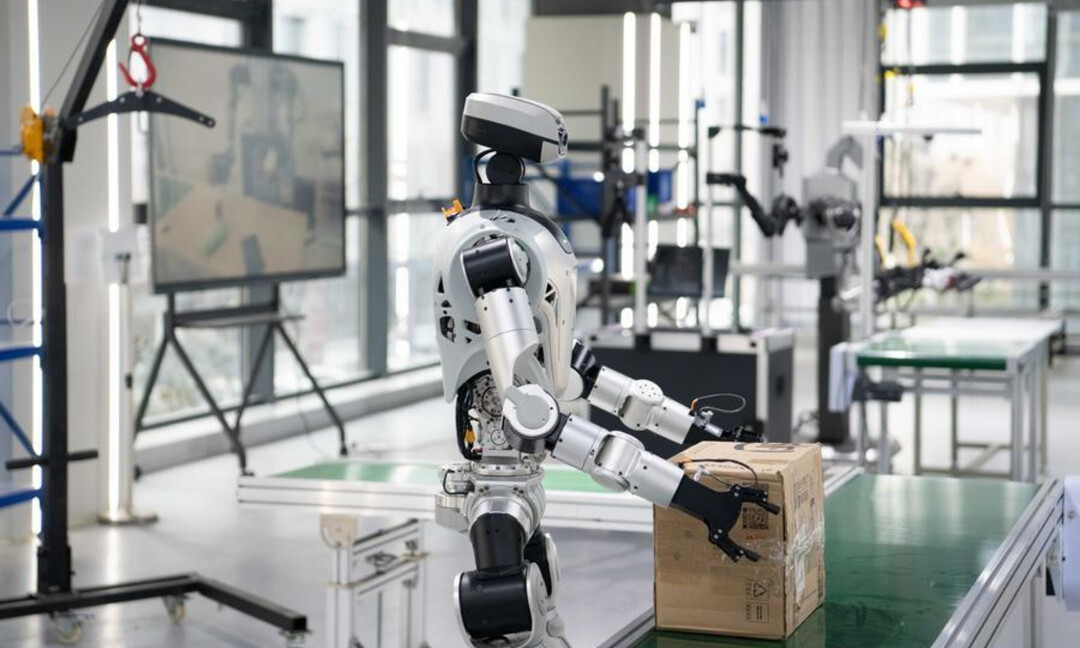
The gap was most visible at the recent CES 2026 in Las Vegas. While global crowds once flocked to Korean booths, the spotlight has shifted to Chinese firms like Unitree and Engine AI. Their humanoid robots—capable of backflips, sparring with humans, and engaging in complex dialogue—demonstrated that China has moved beyond mere manufacturing into advanced AI integration.
According to KIET, while Korea maintains a razor-thin lead in fundamental R&D and design for industrial robots, China has seized the upper hand in supply chain procurement, production, and global market creation. "China’s aggressive state-led support has pushed humanoid robots into the commercialization stage," the report notes, adding that Chinese service robots for cleaning, serving, and logistics already dominate the global market.
EVs and Batteries: A Strategic Shift
The battle for the road is also tilting in Beijing's favor. While Korea still holds a slight edge in after-sales service and global marketing, China leads in almost every other segment of the EV value chain. The synergy between China's massive internal market and its total control over the battery supply chain has created a formidable barrier.
In the realm of autonomous driving, the verdict was even more definitive. Experts agree that China’s lead is "clear and overwhelming," fueled by vast troves of real-world testing data, superior AI algorithms, and a robust software ecosystem that Korea currently struggles to match.
The Semiconductor Paradox
Perhaps most surprising is the shift in semiconductors. While Korea remains the undisputed king of Memory Chips, China has carved out a superior position in Non-memory (System) Semiconductors. From AI chip architecture to sophisticated semiconductor design platforms, Chinese firms are increasingly outperforming their Korean counterparts in innovation and agility.
Strategic Recommendations: Beyond Competition
How should Seoul respond? Park Sang-su, a senior researcher at KIET, suggests a paradigm shift. "Since 2015, the Chinese government has provided surgical, goal-oriented support for every link in the value chain," Park stated. "Korea must now move beyond viewing China as a mere rival to be overtaken."
The report outlines three critical strategic pillars:
Specialized Strategy: Identify niche, "Korea-only" specialized technologies where Korea can maintain a unique edge.
Strategic Collaboration: Acknowledge China as a manufacturing powerhouse and find ways to integrate Korean tech into China's massive domestic demand.
Real-world Verification: Scale up government-led "demonstration and distribution" projects to allow Korean robots and AI to be tested in real-world environments, bridging the gap between labs and markets.
As the tech landscape shifts, the KIET report serves as a wake-up call. The era of Korean technological hegemony in the East is being challenged, requiring a total overhaul of national industrial policy to ensure survival in a China-centric tech era.
[Copyright (c) Global Economic Times. All Rights Reserved.]