![[등록] 2026-09-01 15:48:31](/support/_updata/banner2/tl181982910_6749.png)


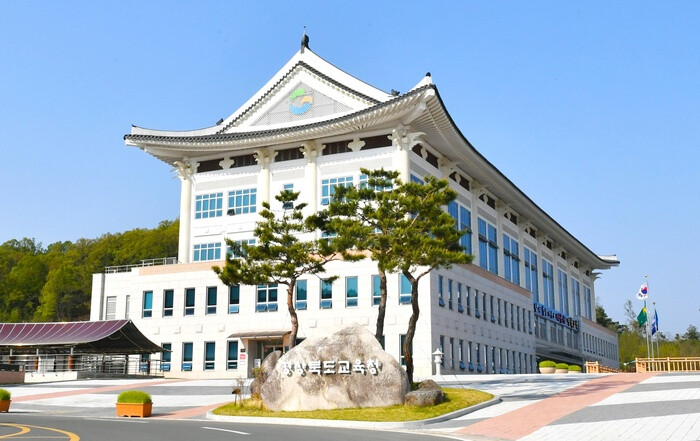
(C) Gyeongbuk Provincial Office of Education
Gyeongbuk Province, South Korea — An investigation has been launched by the Gyeongbuk Provincial Office of Education after it was discovered that School Development Funds (학교발전기금), ostensibly donated by teachers at a private high school (referred to as 'A High School'), were deposited directly into the personal bank account of the principal. The funds, collected monthly via a compulsory deduction from teachers' salaries, have raised serious questions regarding their management, transparency, and the potentially coercive nature of the "donations."
Compulsory 'Donations' and Mismanagement
According to a report by the Kyunghyang Shinmun, approximately 30 teachers at A High School were subjected to a monthly deduction of 30,000 Korean won (approximately $22.50 USD) from their salaries as a mandatory contribution to the school development fund. This practice of blanket, timed deductions suggests the contributions were less of a voluntary donation and more of a compulsory levy.
The core of the controversy lies in the destination of these funds. Under South Korea's Elementary and Secondary Education Act (초·중등교육법), school development funds must be managed with strict transparency. They are required to be deposited into a designated School Development Fund Account, handled as a separate special account, and expenditures must follow rigorous documentation and settlement procedures. However, the collected money was funneled into the personal bank account of Principal B, completely bypassing the legally mandated accounting and auditing processes.
Questionable Usage and Coercion Allegations
School officials defended the practice, stating the use of a general account was for convenience to avoid the extensive paperwork associated with the special account. They claimed the funds were used for essential school activities, such as purchasing a school shuttle bus, providing scholarships, and covering student recruitment expenses.
The issue of student recruitment is particularly sensitive in Gyeongbuk Province. The area largely operates under a non-standardized admission system, and with the national decline in the student-age population, many high schools struggle to meet their enrollment quotas. An insider suggested that the funds were used to cover promotion and hospitality costs incurred while recruiting students, expenses that are often not adequately covered by official operational budgets.
Despite the school's assertion that the donations were voluntary, the compulsory deduction from all teachers' salaries and the opaque management structure have led to allegations of coercion. Given the hierarchical nature of private schools, teachers often feel unable to challenge administrative policies, leading to internal dissent over why they must personally subsidize student recruitment efforts. Some teachers reportedly were not even aware the money was going into the principal's private account.
Educational Authorities Launch Audit, Face Limitations
The Gyeongbuk Provincial Office of Education has launched an audit to investigate the fund's collection process, usage, and accounting practices. However, the investigation faces a significant hurdle: limitations on investigating personal bank accounts. Unlike a police investigation, the educational audit lacks the authority to compel access to the principal's private financial records, making it reliant on witness testimony and school documentation.
A representative from the Gyeongbuk Education Solidarity pointed out the severity of the violation, suggesting that the lack of proper accounting makes it difficult to rule out the possibility of personal embezzlement. The irregularities surrounding the mandatory collection and improper management of public-purpose funds represent a serious breach of financial regulations and public trust within the education sector.
The outcome of the audit is eagerly awaited, but for now, the incident highlights a critical need for tighter financial oversight and transparency in the management of private school development funds across the region.
[Copyright (c) Global Economic Times. All Rights Reserved.]