• 2026.03.22 (Sun)
  • All articles
  • LOGIN
  • JOIN
Global Economic Times
fashionrunwayshow2026
  • Synthesis
  • World
  • Business
  • Industry
  • ICT
  • Distribution Economy
  • Well+Being
  • Travel
  • Eco-News
  • Education
  • Korean Wave News
  • Opinion
  • Arts&Culture
  • Sports
  • People & Life
    • International Student Report
    • With Ambassador
  • Column
    • Cho Kijo Column
    • Cherry Garden Story
    • Ko Yong-chul Column
    • Kim Seul-Ong Column
    • Lee Yeon-sil Column
  • Photo News
  • New Book Guide
MENU
 
Home > World

Iran’s ‘Swarm’ of Camouflaged Suicide Drones Sparks Terror in Strait of Hormuz

Ana Fernanda Reporter / Updated : 2026-03-15 08:04:35
  • -
  • +
  • Print


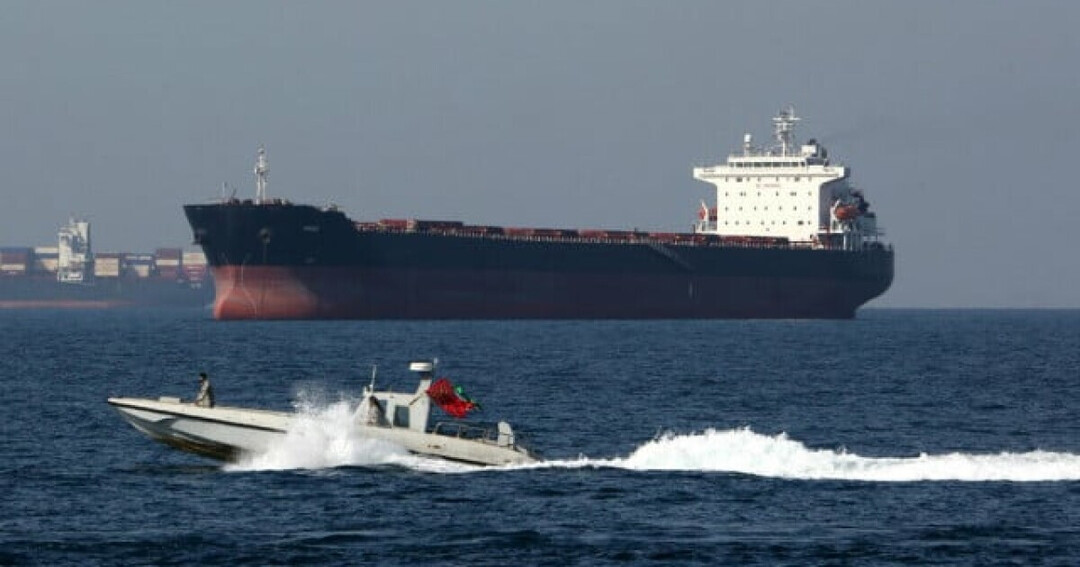
MANAMA, Bahrain — The Strait of Hormuz, the world’s most vital artery for crude oil, has become the frontline of a sophisticated "hybrid war." Recent intelligence and maritime reports suggest that Iran’s Islamic Revolutionary Guard Corps (IRGC) is increasingly deploying swarms of explosive-laden unmanned surface vessels (USVs), camouflaged as ordinary fishing boats, to paralyze global energy shipments.

A New Era of Hybrid Maritime Warfare
Military analysts and drone technology experts warn that the maritime security landscape has shifted. Cameron Chell, CEO of Draganfly, noted in a recent interview that Iran is utilizing remote-controlled suicide boats to execute high-precision strikes. This "swarm" tactic involves dozens of small, high-speed craft overwhelming the defenses of massive oil tankers.

This assessment follows a string of confirmed attacks. On March 1, the United Kingdom Maritime Trade Operations (UKMTO) confirmed that a Marshall Islands-flagged tanker was struck by an Iranian drone boat near the coast of Oman. This was followed by another alarming incident on March 11, where two tankers in the Persian Gulf were reportedly targeted by remote-controlled vessels suspected to be of Iranian origin.

Sophisticated Tactics: Encryption and Autonomy
According to Chell, the IRGC likely employs encrypted radio communications to manage these fleets. The technology allows a single operator to control multiple USVs simultaneously or enables the vessels to navigate autonomously toward pre-programmed targets.

The geography of the Strait of Hormuz—narrow, cluttered with civilian traffic, and lined with jagged coastlines—provides the perfect cover for these operations. By disguising lethal assets as harmless fishing trawlers, Iran makes it nearly impossible for international naval forces to distinguish between a civilian vessel and a suicide drone until it is too late.

"While the U.S. military possesses advanced electronic warfare and tracking capabilities, detecting every single explosive-laden boat moving along the coastline is an immense challenge," Chell stated.

Strategic Leverage Over Global Energy
Iran’s shift toward guerrilla-style maritime warfare is seen as a strategic response to its relative conventional military inferiority. By threatening a waterway that carries approximately 20% of the world's oil supply, Tehran aims to exert maximum pressure on the global economy and the United States.

Beyond suicide boats, the IRGC continues to utilize:

-Sea Mines: Recent U.S. intelligence suggests Iran is now using smaller, more discreet vessels to lay mines after losing larger minelaying ships.
-Anti-Ship Missiles: Shore-based batteries capable of targeting both merchant ships and naval escorts.
-Aerial Drones: Used for both surveillance and kinetic strikes.

Escalation and U.S. Response
The tension recently reached a breaking point in the Arabian Sea. Reports indicate that U.S. forces aboard the USS Abraham Lincoln aircraft carrier were forced to open fire on an Iranian vessel that approached at a threatening distance. Following initial warning shots from deck guns, a U.S. helicopter was scrambled, firing two Hellfire missiles to neutralize the craft.

As the "shadow war" at sea transitions into a more visible and violent conflict, the international community remains on high alert. The continued use of deceptive, unmanned technology suggests that the battle for the Strait of Hormuz will no longer be fought between massive warships alone, but in the chaotic, gray zones of hybrid warfare.

[Copyright (c) Global Economic Times. All Rights Reserved.]

  • #globaleconomictimes
  • #micorea
  • #mykorea
  • #nammidonganews
  • #singaporenewsk
  • #Samsung
  • #Daewoo
  • #Hyosung
  • #Apple
  • #korea
Ana Fernanda Reporter

Popular articles

  • Tehran on the Brink: Scenarios of a U.S. Strike and the Looming Global Fallout

  • Google Unveils ‘Nano Banana 2’: Pro-Level Image AI Now Free for All

  • Samsung Display Resumes Development of Next-Gen 'QNED' Technology

I like it
Share
  • Facebook
  • X
  • Kakaotalk
  • LINE
  • BAND
  • NAVER
  • https://www.globaleconomictimes.kr/article/1065567771892515 Copy URL copied.
Comments >

Comments 0

Weekly Hot Issue

  • Appellate Court Begins Review of Kakao Founder’s Acquittal in SM Entertainment Stock Rigging Case
  • AI Supercycle Propels Global Semiconductor Market Toward $1 Trillion Milestone
  • Naver Suspends Election Comments to Combat Cyberbullying and Misinformation Ahead of June Polls
  • Lotte Town Myeongdong Lights Up with 'Welcome Light' to Greet Global K-Pop Fans
  • K-Beauty SMEs Join Forces with Distributors: A New Paradigm for Global Expansion through Strategic Consortiums
  • BMW ‘The New i3’ Next-Gen EV: 900km Range 

Most Viewed

1
An Open Letter to BTS On the Eve of a Historic Performance
2
From Industrial Capital to Tourism Mecca... Ulsan Makes a Bold Move with ‘Experiential Content’ in 2026
3
Ko Sang-goo, President of World Federation of Korean Associations, Elected as First Private Sector Chair of World Korean Community Leaders Convention
4
It is Time for BTS’s Fandom, ARMY, to Step Forward
5
Korean Stock Market Plunges: Circuit Breaker and Sidecar Triggered Amid Geopolitical Crisis
광고문의
임시1
임시3
임시2

Hot Issue

Netflix Declares BTS Comeback Live “ARIRANG” as the Year’s Biggest Global Event

AI Medical Ecosystem in Focus: KIMES 2026 Opens in Seoul as Global Healthcare Hub

Netanyahu Declares Decisive Blow to Iran’s Nuclear and Missile Programs, Signals Early End to War

Intel Announces 10% Price Hike on CPUs: PC Manufacturers Bracing for Massive Production Cost Spikes

Let’s recycle the old blankets in Jeju Island’s closet instead of incinerating them.

Global Economic Times
korocamia@naver.com
CEO : LEE YEON-SIL
Publisher : KO YONG-CHUL
Registration number : Seoul, A55681
Registration Date : 2024-10-24
Youth Protection Manager: KO YONG-CHUL
Singapore Headquarters
5A Woodlands Road #11-34 The Tennery. S'677728
Korean Branch
Phone : +82(0)10 4724 5264
#304, 6 Nonhyeon-ro 111-gil, Gangnam-gu, Seoul
Copyright © Global Economic Times All Rights Reserved
  • 에이펙2025
  • APEC2025가이드북TV
  • 독도는우리땅
Search
Category
  • All articles
  • Synthesis
  • World
  • Business
  • Industry
  • ICT
  • Distribution Economy
  • Well+Being
  • Travel
  • Eco-News
  • Education
  • Korean Wave News
  • Opinion
  • Arts&Culture
  • Sports
  • People & Life 
    • 전체
    • International Student Report
    • With Ambassador
  • Column 
    • 전체
    • Cho Kijo Column
    • Cherry Garden Story
    • Ko Yong-chul Column
    • Kim Seul-Ong Column
    • Lee Yeon-sil Column
  • Photo News
  • New Book Guide
  • Multicultural News
  • Jobs & Workers