• 2026.11.11 (Wed)
  • All articles
  • LOGIN
  • JOIN
Global Economic Times
[등록] 2026-09-01 15:48:31
  • Synthesis
  • World
  • Business
  • Industry
  • ICT
  • Distribution Economy
  • Well+Being
    • Pet Life
    • Halal Horizon
  • Travel
  • Eco-News
  • Education
  • Korean Wave News
  • Opinion
  • Arts&Culture
  • Sports
  • People & Life
    • International Student Report
    • With Ambassador
  • Column
    • Cho Kijo Column
    • Cherry Garden Story
    • Ko Yong-chul Column
    • Kim Bong-seon's Photo Column
    • Kim Seul-Ong Column
    • Lee Yeon-sil Column
  • Photo News
  • New Book Guide
MENU
 
Home > World

Trump's Deliberation: To Strike or Not to Strike Iran's Nuclear Facilities

Eugenio Rodolfo Sanabria Reporter / Updated : 2025-06-20 08:30:33
  • -
  • +
  • Print

Washington D.C.  – In a high-stakes geopolitical drama, U.S. President Donald Trump has indicated a military strike on Iran's nuclear facilities is an option, stating he "could, or could not" proceed. This declaration, made at the White House, serves as a clear warning to Tehran, signaling Washington's readiness for immediate action while also weighing the profound implications of such a move. Currently, U.S. forces are reportedly poised, awaiting the President's final command.

President Trump emphasized his disinclination for conflict, but quickly added, "If it's a choice between a fight and Iran having a nuclear weapon, I'll do what has to be done." When questioned about the potential for the Iranian regime's collapse, he responded, "Of course. Anything can happen." He asserted that his "patience has run out" with Iran, indicating a "final ultimatum" has been issued.

Despite the aggressive rhetoric, Trump has not entirely ruled out negotiations with Iran. He expressed a desire to make a "final decision at the last second," acknowledging the fluidity of war. This comes after a Wall Street Journal report claimed Trump had approved an attack plan the previous day but held off on the final order, opting to observe if Iran would abandon its nuclear weapons development.

 
Escalation and Retaliation in the Region

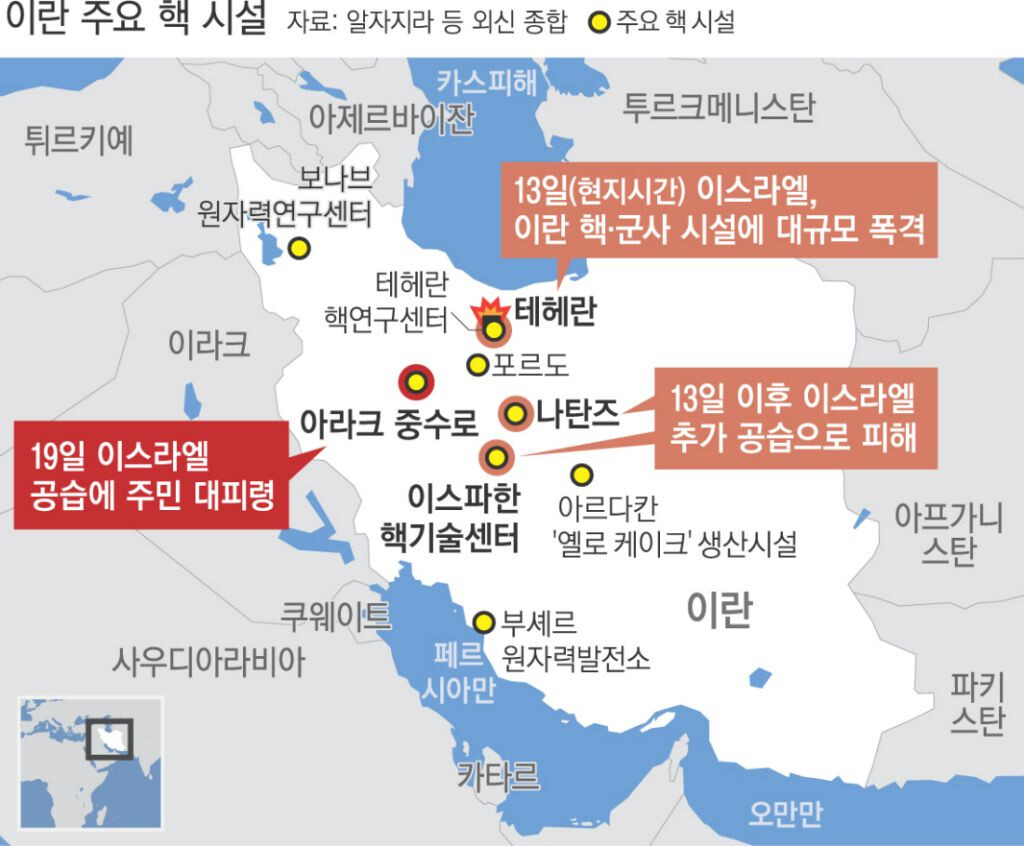
While the U.S. deliberates, Israel has intensified its actions. Despite warnings from the International Atomic Energy Agency (IAEA), the Israeli military reportedly conducted an airstrike on Iran's Arak heavy water reactor nuclear facility this morning. Fortunately, the facility was already empty, preventing any radioactive leakage. Iran retaliated swiftly, launching over 20 missiles towards Israel. Agence France-Presse reported intense explosions in Tel Aviv and Jerusalem, with hospitals in southern Israel reportedly sustaining damage.

 
The Crossroads: Bunker Busters or Diplomacy

President Trump finds himself at a critical juncture, torn between military intervention with "bunker buster" bombs and diplomatic engagement. A final decision is expected within days, with Bloomberg, citing sources, suggesting a potential U.S. military intervention could occur as early as this weekend.

 
Doubts and Dire Consequences

Trump's hesitation stems from the immense potential costs of an attack and a lack of certainty regarding the effectiveness of bunker busters in completely neutralizing Iran's Fordow nuclear facility. The Guardian reported that some within the U.S. Department of Defense believe bunker busters might be insufficient, with tactical nuclear weapons being the only means to completely destroy Fordow. Iran has threatened "retaliation wherever there are necessary targets" should the U.S. attack, raising concerns not only of strikes against U.S. military personnel but also potential terror attacks against American civilians. Elly Geranmayeh of the European Council on Foreign Relations (ECFR) warned CNN that a U.S. attack on Iran would "open a Pandora's Box," potentially consuming the remainder of Trump's presidency in conflict.

Conversely, some analysts suggest that an attack might only reinforce Iran's resolve to acquire nuclear weapons. Gary Samore, former White House Coordinator for Arms Control and Weapons of Mass Destruction during the Obama administration, told The New York Times that if the Fordow facility remains intact after this conflict, "it won't be long before this war starts again." The strategic implications for regional stability, global oil markets, and the broader international non-proliferation regime are profound, making Trump's impending decision one of the most critical of his presidency.


[Copyright (c) Global Economic Times. All Rights Reserved.]

  • #NATO
  • #OTAN
  • #OECD
  • #G20
  • #globaleconomictimes
  • #Korea
  • #UNPEACEKOR
  • #micorea
  • #mykorea
  • #UN
  • #UNESCO
  • #nammidonganews
  • #sin
Eugenio Rodolfo Sanabria Reporter

Popular articles

  • Nearly 900 Schools Temporarily Closed as 'Flu' Epidemic Sweeps Japan

  • AI Companies Rush to Go Public, But Face Sudden Brakes Amid Cooling Investor Sentiment

  • Singapore and Brunei Sign Landmark MOU on Mutual Recognition of Halal Certificates

I like it
Share
  • Facebook
  • X
  • Kakaotalk
  • LINE
  • BAND
  • NAVER
  • https://www.globaleconomictimes.kr/article/1065569390604400 Copy URL copied.
Comments >

Comments 0

Weekly Hot Issue

  • Hyundai Motor Deepens Tech Alliances with Samsung and Nvidia to Pioneer the Physical AI Era
  • G마켓 Expands Beyond Search: E-Commerce Giant Taps Creators for SNS Shopping
  • JTBC Initiates Formal Sale Process to Find a Strategic Buyer
  • Miky Lee Honored with Asian Hall of Fame’s Centennial Medal for Pioneering Global K-Culture
  • The Harsh Reality of K-Pop: Why Small Agency Idols Struggle to Survive Beyond Three Years
  • Regional Tourism in South Korea Struggles as Infrastructure Lags Behind Inbound Airport Growth

Most Viewed

1
US Army Conducts Rare Temporary Burial Drills to Prepare for Worst-Case Large-Scale War Scenarios
2
World Citizens are Flying Directly to Busan... The Era of 4 Million Foreigners is Just Around the Corner
3
South Korea and Ethiopia Sign Trilateral MOU to Introduce Liquid-Based Cytology (LBC) Technology for Cervical Cancer Diagnosis
4
Eating 100g of Baechu Kimchi Daily Linked to Lower High-Cholesterol Risks
5
From Kim Whanki to Pokémon Cards... Seoul Auction Opens the Floodgates
체리가든 스토리
nutri huevos
로타리
동포저널

Hot Issue

LG Electronics and Skyscanner Partner to Bring Smart Travel Planning to Living Rooms

Regional Tourism in South Korea Struggles as Infrastructure Lags Behind Inbound Airport Growth

Miky Lee Honored with Asian Hall of Fame’s Centennial Medal for Pioneering Global K-Culture

Fashion Runway Show 2026

Let’s recycle the old blankets in Jeju Island’s closet instead of incinerating them.

Global Economic Times
korocamia@naver.com
CEO : LEE YEON-SIL
Publisher : KO YONG-CHUL
Registration number : Seoul, A55681
Registration Date : 2024-10-24
Youth Protection Manager: KO YONG-CHUL
Singapore Headquarters
5A Woodlands Road #11-34 The Tennery. S'677728
Korean Branch
Phone : +82(0)10 4724 5264
#304, 6 Nonhyeon-ro 111-gil, Gangnam-gu, Seoul
Copyright © Global Economic Times All Rights Reserved
  • News K
  • 반달곰 프로젝트
  • 광고문의
Search
Category
  • All articles
  • Synthesis
  • World
  • Business
  • Industry
  • ICT
  • Distribution Economy
  • Well+Being 
    • 전체
    • Pet Life
    • Halal Horizon
  • Travel
  • Eco-News
  • Education
  • Korean Wave News
  • Opinion
  • Arts&Culture
  • Sports
  • People & Life 
    • 전체
    • International Student Report
    • With Ambassador
  • Column 
    • 전체
    • Cho Kijo Column
    • Cherry Garden Story
    • Ko Yong-chul Column
    • Kim Bong-seon's Photo Column
    • Kim Seul-Ong Column
    • Lee Yeon-sil Column
  • Photo News
  • New Book Guide
  • Overseas Koreans
  • Multicultural News