![[등록] 2026-09-01 15:48:31](/support/_updata/banner2/tl181982910_6749.png)


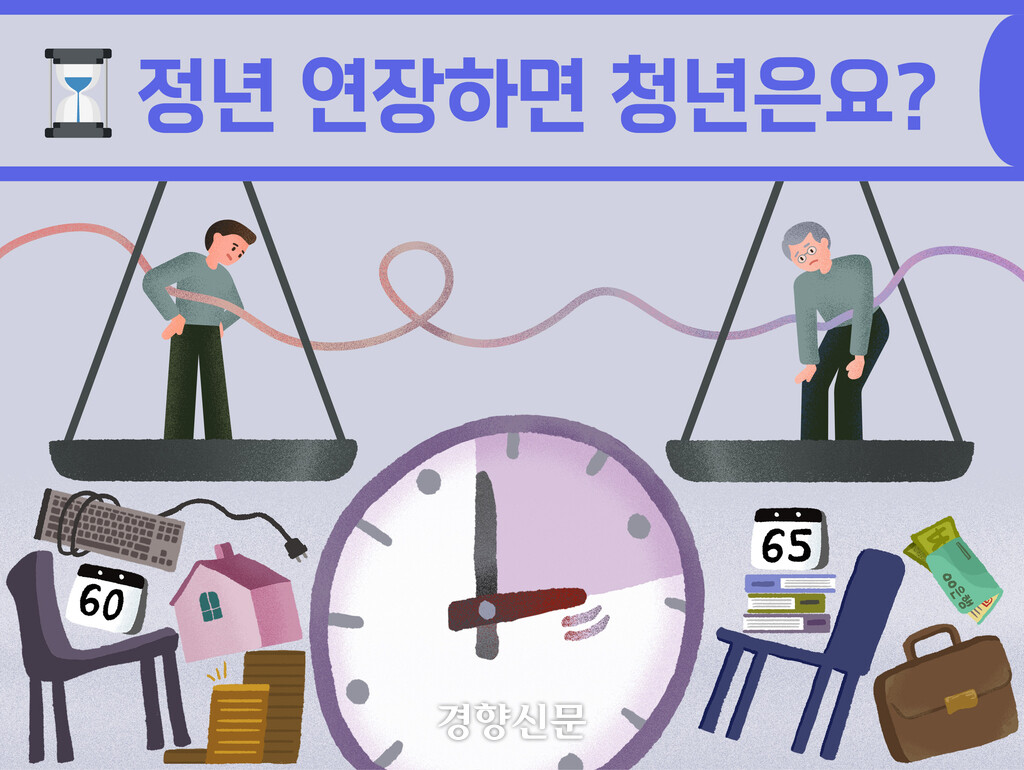
SEOUL, South Korea – As the extension of the retirement age and the four-and-a-half-day workweek emerged as hot-button labor issues in the 21st presidential election, the backlash from young people concerned about job security has grown fierce. A particularly notable aspect of this phenomenon is the deepening conflict within the MZ generation itself, with opinions sharply divided based on employment type—whether in public enterprises, private companies, or as freelancers.
On May 26, according to labor circles, the 'Saerogochim Labor Council' (literally, "Refresh Labor Council"), widely known as an MZ generation labor union alliance, faced a mass exodus of its member unions after it publicly called for a postponement of the retirement age extension legislation. To date, six unions have announced their withdrawal: LG Electronics Human-Centered Office Workers' Union, Samsung Display Open Labor Union, LS Electric Office Workers' Union, Kumho Tire Office Workers' Union, LG Uplus Labor Union, and Bbodeuk Production Workers' Union.
Baek Jae-ha, chairman of the LS Electric Office Workers' Union, told Maeil Business Newspaper that "the six unions that withdrew are all affiliated with private companies." He explained, "Regarding the retirement age extension, which has sharply divided opinions, we decided to withdraw because the Saerogochim Council announced its opposition without a process of gathering consensus through debate."
Divergent Views: Public vs. Private Sector
Baek emphasized that public enterprises/institutions and private companies inevitably have different stances on this issue. Song Si-young, the interim chairman of the Saerogochim Council, who officially called for the postponement of the retirement age legislation, is himself affiliated with the Seoul Metro. Baek argued, "If the retirement age is extended, the older, vested-interest labor unions working in public enterprises will monopolize more positions." He added, "Since public enterprises operate on a seniority-based pay system, extending the retirement age will definitely lead to a decrease in youth employment."
In contrast, Baek noted, "Private companies already implement a wage peak system, so even if the retirement age is extended, its impact on youth employment is minor." He further contended, "The lack of recruitment in private companies is a structural issue unrelated to the retirement age, such as the emergence of large language models (LLMs)." This perspective highlights the differing operational structures and labor market dynamics between the public and private sectors in Korea. Public institutions, often characterized by rigid seniority systems and stable job security, are perceived by some as exacerbating the youth unemployment problem when older workers retain their positions longer. Private companies, however, face different pressures, including technological advancements and global competition, which influence their hiring decisions.
Freelancers' Frustration and Broader Implications
Young people working as freelancers outside traditional corporate structures are also expressing significant frustration over the proposed retirement age extension. Kim Min-jung, a former HR professional who now works as a freelancer, lamented, "Even as a freelancer, I don't want to be one forever." She added, "If the retirement age is extended, it will become even harder for freelancers to enter the formal system." Kim also pointed out, "I was born in 1995, and there are still so many friends around me who haven't found jobs yet." She suggested, "Wouldn't it be better to support workers nearing retirement age to find new jobs in society rather than extending their current tenure?"
This sentiment reflects a broader concern among a generation grappling with an increasingly competitive and precarious job market. Many young Koreans, often referred to as the "MZ generation" (a combination of Millennials and Generation Z), feel that the current system is stacked against them. They face high youth unemployment rates, fierce competition for limited stable jobs, and a growing gig economy that offers flexibility but often lacks the benefits and security of traditional employment. The prospect of older workers staying longer in positions they might otherwise vacate is seen as further diminishing their opportunities.
Political Discourse and the Path Forward
Lee Dong-soo, head of Youth Politics Crew, diagnosed the situation: "Currently, Democratic Party presidential candidate Lee Jae-myung has put forward the retirement age extension pledge, but he hasn't specifically clarified the methodology, which is making young people even more bewildered." He suggested, "Taking this presidential election as an opportunity, specific tasks like seniority system reform should emerge alongside the retirement age issue to help young people make their choices and judgments."
The debate over retirement age in South Korea is multifaceted, touching upon demographic shifts, economic realities, and generational equity. Korea is rapidly aging, with one of the lowest birth rates and highest life expectancies in the world. This demographic trend puts immense pressure on the national pension system and raises questions about labor force participation. Extending the retirement age is often proposed as a solution to maintain the workforce and bolster the pension fund, but it directly conflicts with the aspirations of younger generations struggling to enter the job market.
The concept of seniority-based pay (Hohobong-je), prevalent in many Korean companies, particularly public ones, further complicates the issue. Under this system, wages typically increase with years of service, meaning older workers, who are often higher paid, remain in their positions longer if the retirement age is extended. This can lead to increased labor costs for companies and fewer entry-level positions for young job seekers, fueling the "youth vs. old" conflict.
The push for a retirement age extension is also intertwined with broader discussions about labor market flexibility and wage reform. Some argue that a more flexible labor market, combined with performance-based pay rather than strict seniority, could mitigate the negative impacts of an extended retirement age on youth employment. However, such reforms often face strong opposition from established labor unions representing older workers.
As the presidential election approaches, candidates are under pressure to address these complex labor issues. However, finding a solution that satisfies all generations and employment types remains a significant challenge. The "Saerogochim Labor Council" internal conflict perfectly illustrates the depth of this generational divide. The outcome of this debate will not only impact individual careers and livelihoods but also shape the future trajectory of South Korea's economy and social structure. It highlights the urgent need for comprehensive policy solutions that balance the needs of an aging workforce with the aspirations of the younger generation, ensuring intergenerational fairness and sustainable economic growth.
[Copyright (c) Global Economic Times. All Rights Reserved.]