• 2025.12.12 (Fri)
  • All articles
  • LOGIN
  • JOIN
Global Economic Times
APEC2025KOREA가이드북
  • Synthesis
  • World
  • Business
  • Industry
  • ICT
  • Distribution Economy
  • Well+Being
  • Travel
  • Eco-News
  • Education
  • Korean Wave News
  • Opinion
  • Arts&Culture
  • Sports
  • People & Life
  • Column
    • Cho Kijo Column
    • Lee Yeon-sil Column
    • Ko Yong-chul Column
    • Cherry Garden Story
  • Photo News
  • New Book Guide
MENU
 
Home > World

Trump Designates Colombia as Drug Non-Cooperative Nation After 30 Years

Eunsil Ju Reporter / Updated : 2025-09-17 09:16:44
  • -
  • +
  • Print


WASHINGTON, D.C. - In a move that has ignited diplomatic tensions and sparked controversy, President Donald Trump has designated Colombia as a "major drug-producing or drug-transit country that has failed demonstrably to make substantial efforts" to combat illicit drug trafficking. This marks the first time in nearly three decades that Colombia has received such a designation, an official rebuke that underscores the deep divide between the Trump administration’s hardline "war on drugs" approach and the more lenient policies of Colombian President Gustavo Petro. Despite this designation, the Trump administration has opted to maintain its crucial financial assistance to the South American nation, citing U.S. national security interests.

The presidential determination, submitted to Congress, places Colombia alongside four other nations—Afghanistan, Bolivia, Myanmar, and Venezuela—on a list of countries deemed uncooperative in the global fight against narcotics. This is a significant blow to the long-standing U.S.-Colombia partnership on drug enforcement, which has seen billions of dollars in U.S. aid flow into the country over the years.

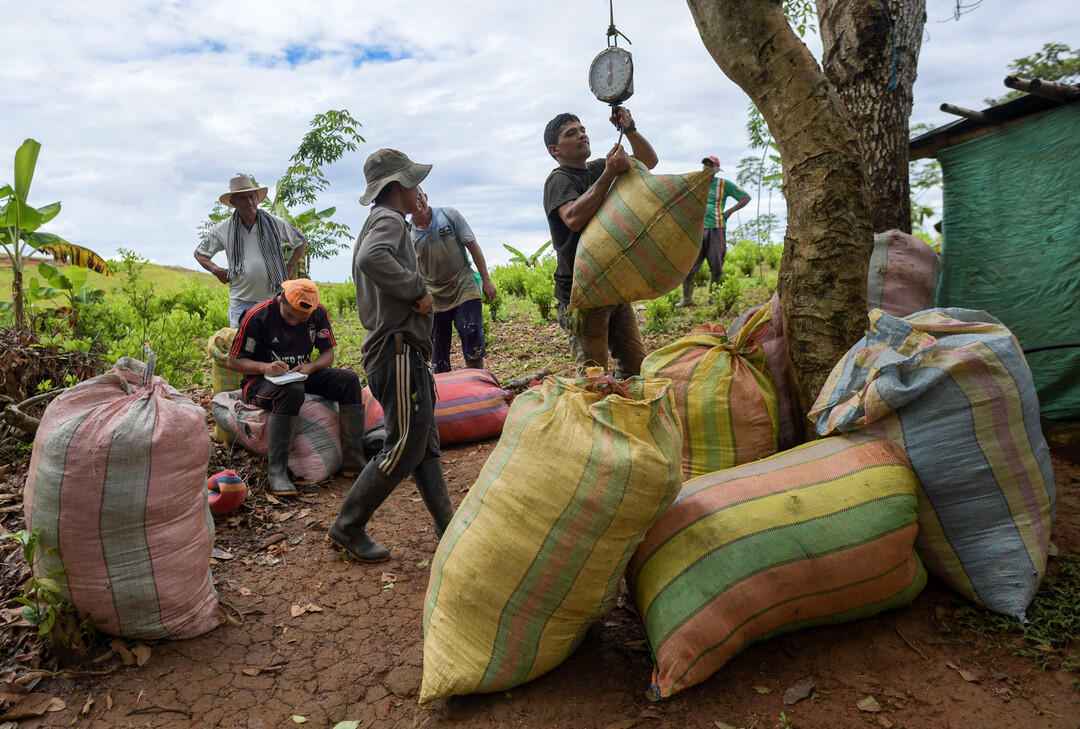
Trump’s decision is a direct response to the policies enacted by President Petro since he took office in August 2022. Petro’s administration has drastically scaled back the aggressive military and police operations targeting coca farms and has instead shifted focus to intercepting drug shipments at sea. Petro argues that the true solution to the drug crisis lies not in eradication but in curbing the immense demand for drugs in developed countries like the United States. His controversial statements, such as likening cocaine to whiskey and suggesting that its illegality is a result of its South American origins, have further fueled the fire. He has even floated the idea of legalizing cocaine as a way to undermine the cartels.

The U.S. government has presented a starkly different narrative. According to official U.S. data, coca cultivation and cocaine production in Colombia have reached all-time highs under the Petro administration. This alarming increase has led Trump to accuse the Colombian government of "negotiating" with drug trafficking organizations, a move he believes has only exacerbated the crisis. "If the Colombian government takes more aggressive measures to eradicate coca and reduce cocaine production and trafficking," Trump stated, "the designation could be reversed."

The move has been met with fierce opposition from President Petro, who has vocally defended his country's efforts. "The U.S. is blaming us despite the sacrifice of dozens of police officers, soldiers, and civilians who have died trying to stop drug trafficking," he asserted. Petro has consistently argued that the responsibility for the drug trade rests with the consumer nations, not just the producers, and that placing the blame squarely on Colombia is an unjust and hypocritical stance.

Despite the political fallout, the decision to continue U.S. financial aid highlights the complex nature of the relationship. The U.S. government recognizes that Colombia remains a vital partner in the regional fight against drug trafficking and that cutting off aid would likely do more harm than good to U.S. interests. This dual approach of public condemnation and continued support reflects a carefully balanced, if contradictory, foreign policy strategy aimed at pressuring the Petro administration without completely abandoning a key ally in a volatile region.

[Copyright (c) Global Economic Times. All Rights Reserved.]

  • #globaleconomictimes
  • #micorea
  • #mykorea
  • #Lifeplaza
  • #nammidonganews
  • #singaporenewsk
  • #Samsung
  • #Daewoo
  • #Hyosung
  • #A
Eunsil Ju Reporter
Eunsil Ju Reporter

Popular articles

  • Apple Poised to Overtake Samsung as World’s Largest Smartphone Maker After 14 Years, Driven by iPhone 17 Success

  • US Layoffs Surge: Over 1.17 Million Job Cuts Announced in First 11 Months of 2025

  • NVIDIA Lobby Succeeds? U.S. Bill Expected to Drop AI Chip Export Restrictions

I like it
Share
  • Facebook
  • X
  • Kakaotalk
  • LINE
  • BAND
  • NAVER
  • https://www.globaleconomictimes.kr/article/1065572081982728 Copy URL copied.
Comments >

Comments 0

Weekly Hot Issue

  • ZTE Faces Massive US Fine Over Alleged Foreign Bribery; Potential Settlement Could Exceed $2 Billion
  • Mexico Hikes Tariffs on 'Strategic Goods' from South Korea, China, and Other Non-FTA Nations
  • From Air to Plastic: A Female Scientist's Carbon Neutral Revolution
  • Rising Resentment: Uncensored Voices Expose China's Surveillance State
  • US Proposes Mandatory Social Media Disclosure for ESTA and Visa Applicants, Citing Enhanced Security
  • Concert Halls Struggle to Silence 'Phone Nuisance' Amidst Growing Concerns Over Performance Etiquette

Most Viewed

1
Korean War Ally, Reborn as an 'Economic Alliance' Across 70 Years: Chuncheon's 'Path of Reciprocity,' a Strategic
2
A Garden Where the City's Rhythm Stops: Dongdaemun's 'Cherry Garden', Cooking Consideration and Diversity
3
The Sudden Halt of Ayumi Hamasaki's Shanghai Concert: Unpacking the Rising Sino-Japanese Tensions
4
Alliance in a Dilemma: The Fallout of Trump's Advice to Takaichi Not to 'Provoke Taiwan' 
5
The Paradox of the 'Juvenile Offender' (Chokbeop Sonyeon): Impunity or Unfinished Rehabilitation?
광고문의
임시1
임시3
임시2

Hot Issue

Mexico Hikes Tariffs on 'Strategic Goods' from South Korea, China, and Other Non-FTA Nations

Tech Tensions Flare: DeepSeek Allegedly Smuggles Banned NVIDIA Blackwell Chips for New AI Model

Netflix Stock Plummets 10% on Credit Downgrade Fears Following Blockbuster Warner Bros. Acquisition

LG Innotek Develops Eco-Friendly Next-Gen Smart IC Substrate, Reducing Carbon Emissions by Half

Let’s recycle the old blankets in Jeju Island’s closet instead of incinerating them.

Global Economic Times
korocamia@naver.com
CEO : LEE YEON-SIL
Publisher : KO YONG-CHUL
Registration number : Seoul, A55681
Registration Date : 2024-10-24
Youth Protection Manager: KO YONG-CHUL
Singapore Headquarters
5A Woodlands Road #11-34 The Tennery. S'677728
Korean Branch
Phone : +82(0)10 4724 5264
#304, 6 Nonhyeon-ro 111-gil, Gangnam-gu, Seoul
Copyright © Global Economic Times All Rights Reserved
  • 에이펙2025
  • APEC2025가이드북TV
  • 독도는우리땅
Search
Category
  • All articles
  • Synthesis
  • World
  • Business
  • Industry
  • ICT
  • Distribution Economy
  • Well+Being
  • Travel
  • Eco-News
  • Education
  • Korean Wave News
  • Opinion
  • Arts&Culture
  • Sports
  • People & Life
  • Column 
    • 전체
    • Cho Kijo Column
    • Lee Yeon-sil Column
    • Ko Yong-chul Column
    • Cherry Garden Story
  • Photo News
  • New Book Guide
  • Multicultural News
  • Jobs & Workers