![[등록] 2026-09-01 15:48:31](/support/_updata/banner2/tl181982910_6749.png)



The epicenter of the artificial intelligence (AI) competition is shifting from pure technology to people. Only a handful of researchers have ever built cutting-edge models firsthand, and Big Tech CEOs are directly jumping into the recruitment fray, offering hundreds of millions of dollars in compensation alongside massive investments. Securing talent has expanded far beyond individual hiring into acquiring core teams and technologies together, direct government scouting, and bundling GPU, data, and research organizations into a single competitive package.
This "Talent War" series begins with the recruitment battles at Meta, Google, OpenAI, and Apple, traces China's reverse brain drain and retention efforts, Europe's brain circulation, and governments' scouting and public compute resource competitions. It then examines the talent pipeline connecting universities and enterprises, and finally looks at where South Korea stands in the global talent war by addressing the realities of brain drain and skilled labor shortages, as well as responses to attract overseas talent and improve research environments.
When OpenAI researcher Noam Brown was weighing a job change in 2023, he had lunch with Google co-founder Sergey Brin and played poker with OpenAI CEO Sam Altman. An investor even flew out to meet him in a private jet. Ultimately, the place Brown chose was not the one offering the highest pay. “It wasn't the best financial choice,” Brown noted, explaining that he chose OpenAI because they agreed to commit people and computational resources to the research he wanted to pursue.
The hiring conditions for AI talent are expanding beyond salary and title to include how many graphics processing units (GPUs) they are allowed to use. Research environments are now defined not just by what problems are studied, but by how long required GPUs can be utilized, whether failed experiments can be rerun, and whether sufficient computational resources are provided to the team they work with. In cutting-edge AI research, even with research funds and ideas, it is difficult to actually build and verify models without securing massive computational resources.
GPU access affects not only research outcomes but also a researcher's career. Building cutting-edge models requires connecting and training hundreds to thousands of GPUs, and if performance falls short, altering data, model architecture, and training methods to run experiments all over again. The experience accumulated through this process cannot be gained through papers or theory alone. A structure has emerged where researchers who have directly trained large-scale models are redeployed into cutting-edge research, meaning organizations with computational resources are cultivating the next generation of skilled researchers.
GPU Disparities Lead to Research Experience Gaps
Researchers who cannot utilize large-scale computational resources struggle to verify their ideas into actual model-scale implementations, even if they have good concepts. To check whether a method that works on a small-scale model performs similarly when scaled up, large-scale training must be rerun. Additional computational resources are also required to find the causes of a failed training session, tweak conditions, and re-run experiments.
Conversely, research organizations with secured GPUs can repeatedly experiment by varying model size, data, and training methods. This is why GPUs have become more than mere equipment for researchers—they are a working environment determining the caliber of research one can participate in.
This shift is reflected in corporate talent acquisition terms. Companies do not just offer high compensation and titles; the conditions extend to whether a researcher can build their desired team and secure the computing power required for large-scale model training. Brown’s choice of OpenAI—prioritizing people and compute committed to his research over a higher salary—stems from the same context.
The problem arises when the opportunity to directly handle large-scale models is concentrated among a few Big Tech firms. Researchers with abundant access to compute accumulate experience through training, failure, and refinement of large models, earning high recognition for future projects. In contrast, universities or early-stage startups find experiments of that scale virtually impossible. The difference in GPU access translates into differences in research experience, which subsequently leads to career disparities among researchers.
This is why governments worldwide are expanding the role of public computing facilities. While not a matter of handing out GPUs directly to overseas talent, they are creating pathways to public compute resources so universities, research institutes, and startups can run large-scale experiments. It is a talent policy designed to alleviate the structure where researchers must move to massive tech corporations simply to handle cutting-edge models.
UK’s 'Compute Ladder': From Small Experiments to Large-Scale Research
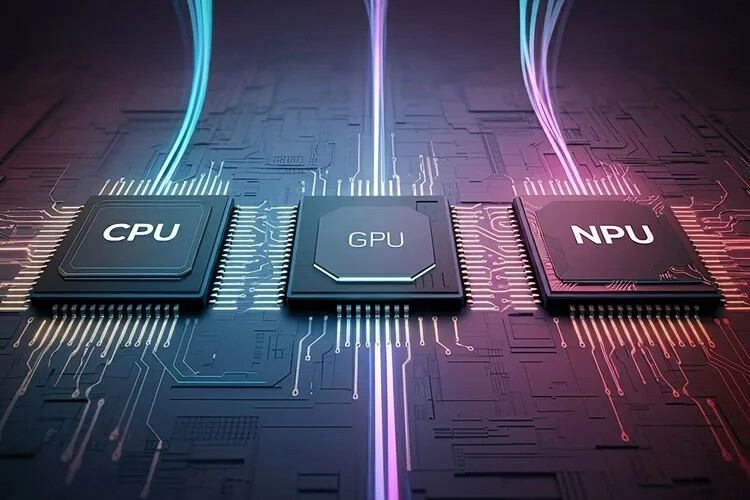
The United Kingdom has established a "compute ladder" that allocates public GPUs based on a researcher’s development stage and required computing scale. In a "Compute Roadmap" published last year, the UK government diagnosed that a shortage of public computing facilities was forcing some researchers to use overseas facilities or lower their research ambitions. It plans to expand the national AI supercomputing network, the AI Research Resource (AIRR), increasing its computing capacity twentyfold by 2030 compared to 2025.
Access channels to AIRR are tiered by research phase. A program for researchers encountering AI supercomputers for the first time to test code and algorithms provides up to 10,000 GPU hours. Small and medium-sized enterprises (SMEs) in early product development stages are supported with up to 20,000 GPU hours. Larger R&D projects have utilized programs allocating 50,000 to 150,000 GPU hours over six months.
One GPU hour equals one GPU used for an hour. A 150,000 GPU hour allocation equates to using 1,000 GPUs for 150 hours. For large-scale scientific AI research, separate programs offer up to 1.4 million GPU hours per project.
Crucially, GPUs are not distributed equally; rather, a pathway is built granting access to greater compute as research scales. Researchers who test ideas with small-scale resources can apply for larger projects, and university-born research can leverage public computing networks to continue product development even after spin-off. This creates an environment where hands-on experience with large-scale models can be built outside of Big Tech.
GPU Costs and Access Rights Become National Talent Policies
In Canada, the government subsidizes GPU usage costs for startups that struggle to maintain their own computing infrastructure. Through an AI Compute Access Fund worth up to 300 million Canadian dollars, the Canadian government supports SMEs in purchasing external, high-performance AI compute resources. In its first tranche this May, 66 million Canadian dollars were allocated to projects across 44 companies.
When an AI startup recruits top-tier researchers, research does not begin immediately. Even with promises of high salaries or equity, researchers cannot bring their ideas to life if large-scale model training costs are unaffordable. Canada shoulders a portion of compute costs that businesses find difficult to bear, enabling AI R&D to continue outside Big Tech. The country is also simultaneously pursuing projects to expand its own large-scale AI computing infrastructure.
The United States, owner of the world’s largest private AI computing infrastructure, also treats university and startup access as a matter of national research policy. The U.S. AI Action Plan diagnosed that accessing large-scale computing resources often requires long-term contracts with hyperscale cloud providers—costs beyond the reach of most universities and a significant portion of startups.
The National AI Research Resource (NAIRR), led by the National Science Foundation (NSF), connects computing resources, AI models, data, and software held by private corporations and federal agencies with universities and researchers. Initiated as a pilot program in 2024, it expanded access across research and educational fields, and this year entered operational framework design to transition the pilot into long-term national research infrastructure. It functions as a national bridge enabling university researchers to utilize compute owned by private Big Tech firms.
China integrates compute resource support directly with enterprise and research organization development. Last year, the Shanghai municipal government rolled out an AI industry development initiative offering computing resource vouchers worth up to 600 million yuan, covering up to 30% of rental fees for companies and research institutes leasing intelligent computing facilities. A separate support measure worth 300 million yuan was established for large language model usage.
Substantial funds are also funneled into helping talent build new research organizations. If strategic AI talent establishes a new AI R&D institution in Shanghai, the city provides up to 500 million yuan over three to five years depending on business goals and tasks. Rather than ending at high personal compensation, this approach builds the actual organizational and computing environment required for researchers to build teams and execute real research.
[Copyright (c) Global Economic Times. All Rights Reserved.]