![[등록] 2026-09-01 15:48:31](/support/_updata/banner2/tl181982910_6749.png)


BOGOTÁ – In a grim display of escalating violence, Colombia was plunged into a state of mourning on Friday following a series of deadly attacks targeting state security forces. The coordinated assaults, which authorities have linked to armed rebel factions and powerful criminal organizations, have left at least 13 people dead and dozens wounded. The incidents, which occurred in separate regions of the country, signal a worrying resurgence of guerrilla and narco-terror tactics, challenging the nation's fragile peace.
The first attack, a sophisticated and deadly strike, occurred in the northwestern department of Antioquia. A police helicopter, engaged in a mission to eradicate coca plantations, was shot down by what officials described as an explosive-laden drone. The blast sent the helicopter spiraling to the ground, killing all eight police officers on board. Eight other personnel sustained severe injuries and were rushed to local hospitals. President Gustavo Petro, using his official X account, condemned the attack and mourned the loss of the officers, who were on the front lines of the country's ongoing struggle against drug cultivation. The use of an explosive drone marks a significant and dangerous evolution in the tactics employed by these groups, indicating a growing technological capability that poses a serious threat to airborne law enforcement and military operations.
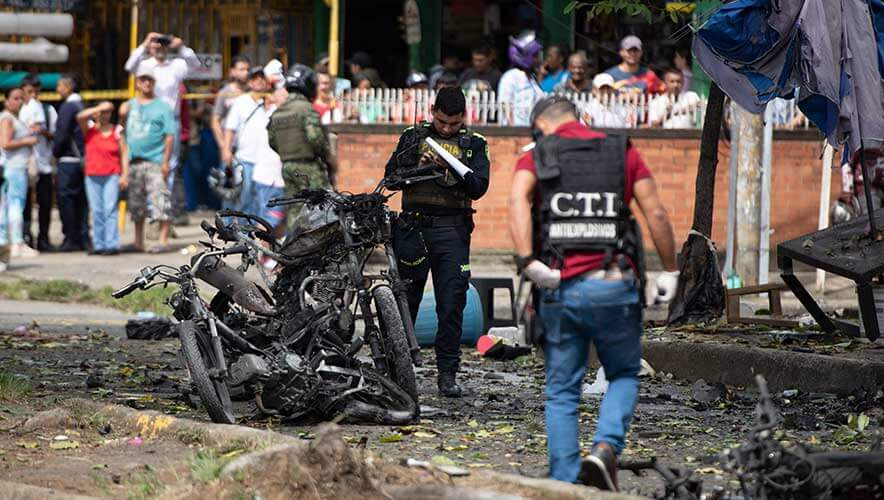
Just hours later, a second, equally devastating attack struck in the heart of the Valle del Cauca department. In Santiago de Cali, a major urban center, a vehicle packed with explosives detonated near the Marco Fidel Suárez Air Base. The blast, which rocked a residential area adjacent to the base, caused widespread panic and destruction. The explosion left a trail of shattered glass and mangled metal, with rescue workers and citizens alike rushing to aid the wounded. The city's mayor, Alejandro Eder, confirmed that the attack claimed the lives of at least five people and injured 36, a grim tally that includes civilians caught in the crossfire. Social media was flooded with harrowing videos of residents fleeing the scene, stepping over debris as they desperately sought safety.
Colombian authorities have been quick to point the finger at two notorious groups. Local media, citing official sources, report that the attacks are believed to be the work of the Central General Staff (EMC), a dissident faction of the demobilized Revolutionary Armed Forces of Colombia (FARC), and the Gulf Clan, one of the nation's most formidable criminal organizations. The FARC, once a major guerrilla force, signed a landmark peace deal with the government in 2016, but splinter groups like the EMC rejected the accord and continue to engage in armed rebellion and criminal activities. The Gulf Clan, a powerful drug cartel, controls vast swaths of territory and is a key player in the global cocaine trade. Its involvement suggests a possible alliance of convenience between armed rebels and organized crime, a nexus of terror that poses a grave threat to national security.
The series of attacks has drawn widespread condemnation and has prompted a robust response from the government. The head of the Colombian National Police, Carlos Fernando Triana, has vowed a relentless pursuit of those responsible. "We will not rest until we have brought these criminals to justice," Triana stated, reflecting the nation's resolve to confront this renewed wave of violence. The incidents serve as a stark reminder that while a peace accord may have officially ended the conflict with the FARC, the underlying issues of armed dissidence, drug trafficking, and territorial control continue to plague Colombia, demanding a comprehensive and sustained effort to ensure lasting peace and security for all its citizens.
[Copyright (c) Global Economic Times. All Rights Reserved.]