• 2026.09.10 (Thu)
  • All articles
  • LOGIN
  • JOIN
Global Economic Times
[등록] 2026-09-01 15:48:31
  • Synthesis
  • World
  • Business
  • Industry
  • ICT
  • Distribution Economy
  • Well+Being
  • Travel
  • Eco-News
  • Education
  • Korean Wave News
  • Opinion
  • Arts&Culture
  • Sports
  • People & Life
    • International Student Report
    • With Ambassador
  • Column
    • Cho Kijo Column
    • Cherry Garden Story
    • Ko Yong-chul Column
    • Kim Seul-Ong Column
    • Lee Yeon-sil Column
  • Photo News
  • New Book Guide
MENU
 
Home > Distribution Economy

National Pension Retroactive Contributions Surge in South Korea Amid Exploitation Concerns

Hwang Sujin Reporter / Updated : 2026-09-10 09:29:29
  • -
  • +
  • Print


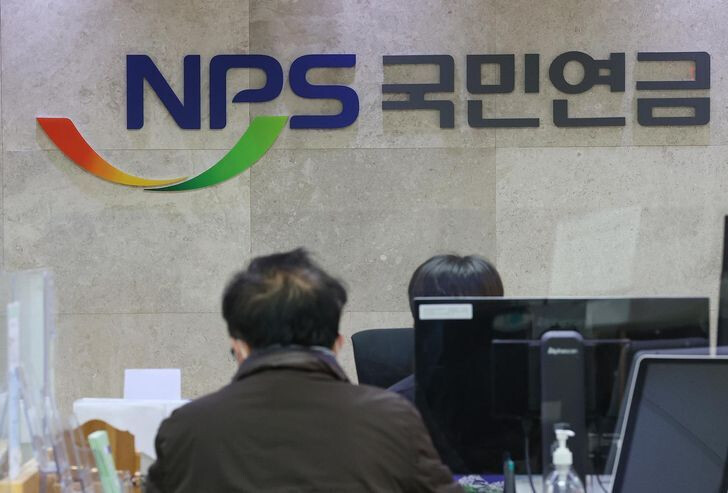
SEOUL — South Korea is witnessing a sharp resurgence in applications for retroactive national pension contributions, a system originally designed as a safety net for individuals who experienced gaps in employment or income. However, recent data highlights a dramatic spike in usage, particularly among foreign nationals, sparking intense debates over systemic loopholes and prompting swift legislative countermeasures.

The Rebound: A 2.8-Fold Surge in Two Years

According to data released by the National Pension Service (NPS), retroactive contribution applications—commonly known as chunap—have experienced a massive rebound. Following a regulatory cap introduced in late 2020 that limited the maximum retroactive contribution period to 119 months, applications had initially plummeted from a peak of 271,303 cases in 2020 down to 87,644 cases by 2023.

Yet, the downward trend proved short-lived. Applications rebounded to 138,459 cases in 2024 before skyrocketing by 76.5% year-on-year to 244,329 cases in 2025. Compared to the low point in 2023, applications have surged nearly 2.8-fold within just two years. The momentum has continued into 2026, with 106,838 applications filed in the first half alone, bringing numbers dangerously close to the historical peak set in 2020.

Foreign National Influx and Exploitation Concerns

While the overall rebound spans domestic and foreign applicants alike, the concentration of foreign applicants has drawn intense scrutiny. Foreign applications rose from just 87 cases in 2016 to 1,517 cases by 2025—a staggering 17.4-fold increase over a decade. Furthermore, the number of foreign nationals who successfully secured lifelong old-age pensions by utilizing retroactive contributions to hit the mandatory 10-year (120-month) minimum subscription threshold surged 83.3-fold, from 27 individuals in 2016 to 2,250 as of June 2026.

Critics point out that the current regulatory framework allows individuals—both domestic and foreign—to work briefly, pay minimal historical premiums in a lump sum, and secure guaranteed monthly lifelong pension payouts, transforming a social safety net into a high-yield retirement financial vehicle.

Legislative and Institutional Countermeasures

In response to growing public criticism and concerns over fiscal sustainability, South Korea's Ministry of Health and Welfare and the NPS have initiated sweeping institutional reforms. Authorities have tightened screening criteria for foreign applicants, mandating rigorous immigration record checks to verify actual domestic residency of at least 15 days per month, effectively blocking retroactive contributions for periods spent living abroad.

Additionally, policymakers are introducing the principle of reciprocity, restricting domestic retroactive contributions for foreign nationals to citizens of countries that similarly grant pension reciprocity to South Korean expatriates. Lawmakers, including Representative Kim Mi-ae of the ruling People Power Party, have sponsored legislative amendments to codify these reciprocity rules, require a minimum of 12 months of actual domestic contribution before applying, and cap retroactive eligibility strictly to periods of actual historical residence or employment, thereby closing the loophole that allowed minimal temporary work to unlock lifetime Korean retirement benefits.

[Copyright (c) Global Economic Times. All Rights Reserved.]

  • #globaleconomictimes
  • #micorea
  • #mykorea
  • #Lifeplaza
  • #nammidonganews
  • #singaporenewsk
  • #Taiwanpost
  • #Samsung
  • #Doosa
Hwang Sujin Reporter

Popular articles

  • South Korea to Revive Pro-Japanese Asset Recovery: New Law Targets "Disposed" Property

  • LG Electronics Weighs India Laptop Re-Entry While Exiting Brazil: A Strategic Pivot Toward 'Selection and Concentration'

  • "The Era of Automatic Alliance Protection is Over": South Korea’s New 'Four-Pillar' Survival Strategy

I like it
Share
  • Facebook
  • X
  • Kakaotalk
  • LINE
  • BAND
  • NAVER
  • https://www.globaleconomictimes.kr/article/1065572907417376 Copy URL copied.
Comments >

Comments 0

Weekly Hot Issue

  • South Korea Considers Expanding Life-Sustaining Treatment Discontinuation from 'Dying Phase' to 'Terminal Stage'
  • ROK-U.S. Military Leadership Jointly Inspects Eastern Frontline Amid Frequent North Korean Violations of the Military Demarcation Line 
  • South Korea’s Uninsured Medical Expenses Approach 9 Trillion Won Amid Persistent Overuse of Non-Benefit Services
  • Memory Chips Emerge as the True Kings of the AI Era, Driving Semiconductor Industry Growth
  • Oil Nears $100: How Long Can South Korea’s Fuel Price Ceiling Withstand Middle East Strains?
  • Apple’s 19-Year Design Innovation: The "iPhone Duo" and Its Muted Market Reception

Most Viewed

1
Bridging Nations, Building Futures: Reflections of Ethiopia's Ambassador to the Republic of Korea
2
Connecting Generations and Cultures through the Sound of Drums: Master Lee Kyung-hwa Holds Successful Jindo Buk-chum Workshop in Berlin
3
Bridging Hearts and Horizons: Celebrating 30 Years of the Korean Association in Cambodia
4
Seoul's Average Apartment Prices Surpass 1.6 Billion Won as Real Estate Surge Spreads from Gangnam to Outlying Districts
5
Diplomatic Efforts Intensify as Nine Out of Ten Isolated South Koreans Evacuated to Safety Following Devastating Floods in Nepal
광고문의
임시1
임시3
임시2

Hot Issue

ROK-U.S. Military Leadership Jointly Inspects Eastern Frontline Amid Frequent North Korean Violations of the Military Demarcation Line 

South Korea’s Uninsured Medical Expenses Approach 9 Trillion Won Amid Persistent Overuse of Non-Benefit Services

South Korea Considers Expanding Life-Sustaining Treatment Discontinuation from 'Dying Phase' to 'Terminal Stage'

OpenAI Claims Breakthrough on Millennium Prize Problem: Navier-Stokes Existence and Smoothness Solved in 88 Hours

Fashion Runway Show 2026

Global Economic Times
korocamia@naver.com
CEO : LEE YEON-SIL
Publisher : KO YONG-CHUL
Registration number : Seoul, A55681
Registration Date : 2024-10-24
Youth Protection Manager: KO YONG-CHUL
Singapore Headquarters
5A Woodlands Road #11-34 The Tennery. S'677728
Korean Branch
Phone : +82(0)10 4724 5264
#304, 6 Nonhyeon-ro 111-gil, Gangnam-gu, Seoul
Copyright © Global Economic Times All Rights Reserved
  • 향기네무료급식
  • BCB부천방송
  • 반달곰 프로젝트
Search
Category
  • All articles
  • Synthesis
  • World
  • Business
  • Industry
  • ICT
  • Distribution Economy
  • Well+Being
  • Travel
  • Eco-News
  • Education
  • Korean Wave News
  • Opinion
  • Arts&Culture
  • Sports
  • People & Life 
    • 전체
    • International Student Report
    • With Ambassador
  • Column 
    • 전체
    • Cho Kijo Column
    • Cherry Garden Story
    • Ko Yong-chul Column
    • Kim Seul-Ong Column
    • Lee Yeon-sil Column
  • Photo News
  • New Book Guide
  • Overseas Koreans
  • Multicultural News