![[등록] 2026-09-01 15:48:31](/support/_updata/banner2/tl181982910_6749.png)


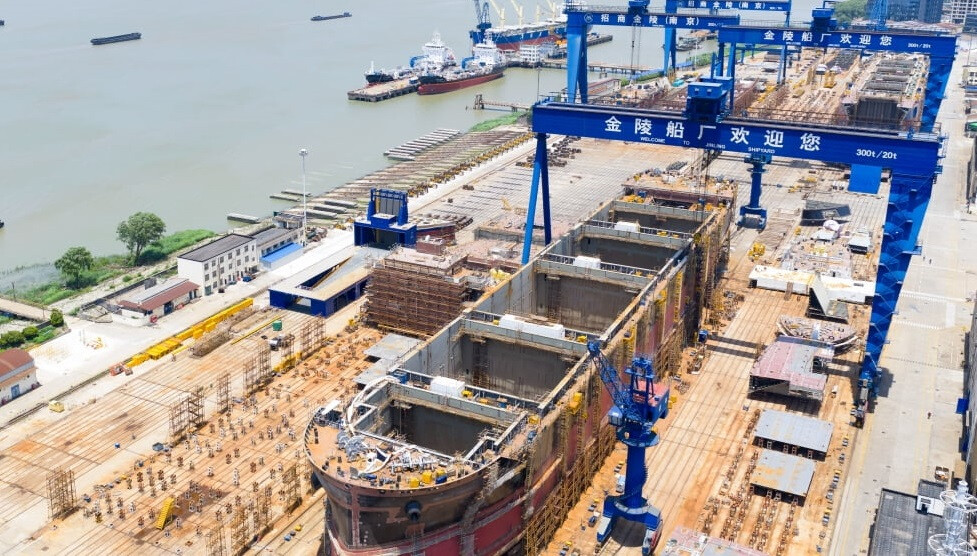
A transformative merger within China's state-owned shipbuilding sector is poised to create a colossal entity, further solidifying the nation's dominance in the global maritime industry. The proposed absorption of China Shipbuilding Industry Co., Ltd. (CSIC) by China CSSC Holdings Ltd. (CSSC Holdings), both key subsidiaries of the world's largest shipbuilder, China State Shipbuilding Corporation (CSSC), has successfully passed the crucial review by the Shanghai Stock Exchange Merger and Acquisition Review Committee. This landmark transaction is anticipated to result in a "super-large dinosaur" within the shipbuilding landscape, setting new benchmarks in scale and capability.
The strategic consolidation, a significant component of broader restructuring efforts spearheaded by the Chinese government, involves CSSC Holdings issuing new shares in exchange for existing CSIC shares. The latest terms dictate that 0.1339 shares of CSSC Holdings will be exchanged for each CSIC share. Upon completion, CSIC will be delisted, with CSSC Holdings assuming all of its assets, liabilities, businesses, personnel, and contractual obligations. Local media project this to be the largest absorption merger ever recorded among A-share listed companies on the Shanghai Stock Exchange, with an estimated total transaction value exceeding RMB 110 billion.
The primary objective behind this integration is to streamline operations, eliminate internal competition, and harness synergistic effects across the vast portfolios of both companies. CSSC Holdings' operations encompass military and civilian shipbuilding, ship repair, and marine engineering, with prominent shipyards such as Jiangnan Shipyard, Waigaoqiao Shipbuilding, CSSC Chengxi Shipbuilding, and Guangzhou International Shipyard under its purview. CSIC, established in 2008, specializes in marine defense and offshore development equipment, controlling major facilities like Dalian Shipbuilding, Wuchang Shipbuilding, and Beihai Shipbuilding. This merger will unify these diverse capabilities under a single, formidable listed platform.
Industry analysts predict that the combined entity will emerge as the undisputed global leader in shipbuilding, surpassing competitors in asset size, operating revenue, and order backlog. Collectively, in the previous year, CSSC Holdings secured orders for 154 vessels (12.7246 million DWT), while CSIC received orders for 103 vessels (15.8995 million DWT). This impressive orderbook represents approximately 17% of total global ship orders. Post-merger, the consolidated CSSC is projected to command total assets approaching RMB 400 billion and generate annual revenues exceeding RMB 120 billion. As of July 4th, the combined market capitalization of CSSC Holdings and CSIC stood at an approximate 252.3 billion yuan (approximately 48 trillion won).
This merger also carries historical significance as it marks a "re-merger" of entities that were once part of the same shipbuilding conglomerate, which was split in 1999 along geographical lines for efficiency. The parent companies, CSSC and CSIC, previously merged in 2019 to form the current China State Shipbuilding Corporation, a move that already established it as the world's largest shipbuilder with a 20% global market share and US$110 billion in assets. This latest subsidiary merger is designed to further refine this strategic consolidation.
The integration is expected to bolster the merged company's capacity for high-end vessel manufacturing and accelerate the development of advanced marine products, enabling a more differentiated brand management approach across its various shipyards. This move also highlights China's broader strategy of industrial scale and efficiency, a push that has drawn attention from international players, including the U.S., which has implemented measures such as blacklisting and financial restrictions on CSSC-affiliated firms to counter China's growing maritime influence. The completion of this merger, subject to further regulatory approvals from the China Securities Regulatory Commission, will undoubtedly reshape the competitive dynamics of the global shipbuilding industry for years to come.
[Copyright (c) Global Economic Times. All Rights Reserved.]