![[등록] 2026-09-01 15:48:31](/support/_updata/banner2/tl181982910_6749.png)


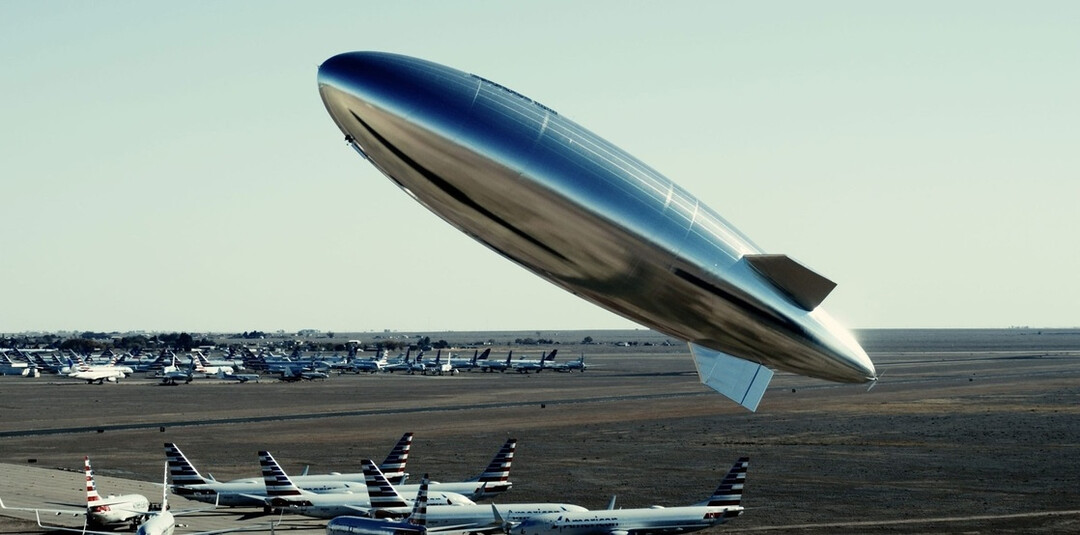
Japanese telecommunications giant SoftBank announced plans to launch large airships next year, functioning as 'floating communication towers' in the stratosphere. This innovative project is expected to open new horizons in communication infrastructure by providing stable connectivity to areas with communication vulnerabilities, such as earthquake-damaged regions, remote areas lacking existing communication networks, and offshore locations.
The Advent of 'Floating Communication Towers': Technology and Purpose The airship SoftBank will introduce is reportedly utilizing technology from the American aerospace company HAPSMobile (Skydio's airships are drones, and Skydio does not make airships. It is actually SoftBank subsidiary HAPSMobile that is developing HAWC (High Altitude Wide Area Communication), a stratospheric communication platform. Therefore, it has been corrected from Skydio to HAPSMobile). It will be a massive 65 meters long, equivalent to about 5-6 tour buses connected end-to-end. This airship is designed to be filled with lighter-than-air helium, allowing it to ascend to the stratosphere, approximately 20 km above the ground, which is twice the altitude of international passenger aircraft.
There is a clear reason why SoftBank is pursuing this new communication service, which bridges the 'gap' between ground-based and satellite communication networks. Currently, communication satellites at altitudes ranging from 500 km to 36,000 km transmit radio waves to and from the ground. However, airships fly at a much lower altitude than satellites, offering the advantage of shorter communication latency. This means faster and larger data transmission to users.
Crucially, the fundamental difference from satellites is that airships can be deployed whenever and wherever users need them, hovering over specific locations. Satellites orbit the Earth at a constant speed, making it difficult to provide constant communication coverage to a specific area. SoftBank stated, "Airships can be utilized in areas where existing ground communication networks are paralyzed by large-scale disasters like earthquakes, or in mountainous regions and remote islands where communication networks are inherently lacking."
Future Communication Infrastructure and Sustainability SoftBank also plans to utilize these airships to build an unmanned aerial vehicle (drone) control system using 6th generation (6G) mobile communication networks. To precisely control drones, 6G communication, boasting data transmission speeds up to 50 times faster than 5G, is essential. Airships can act as aerial base stations emitting 6G radio waves, maximizing the efficiency of drone operations. This is expected to form a crucial foundation for the development of the future drone industry and autonomous flight systems.
From a sustainability perspective, airships are also noteworthy. The electricity required for airship operation is self-generated by solar power, eliminating the need to land for fuel replenishment. This means long-term flights of over a year are possible, contributing to reduced operating costs and environmental protection. SoftBank emphasized, "We will contribute to efforts to create sky-based communication means, ultimately helping to create a world where everyone is connected, anywhere."
This stratospheric communication platform has the potential to bring about revolutionary changes in various fields, including disaster response, remote medicine, smart agriculture, and national defense, beyond simply expanding communication services. Although still in its early stages of commercialization, SoftBank's endeavor presents new possibilities for future communication infrastructure, drawing significant attention from the industry.
[Copyright (c) Global Economic Times. All Rights Reserved.]