


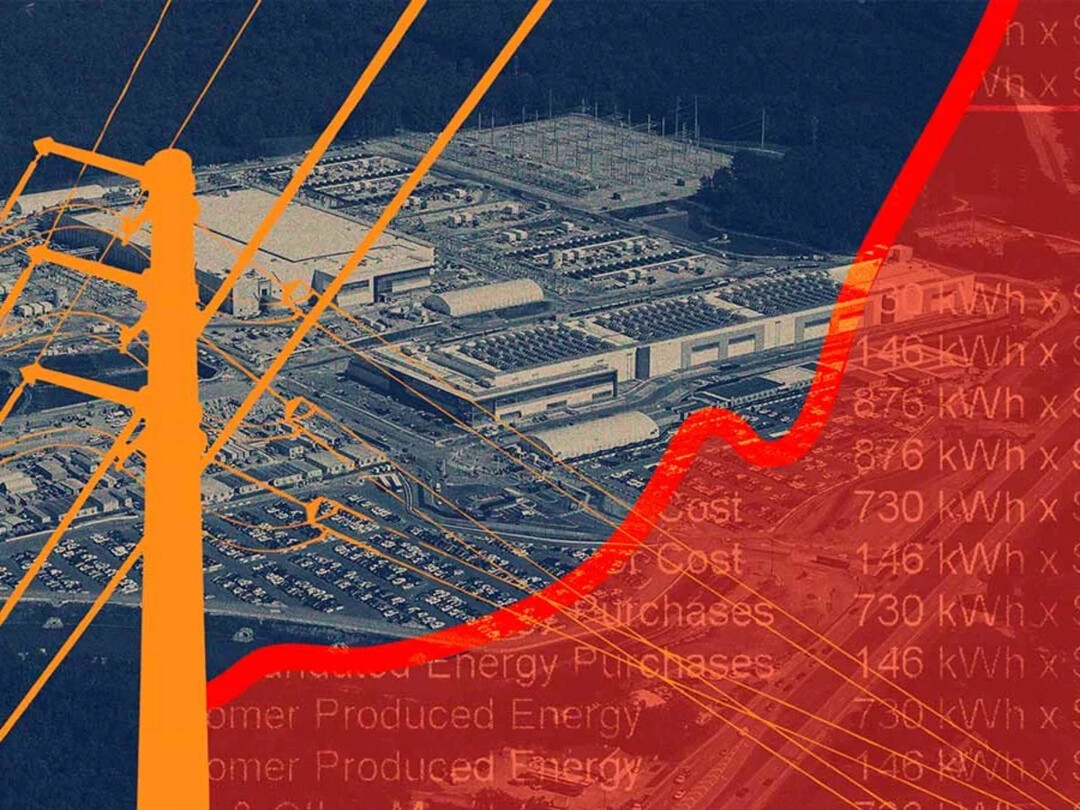
"Electricity is a national lifeline, and the state has a duty to manage it," I remarked on a radio program not long ago. "That’s why corporations pay taxes," I added, "and shouldn’t we factor those contributions into the equation?"
Appearing as a guest to break down the government’s latest power grid expansion strategy, my job was simply to explain how much more transmission infrastructure we need and what measures authorities are taking to combat chronic delays. Yet, feeling a bit uncomfortable acting as an uncritical mouthpiece for official policies, I decided to raise a parting question: Who should actually foot the bill for building these new power lines?
Historically, power grids were treated as public infrastructure open to everyone. Naturally, building them was left to state utilities like KEPCO, with costs recouped through universal electricity bills. But that was before artificial intelligence data centers entered the arena as a disruptive force—prompting us to ask whether what made sense yesterday still holds true today.
As witnessed clearly during recent political cycles in the United States, the massive socio-economic footprints generated by AI data centers can no longer be brushed off as mere by-products of progress. However, suggesting that cutting-edge industries should shoulder a fair share of public infrastructure costs and environmental accountability evidently struck some as anti-market heresy. One irate listener even fired off an email warning me not to spread "pro-China, leftist messages aimed at handing over AI leadership to Beijing." In introductory economics, internalizing negative externalities via taxation or proper regulatory frameworks is Lesson One. Perhaps my explanation had simply fallen short.
The entanglement of artificial intelligence and energy is hardly a localized headache. This reality took center stage at the 31st UN Climate Change Conference (COP31), which kicked off on November 9 in Antalya, Turkey. As the host nation, Turkey has championed the "Antalya AI Pledge," a framework explicitly designed to institutionalize environmental responsibility within the tech sector.
A standout feature of the draft text released late last month is the mandate for transparency: measuring and disclosing the environmental toll of artificial intelligence. It urges stakeholders to openly reveal how much electricity and water data centers consume, the volume of greenhouse gases they emit, and the ecological burdens tied to developing and operating these models. At the same time, the pledge accounts for the positive contributions AI can make toward emission reductions. Crucially, it also calls for a fair distribution of infrastructure costs, including the new power grids required to feed ravenous data hubs. In essence, it argues that expenses must be equitably shared among corporations, electric utilities, and ordinary consumers—the exact dilemma I posed on the radio.
In truth, this is hardly a radical demand. In South Korea, some 2,000 manufacturing firms and institutions already disclose their energy and water usage under existing environmental transparency regulations. Entities exceeding specific emission thresholds are legally bound to calculate and verify their carbon footprints. The blind spot, however, is that we have yet to systematically track and assess the environmental data of individual data centers. In contrast, the European Union has mandated energy and water reporting for data centers above a certain scale, while the UK introduced a voluntary pact last month requiring environmental disclosures and fair grid cost-sharing for data facilities.
As COP31 hosts a high-level ministerial and corporate summit on November 16 to officially launch the AI Pledge platform, South Korea’s stance remains ambiguous—despite its grand ambitions of becoming an AI powerhouse fueled by gigawatt-scale data centers and a 550 trillion-won investment pipeline.
Forcing the artificial intelligence sector to disclose its economic and environmental costs and share the burden is not a bottleneck to growth; it is the baseline rule for sustainable development in our society. Speed-running the construction of data centers does not automatically crown a nation an AI superpower.
[Copyright (c) Global Economic Times. All Rights Reserved.]