
![[등록] 2026-09-01 15:48:31](/support/_updata/banner2/tl181982910_6749.png)


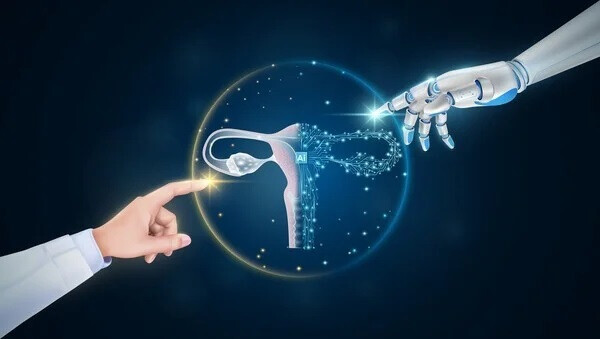
New York, USA – In a significant stride for reproductive medicine, an American couple, who had struggled with infertility for 18 years due to the husband's azoospermia, has successfully conceived with the aid of artificial intelligence (AI) technology. The breakthrough lies in AI's ability to identify extremely rare sperm cells that traditional medical methods had failed to detect.
According to reports from CNN and other U.S. media outlets on July 3rd, the couple, whose identities remain undisclosed, had undergone 15 in vitro fertilization (IVF) attempts at various fertility clinics worldwide over nearly two decades. Their consistent failure stemmed from the husband's severe azoospermia, a condition characterized by the near absence of sperm in his ejaculate. While a typical semen sample contains hundreds of millions of sperm, samples from azoospermic patients might contain only a handful, making their detection incredibly challenging even for highly skilled specialists peering through microscopes for hours. Sperm, notably, are the smallest cells in the human body.
The turning point came in March of this year when the couple utilized the AI-powered Sperm Tracking and Recovery (STAR) technology developed by the Columbia University Fertility Center in New York. The STAR technology leverages a specialized microfluidic chip designed to pass semen samples through, coupled with an AI algorithm that has been meticulously trained over five years to recognize sperm cells. As the semen sample flows through the chip, the AI, connected to a high-speed camera and microscope, captures over 8 million images per hour, analyzing them in real-time. Upon identifying what it determines to be a sperm cell, the AI precisely isolates it into a connected microtube.
The isolated sperm, even if few in number, can then be preserved, frozen, or used for egg fertilization. In this groundbreaking case, the AI successfully identified three viable sperm cells, which were then used to fertilize the wife's eggs, leading to a successful pregnancy. The couple is reportedly due to give birth in December of this year.
This innovative technology draws inspiration from the field of astrophysics, where AI is routinely employed to detect new stars and planets. Dr. Zev Williams, Director of the Columbia University Fertility Center and a lead developer of the STAR technology, emphasized its transformative potential to CNN. "A skilled technician could look at a sample for two days and not find a single sperm, but the AI found 44 in just one hour," Dr. Williams stated, declaring, "AI is literally a game-changer." The development team intends to share their research findings with other fertility centers to broaden its impact.
Despite the promising outcome, experts emphasize the need for further validation given that this is the first reported success of its kind. Dr. Robert Brannigan, the incoming president of the American Society for Reproductive Medicine, commented to The Washington Post that while the results appear promising, "the data needs to be tracked, and more research needs to be done." He stressed the importance of additional testing to ensure the consistency of results across other clinics.
Concerns have also been raised about the rapid integration of AI into reproductive medicine, particularly the potential for offering false hope to patients. Dr. Gianpiero Palermo, a fertility expert at Weill Cornell Medicine, cautioned that "some men may not have any sperm, regardless of whether a human or technology verifies it." He underscored that AI technology is not a panacea for all infertility challenges, reminding that it serves as a powerful tool but not an absolute solution in the complex landscape of reproductive health.
[Copyright (c) Global Economic Times. All Rights Reserved.]














