

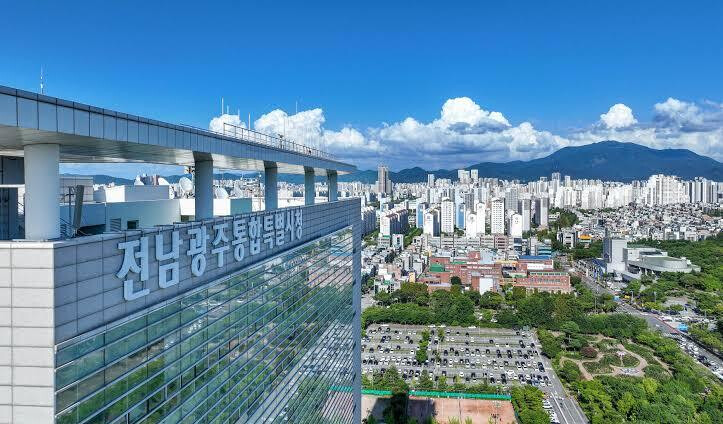
GWANGJU — Chonnam National University Hospital has announced an ambitious restructuring of its expansion plans, cutting five years off its timeline to deliver a state-of-the-art, 1,070-bed medical complex by 2031.
The initiative, officially known as the Future-Type New Smart Hospital Construction Project, cleared the government's preliminary feasibility review in May of last year. Backed by a budget of 962.9 billion won, the massive facility will occupy a 222,860-square-meter footprint spanning the current hospital site in Hak-dong, Dong-gu, alongside adjacent areas belonging to the university's medical and nursing schools.
Originally slated for a two-phase rollout ending in 2036, the project timeline shrunk significantly after leadership opted for a unified single-building design instead of separate east and west wings. This consolidated approach allows builders to finish the facility years ahead of schedule while ensuring that the current hospital can maintain uninterrupted clinical services throughout the construction phase. Furthermore, housing all critical care operations under one roof is expected to optimize workflow efficiency for both medical personnel and patients.
Financial constraints—previously the primary hurdle for the development—have also eased. Following ongoing negotiations with the Ministry of Education, the central government's funding share nearly doubled from roughly 25% to 46.4%, securing 446.8 billion won in national support.
Designed to curb the outflow of regional patients traveling to Seoul for specialized healthcare, the upcoming facility will incorporate advanced Information and Communication Technology (ICT) systems and disease-specific specialization centers. It will feature an integrated ICU command center for real-time monitoring with partner clinics, expanded emergency and critical care departments, and a specialized immediate-response system for infectious diseases developed in coordination with the regional infectious disease center. Additionally, the hospital will launch a dedicated early-cancer care facility while heavily investing in five key clinical sectors: cardiovascular care, stroke, respiratory medicine, emergency trauma, and organ transplantation.
Hospital President Jeong emphasized the strategic vision behind the project, stating that the institution is committed to becoming a top-tier medical hub capable of treating ultra-complex critical and rare conditions locally, ultimately sparing regional patients the burden of long-distance medical travel.
[Copyright (c) Global Economic Times. All Rights Reserved.]