![[등록] 2026-09-01 15:48:31](/support/_updata/banner2/tl181982910_6749.png)


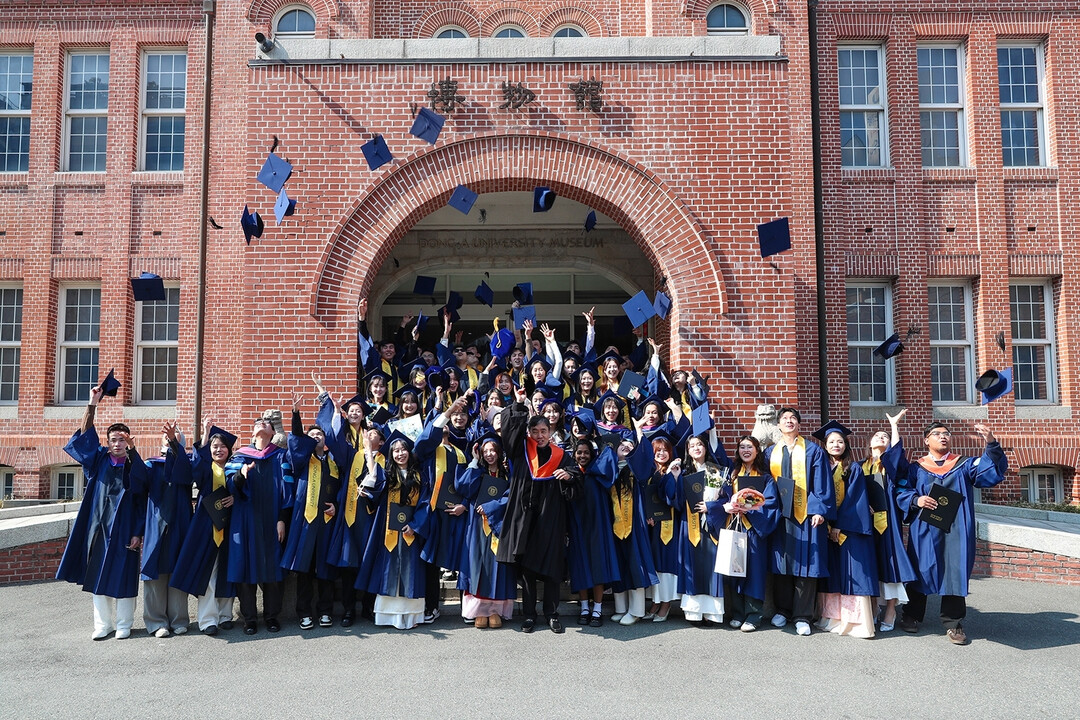
SEOUL — In anticipation of an era with 400,000 foreign students, the Ministry of Justice has unveiled a comprehensive reform package designed to transition its visa policy from mere student recruitment to long-term talent cultivation and settlement.
Following the launch of the Consultative Council for International Student Visa System Improvement last April—chaired by the Vice Minister of Justice and comprising experts from academia, education, and immigration—the ministry held four working-group sessions alongside parliamentary seminars to finalize the new strategy.
The number of international students in South Korea has surged dramatically over the years: starting at 17,000 in 2004, reaching 100,000 in 2016, 200,000 in 2022, 300,000 in 2025, and hitting 350,000 as of August 2026.
Given this rapid growth and its profound impact on the nation's economy, culture, and regional communities, the Korea Immigration Service has designated international students as the "top strategic attraction and management group" for national immigration policy. The newly established roadmap rests on five core strategic pillars:
Incorporating Korean language proficiency across the entire visa framework—from admission to settlement.
Strengthening the verification of study purposes and establishing collaborative quality-control systems for education.
Building recruitment and settlement frameworks tailored to regional development and industrial demand.
Creating customized immigration pathways for distinct student demographics.
Driving data-driven immigration policies and statistical support.
Four-Stage Growth Pathway for International Students
Admission & Influx: Verification of academic intent, credentials, and financial capability.
Enrolment & Growth: Support for stay and employment based on Korean proficiency and academic diligence.
Employment & Settlement: Employment and settlement matching individual competencies with regional and industrial needs.
Administrative Infrastructure: Integrated civil services, legal system adjustments, data-driven management, and information systems.
Key Policy Measures by Stage
1. Admission and Influx Stage
Differentiated Financial Verification: Financial proof requirements will be exempted for students with superior Korean language skills (TOPIK Level 4 or Social Integration Program Stage 4). Conversely, a "Study Expense Deposit System" will be expanded for key-management countries with higher risks of illegal stay or employment.
Enhanced Academic Verification & Overseas Agency Registration: The Korea Immigration Service will provide standardized overseas academic verification procedures to help universities thoroughly vet overseas degrees. In cooperation with overseas diplomatic missions, an "Overseas Study Agency Registration System" will be introduced to enhance transparency and accountability.
Diversified Visa Types: To accommodate global trends—such as the rising popularity of K-culture—the ministry will establish a Gap-Year Student (D-2-8) track for OECD nationals exploring career paths in Korea, as well as short-term student visas for future students enrolled in global network campuses.
2. Enrolment and Growth Stage
Streamlined Part-Time Work Permits: Complex part-time work regulations will be simplified into criteria based on Korean language proficiency and academic credits. The requirement for Korean proficiency will be raised to Social Integration Program Stage 3, and administrative burdens will be eased by relying on university-issued "Part-Time Employment Confirmation Letters."
Tightened Campus Oversight: Universities operating weekend, night, or online courses primarily to facilitate part-time work rather than academics will face suspended visa privileges for those specific departments, even if they hold "Education Internationalization Competency Certification."
3. Employment and Settlement Stage
Differentiated Job-Seeking Visas & Alumni Networks: Job-seeking (D-10) stay periods will range from one to three years depending on Korean proficiency and employment preparation. Additionally, a dedicated multiple-entry "Study Korea Alumni Visa" will be introduced for returning graduates to maintain professional ties with Korea.
Pathways for STEM and Regional Talents: Science and engineering students meeting language and other criteria can transition into Skilled Worker (E-7) visas in manufacturing sectors. A specialized "K-Tech Master Visa" will also be established to bridge studies (D-2) directly into long-term settlement (F-2).
Regional-Industrial Alignment: Regional-specific and metropolitan visas will be overhauled to tie employment visas and family settlement support directly to local industrial needs. Furthermore, university-linked OASIS programs will be introduced to encourage international students to pursue tech startups (D-8-4) while enrolled.
Student Visa Growth Ladder & Checklist: A "Student Visa Growth Ladder" will map out transition pathways categorized by individual merit, contribution, and regional needs, complemented by an online "Student Employment Visa Checklist" to bridge the gap between graduation and employment.
4. Administrative Support Infrastructure
Regional Support Centers & Data Analytics: Five regional "International Student Visa and Stay Support Centers" will be established within local immigration offices to ensure consistent visa screening. Regular releases of "International Student Settlement Big Data" will empower universities and local governments to formulate data-driven policies.
Legal and Systemic Upgrades: A dedicated chapter will be added to the Immigration Act to codify student visa issuance and part-time work rules. The Foreigner Employment Information Management System (FIMS) will also be upgraded with dedicated university menus and AI-driven civil petition platforms to facilitate paperless, visit-free processing.
"International foreign students are core talents of our immigration policy," stated Lee Jin-soo, Acting Minister of Justice. "We will provide expanded growth opportunities to students with genuine academic goals and capabilities while responding strictly to abuses of the study visa system."
The Ministry of Justice plans to implement self-executable tasks starting in the second half of this year, while tasks requiring broader inter-ministerial coordination will be finalized through government consultative bodies.
[Copyright (c) Global Economic Times. All Rights Reserved.]