• 2026.03.22 (Sun)
  • All articles
  • LOGIN
  • JOIN
Global Economic Times
fashionrunwayshow2026
  • Synthesis
  • World
  • Business
  • Industry
  • ICT
  • Distribution Economy
  • Well+Being
  • Travel
  • Eco-News
  • Education
  • Korean Wave News
  • Opinion
  • Arts&Culture
  • Sports
  • People & Life
    • International Student Report
    • With Ambassador
  • Column
    • Cho Kijo Column
    • Cherry Garden Story
    • Ko Yong-chul Column
    • Kim Seul-Ong Column
    • Lee Yeon-sil Column
  • Photo News
  • New Book Guide
MENU
 
Home > Business

Libya's Oil Landscape Fractures as Private Firm Arkenu Challenges State Control, Fueling Economic and Political Instability

Ana Fernanda Reporter / Updated : 2025-03-08 16:00:34
  • -
  • +
  • Print

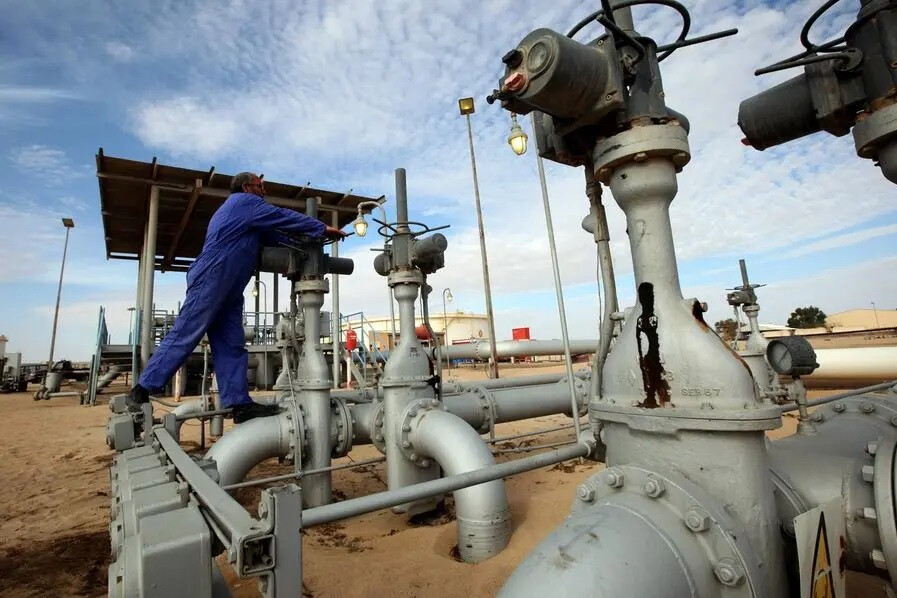
Benghazi, Libya – A seismic shift is underway in Libya's oil-rich landscape, as the emergence of private firms threatens to dismantle the decades-long dominance of the state-run National Oil Corporation (NOC). At the forefront of this transformation is Arkenu Oil Company, an eastern-based entity that has exported over $600 million in crude oil since May 2024, bypassing established state channels and igniting a firestorm of economic and political concerns.

For generations, Libya's oil wealth, accounting for over 90% of state revenue, has been managed centrally by the NOC. However, the nation's protracted political crisis, stemming from the 2011 overthrow of Muammar Gaddafi and the subsequent division between the internationally recognized Government of National Unity (GNU) in Tripoli and the eastern-based administration aligned with General Khalifa Haftar, has created a fertile ground for alternative players.

Arkenu's operations, closely linked to Haftar's forces and particularly his son Saddam Haftar, represent a direct challenge to the NOC's authority. This development raises critical questions about the control and distribution of Libya's vast oil resources. The NOC has declared the actions of Arkenu to be illegal, and has made requests to international buyers to not purchase oil from them.

The involvement of military figures has deepened concerns about the potential for oil revenues to fuel further conflict. By securing independent financial streams, Haftar's forces gain greater autonomy, potentially diminishing the GNU's leverage and risking the creation of parallel economic systems. This situation could lead to a deeper fragmentation of Libyas already fragile economy. The Libyan Dinar has already seen increased volatility, and the average Libyan citizen is worried about increased inflation, and a reduction in government services.

The international community is watching these developments closely. The United Nations, the United States, and the European Union have expressed concerns about the lack of transparency and the potential for increased instability. There is a fear that these private oil sales could violate international sanctions and lead to further restrictions on Libya's economy. Countries like Russia, the UAE, and Egypt, which have historically supported Haftar, are also being monitored for their potential involvement in this evolving situation.

The rise of private oil firms also poses significant economic risks. The diversion of revenue from the Central Bank of Libya could deprive the state of crucial funds for essential services, exacerbating existing economic hardships. Furthermore, the lack of a clear regulatory framework raises the specter of corruption and mismanagement.

The future of Libya's oil industry hangs in the balance. Several scenarios are possible:

The GNU may intensify legal and diplomatic efforts to assert the NOC's authority and pressure international buyers.
Tensions between the east and west could escalate, potentially leading to further economic and even military conflict.
Efforts may be made to negotiate a compromise, allowing for regulated private sector participation while maintaining state oversight.
As Libya navigates this precarious path, the world watches, hoping that the nation can avoid a descent into further chaos and ensure that its oil wealth benefits all its citizens.

[Copyright (c) Global Economic Times. All Rights Reserved.]

  • #globaleconomictimes
  • #글로벌이코노믹타임즈
  • #한국
  • #중기청
  • #재외동포청
  • #외교부
  • #micorea
  • #mykorea
  • #newsk
  • #nammidonganews
  • #singaporenewsk
Ana Fernanda Reporter

Popular articles

  • Tehran on the Brink: Scenarios of a U.S. Strike and the Looming Global Fallout

  • Google Unveils ‘Nano Banana 2’: Pro-Level Image AI Now Free for All

  • Samsung Display Resumes Development of Next-Gen 'QNED' Technology

I like it
Share
  • Facebook
  • X
  • Kakaotalk
  • LINE
  • BAND
  • NAVER
  • https://www.globaleconomictimes.kr/article/1065596340351189 Copy URL copied.
Comments >

Comments 0

Weekly Hot Issue

  • Coway Clinches Top Honor at "Water Taste Awards" for 7th Consecutive Year
  • HP Targets Korea as Strategic Hub for 'Edge AI' Expansion, Seeking Startup Partnerships
  • Pearl Abyss’s 'Crimson Desert' Shatters Records with 2 Million Copies Sold on Day One
  • "BTS Over Books?" Indian Academies Issue Emergency Notices as Students Plot Mass Absences for Comeback Live
  • Naver to Shut Down Men's Fashion Service 'MR.' to Launch Expanded AI-Driven Fashion Platform
  • JBNU and SKKU Researchers Achieve Breakthrough in "Dream Material" MXene, Setting New World Records in Performance

Most Viewed

1
An Open Letter to BTS On the Eve of a Historic Performance
2
From Industrial Capital to Tourism Mecca... Ulsan Makes a Bold Move with ‘Experiential Content’ in 2026
3
Ko Sang-goo, President of World Federation of Korean Associations, Elected as First Private Sector Chair of World Korean Community Leaders Convention
4
It is Time for BTS’s Fandom, ARMY, to Step Forward
5
Korean Stock Market Plunges: Circuit Breaker and Sidecar Triggered Amid Geopolitical Crisis
광고문의
임시1
임시3
임시2

Hot Issue

Vishay Unveils Ultra-Compact 0404 RGB LED with Independent Chip Control for Enhanced Color Precision

Coway Clinches Top Honor at "Water Taste Awards" for 7th Consecutive Year

AI Medical Ecosystem in Focus: KIMES 2026 Opens in Seoul as Global Healthcare Hub

Netanyahu Declares Decisive Blow to Iran’s Nuclear and Missile Programs, Signals Early End to War

Let’s recycle the old blankets in Jeju Island’s closet instead of incinerating them.

Global Economic Times
korocamia@naver.com
CEO : LEE YEON-SIL
Publisher : KO YONG-CHUL
Registration number : Seoul, A55681
Registration Date : 2024-10-24
Youth Protection Manager: KO YONG-CHUL
Singapore Headquarters
5A Woodlands Road #11-34 The Tennery. S'677728
Korean Branch
Phone : +82(0)10 4724 5264
#304, 6 Nonhyeon-ro 111-gil, Gangnam-gu, Seoul
Copyright © Global Economic Times All Rights Reserved
  • 에이펙2025
  • APEC2025가이드북TV
  • 독도는우리땅
Search
Category
  • All articles
  • Synthesis
  • World
  • Business
  • Industry
  • ICT
  • Distribution Economy
  • Well+Being
  • Travel
  • Eco-News
  • Education
  • Korean Wave News
  • Opinion
  • Arts&Culture
  • Sports
  • People & Life 
    • 전체
    • International Student Report
    • With Ambassador
  • Column 
    • 전체
    • Cho Kijo Column
    • Cherry Garden Story
    • Ko Yong-chul Column
    • Kim Seul-Ong Column
    • Lee Yeon-sil Column
  • Photo News
  • New Book Guide
  • Multicultural News
  • Jobs & Workers