

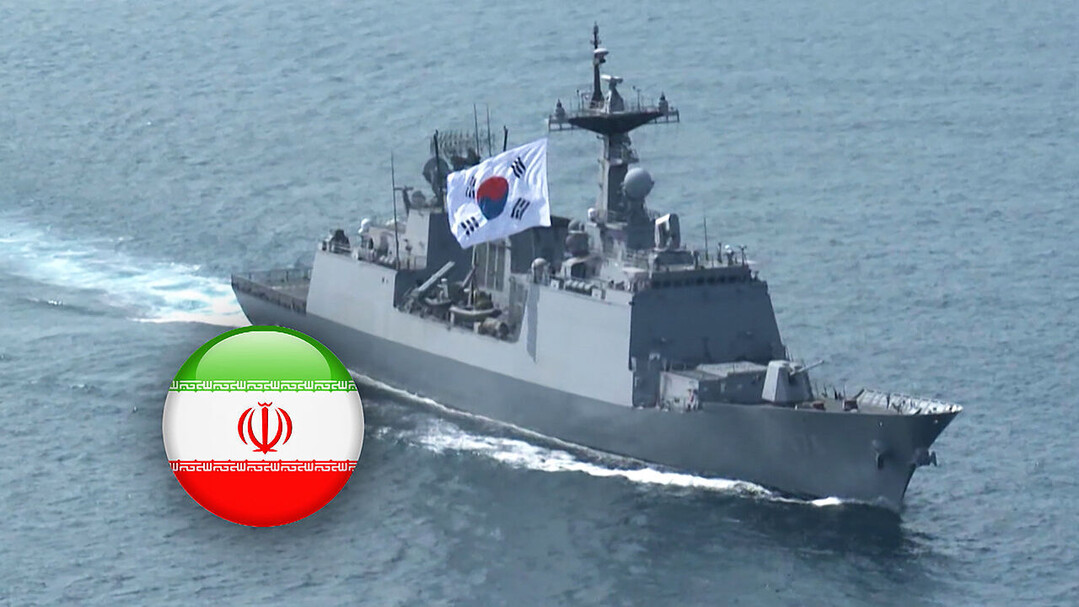
The South Korean government is closely monitoring Iran's reaction to the expanded operational scope of the Cheonghae Unit and is strengthening communication with Iran at various levels, according to a Foreign Ministry official on the 16th.
Meeting with reporters on the same day, the official stated, "We are maintaining communication channels with Iran and explaining our respective positions whenever issues arise," adding, "We will strive to ensure that the situation continues to be effectively managed."
Previously, a plan passed the Cabinet to expand the operational zone of the Cheonghae Unit—which operates in the waters of the Gulf of Aden off Somalia—further toward the southern waters of Oman, closer to the Strait of Hormuz, while reinforcing its capabilities.
Iran's Reactions and Diplomatic Interpretation
On the 9th, the Iranian Ministry of Foreign Affairs stated regarding the matter, "South Korea should refrain from deploying military forces to the region under the pretext of supporting the reopening of the Strait of Hormuz," adding, "It should avoid intervening in a situation that is already sufficiently complex."
Furthermore, on the 12th, Esmaeil Baghaei, spokesperson for the Iranian Foreign Ministry, posted an image and a Korean proverb on his X (formerly Twitter) account, writing, "If a parrot-billed bowerbird tries to keep pace with a stork, its crotch will tear" (equivalent to the English idiom "Don't bite off more than you can chew" or trying to punch above one's weight). He explicitly noted the source as a "Korean proverb" in his English post. The accompanying image depicted a small bird looking up at a stork with a U.S. flag pattern on its wings, with the stork shown falling.
Although Iran has issued two messages regarding the Cheonghae Unit within three days, foreign policy authorities are paying attention to the fact that Iran did not directly name South Korea in the posts. While the use of a Korean proverb clearly targets South Korea, a close analysis of diplomatic expressions suggests that Iran may have engaged in message "water-level control" (moderation).
The government's focus on this diplomatic coordination stems from the judgment that, given South Korea's clear principle of non-intervention in war, it is necessary to manage the situation to prevent further escalation. Behind the scenes, however, the government appears to have explained its stance of non-involvement in the conflict while also conveying an expression of protest regarding the use of the Korean proverb. A Foreign Ministry official remarked, "We are communicating frequently and continuously."
The Iranian side reportedly listened attentively to South Korea's explanations, and both sides agreed on the need to maintain close communication moving forward.
Situation Assessment and Upcoming Trilateral Talks
Regarding the current situation surrounding Iran, the official analyzed that three main options are being considered: a short-term powerful U.S. strike, a negotiated settlement with Iran, and sustained economic pressure.
The government assesses that the possibility of a short-term powerful strike has somewhat diminished, though the option remains open, with the continuation of economic pressure viewed as the more likely scenario.
Additionally, ahead of the scheduled trilateral talks between the United States, China, and Russia on the 19th, Seoul anticipates a high likelihood that the U.S. will urge China and Russia to participate in sanctions against Iran and demand that they halt support for the country.
[Copyright (c) Global Economic Times. All Rights Reserved.]