

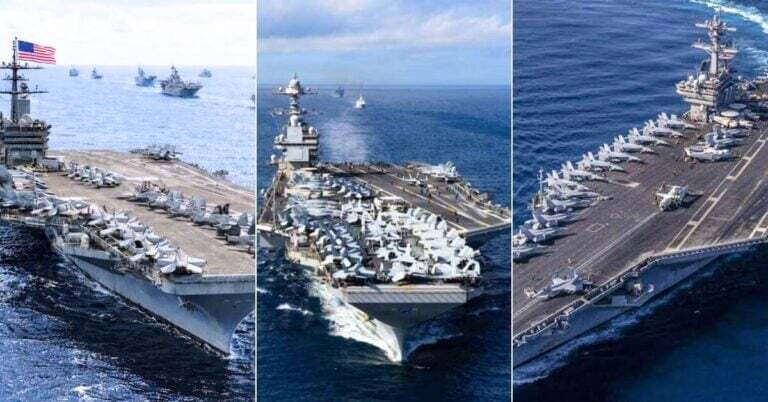
MIDDLE EAST — Washington and Tel Aviv have reportedly drafted expanded military strategies designed to dismantle Iran’s economic backbone, focusing heavily on critical energy grids and national infrastructure. The deployment marks a dramatic hardening of policy under the Trump administration, drawing three U.S. aircraft carrier groups into Middle Eastern waters simultaneously.
Unprecedented Naval Buildup in the Region
According to defense reports published this week, the nuclear-powered aircraft carrier USS Theodore Roosevelt has entered the U.S. Central Command theater. Rather than executing a standard rotation to relieve the USS George Washington, the Roosevelt remains on station alongside existing forces, bringing the total number of active U.S. carrier strike groups in the region to three.
Military analysts note this concentration of naval power is the largest deployment of its kind in the theater since the 2003 Iraq War, reflecting an aggressive escalation in strategic pressure on Tehran.
Strategic Shifts and Infrastructure Targets
Planning documents indicate that upcoming operational frameworks extend well beyond traditional military targets. Allied defense planners are reportedly evaluating scenarios aimed directly at Iran’s vital petroleum and energy sectors to sever primary revenue streams and apply maximum pressure on the central government.
The diplomatic landscape has grown increasingly strained following statements from Washington leadership emphasizing a shift away from negotiated settlements, signaling a preference for intense economic and strategic containment.
Regional Security and Retaliatory Friction
In response to the allied buildup, regional security has deteriorated rapidly. Iranian military leadership recently executed a drone operation targeting radar installations near a major air facility in Bahrain—housing the U.S. Fifth Fleet—marking a renewed cross-border escalation in the Persian Gulf.
Concurrently, maritime transit lanes have faced mounting disruptions amid reported navigational hazards and mine incidents along vital commercial shipping corridors.
While allied defense systems remain on high alert, regional security observers caution that prolonged operational tempos and expended interceptor stockpiles could present logistical hurdles should hostilities widen into a sustained multi-domain conflict. As both sides hold firm to their respective positions, international observers warn of escalating instability across the entire Persian Gulf corridor.
[Copyright (c) Global Economic Times. All Rights Reserved.]