![[등록] 2026-09-01 15:48:31](/support/_updata/banner2/tl181982910_6749.png)


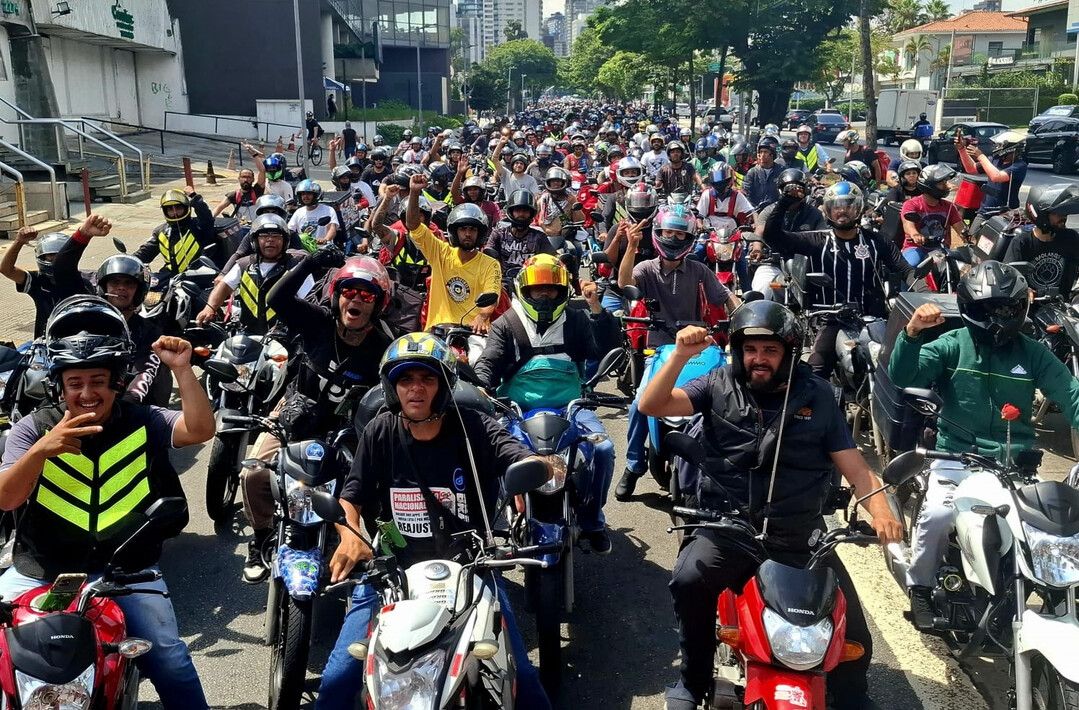
Brazil, with a population of over 211 million, is Latin America's largest ride-hailing market, and two-wheeled vehicles play a crucial role in the sector's growth. However, while app-based motorcycle ride-hailing services operate in hundreds of Brazilian cities, they have been suspended in São Paulo since 2023. Earlier this year, when Uber and 99 briefly defied the ban and resumed services, the city government immediately filed a lawsuit, starkly illustrating the sharp conflict between ride-hailing apps and local authorities across Brazil and Latin America.
"In Brazil, ride-hailing companies continue to engage in strategic disobedience to open up new markets," stated Nina Desglandes, a researcher at the Institute for Technology & Society, a Brazilian think tank. "They rely on public support to exert political pressure."
Globally, the launch of ride-hailing platforms has often sparked clashes between regulatory bodies and companies, as well as between the companies and existing modes of transportation. Meanwhile, users dissatisfied with poor public transport systems have rapidly embraced ride-hailing options like Uber, inDrive, and Didi Chuxing (owner of Didi and 99) in various regions, including Latin America.
Across Latin America, regulators have grappled with issues such as competition, safety, and data privacy. In Brazil, a 2018 federal law on private transportation services stipulates that local municipalities are responsible for regulating and overseeing these services. However, the following year, the Supreme Court ruled that cities could not ban ride-hailing services, arguing that such prohibitions violate constitutional principles of free enterprise and fair competition. This contradictory situation has left room for conflicting interpretations.
"The ride-hailing companies and the city government of São Paulo, or other municipalities that do not allow the service, are taking positions based on different interpretations," explained André Córeia, executive action coordinator at Bloomberg Philanthropies Initiative for Global Road Safety, a Brazilian non-profit. "One side relies on court decisions, and the other relies on federal law."
Amidst this legal gray area, motorcycle ride-hailing services have flourished in Brazil. According to research by the Fundação Getulio Vargas university, Uber Moto has been used by over 20 million people in Brazil since its initial launch in 2020, and 99Moto contributed 5 billion reais (approximately $871 million USD) to Brazil's GDP in 2023. Currently, 99Moto operates in over 3,000 cities across Brazil. According to Didi Chuxing, across Spanish-speaking Latin America, DiDi Moto expanded to over 20 new cities last year alone.
However, São Paulo has resisted this trend. In January 2023, after Uber and 99 announced plans to launch their services in São Paulo, Mayor Ricardo Nunes issued a suspension order, stating that approving the service would be "very difficult" due to São Paulo's complex traffic system.
Subsequently, the city government formed a working group to study the issue and invited Uber and 99 to 12 meetings. Ultimately, the working group recommended against authorizing app-based motorcycle passenger transport, citing significant public health and safety risks. Authorities presented data showing a 22% increase in motorcycle-related accidents and fatalities in São Paulo between 2023 and 2024.
99 opposed the city government's decision. Bruno Rossi, 99's director of communication, argued that the São Paulo government did not have the authority to ban the service. He stated that the company had requested further studies.
In January of this year, 99Moto defied the ban and resumed services, with Uber Moto quickly following suit, registering thousands of drivers on its app. Rossi said that 99 anticipated this move would force the city government to either legislate on the issue or lead to a legal dispute.
"The reality of this case is that it will end up being decided in court," Rossi added. "After two years with no progress, no openness or willingness from the city hall to solve the issue, no dialogue on how to move forward, we understood that we had legal grounds and that the injunction was ineffective."
Days after the motorcycle services launched, the city government filed a lawsuit against 99 and Uber. In an interview with CNN Brasil, Mayor Nunes took a strong stance, stating, "We are not going to accept these companies coming here to cause carnage."
The city government did not respond to requests for comment.
According to Rossi, Uber and 99 have been collaborating through Amobitec, a lobbying group representing the mobility and technology sectors in Brazil. Both Uber and Amobitec declined interview requests.
Motorcycle ride-hailing services have faced opposition beyond Brazil. Across Latin America, motorcycle taxis, while popular among users, often operate in violation of local regulations. Last month, the government of Puebla state in Mexico forced Uber Moto to suspend operations for offering motorcycle transportation services without proper permits. In Colombia, ride-hailing apps are illegal, and drivers face hefty fines and vehicle impoundment. Nevertheless, DiDi Moto continues to operate in Bogotá.
In São Paulo, shortly after the lawsuit was filed, a local court ruling suspended the motorcycle ride-hailing services. According to Rossi, during the 14 days that 99Moto operated in São Paulo in January, it generated 7 million reais (approximately $1.2 million USD) in revenue for motorcycle drivers and recorded 500,000 rides. In contrast, it took two years for 99 to record 1 billion rides in other parts of Brazil. He added that operating motorcycle ride services in São Paulo is "very strategic." Recently, Uber's CEO stated that Brazil is its largest market globally in terms of the number of drivers and delivery workers.
According to the TomTom Traffic Index, despite its growing subway network and extensive bus rapid transit system, São Paulo was one of the most congested cities in the world last year, with commuters losing approximately 111 hours in rush-hour traffic. Two-wheeled vehicles are a popular option for navigating traffic congestion.
However, while motorcycles are fast and affordable, "they are more deadly, more polluting, noisier, and worsen traffic congestion," pointed out Matheus Humberto, a professor of transportation engineering at the University of São Paulo. According to official data, nearly half of the traffic fatalities in São Paulo last year involved motorcycles.
Despite these risks, locals appear undeterred. According to a survey conducted earlier this year by the Locomotiva Institute, a polling firm, commissioned by 99, seven out of ten residents of São Paulo favor motorcycle ride-hailing services in the city.
Meanwhile, the legal battle continues. In late February, another court in São Paulo ruled that the operation of ride-hailing motorcycles is covered by federal law and that the city can regulate but not prohibit such services, deeming the city government's order unconstitutional. Nevertheless, neither 99Moto nor Uber Moto has resumed services, as the court decision that granted the city government's request to ban the services in January has not yet been overturned.
Since the beginning of the year, city councilors across the political spectrum have introduced four bills to regulate the issue. Proposals range from waiving fines for those who drove during the 14-day operating period to legalizing the services in the city.
Many drivers also support some form of legislation and protection.
"We support the legalization and regulation [of ride-hailing] with rules that guarantee greater safety and fair pay," stated Elias Silva Júnior, a prominent member of a group of Uber couriers and motorcycle delivery workers. "We don't want a lawless land."
[Copyright (c) Global Economic Times. All Rights Reserved.]