![[등록] 2026-09-01 15:48:31](/support/_updata/banner2/tl181982910_6749.png)


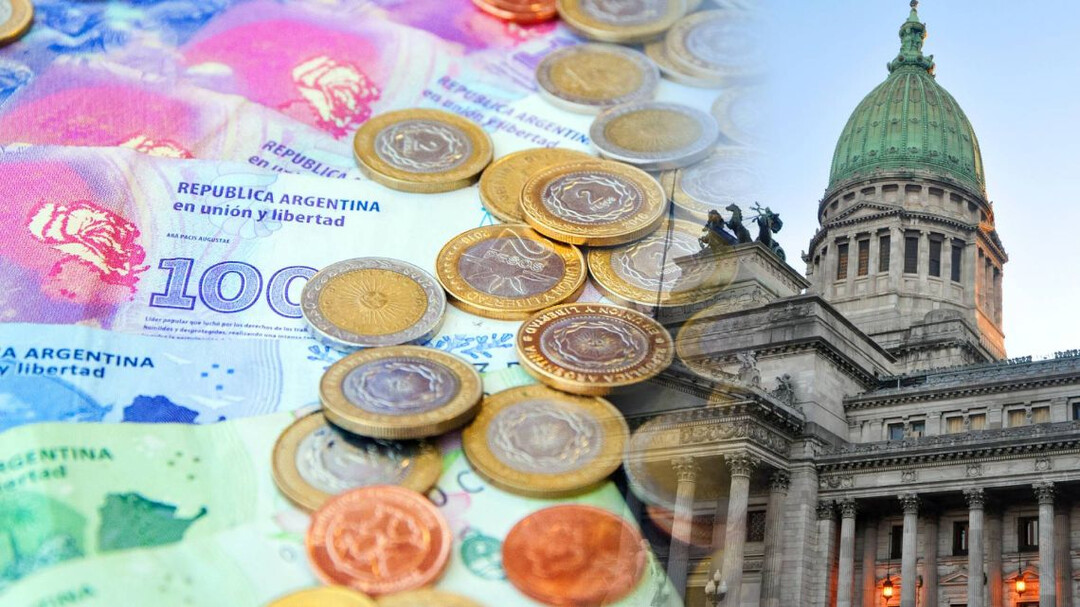
The World Bank has significantly raised Argentina's economic growth forecast for 2025 to 5.5%, anticipating that Argentina will achieve the highest economic growth in the Latin American region next year. This stands in stark contrast to the World Bank's report, which lowered forecasts for most countries worldwide, leading to analyses that President Javier Milei's government reform policies are gradually yielding results.
Argentina's Turnaround Amidst Global Economy's 'New Turbulence'
In its latest economic outlook report released on Tuesday (local time), the World Bank downgraded forecasts for most countries globally due to rising trade barriers and weakening exports. The projected global GDP growth rate for 2025 was set at 2.3%, a 0.4 percentage point reduction from the January forecast. The Latin America and Caribbean region is also expected to grow by 2.3%, a 0.2 percentage point downgrade.
Indermit Gill, the World Bank's chief economist, stated, "Just six months ago, the global economy seemed to be heading for a soft landing," adding, "Now it seems to be hitting new turbulence." The report identified major reasons for these downgrades as increased U.S. tariffs (particularly those affecting Mexican exports) and persistent uncertainty in global trade. It also warned that weak commodity prices and deepening protectionism would put additional pressure on regional economies.
Amidst this general downward trend, Argentina emerged as a rare "bright spot." The World Bank predicts that Argentina will recover after two consecutive years of recession, driven by a strong rebound in its agricultural, energy, and mining sectors. The report evaluated that the Milei government's recent reforms, easing of currency controls, and macroeconomic stabilization measures have contributed to restoring investor and consumer confidence. Argentina's growth is projected to continue at 4.5% in 2026.
Milei Government's 'Ultra-Austerity' Reforms and Market Response
Since taking office, President Javier Milei has prioritized eliminating the national fiscal deficit and controlling inflation, pursuing unprecedented 'ultra-austerity' policies. Key measures include drastic cuts in public spending, elimination of energy subsidies, currency devaluation, and easing of foreign exchange controls. While these policies initially faced high social costs and resistance, inflationary pressures are gradually easing, and signs of improved national fiscal health are emerging.
Indeed, Argentina's monthly inflation rate has shown a downward trend from the 25% range immediately after President Milei took office. Furthermore, the government has maintained a stance of non-intervention in the foreign exchange market since the peso devaluation, respecting market autonomy. These policies align with the World Bank's analysis that they have positively influenced the restoration of investor confidence.
The recent rise in Argentine bond prices also reflects these market expectations. This indicates that investors are betting on the possibility of Argentina's economic recovery, even as the government implements new measures to expand foreign exchange reserves. (Related article: "Argentine bonds rise on new measures to attract dollars")
Partial Successes and Remaining Challenges
While President Milei's reforms are still in their early stages, some positive signals are appearing. In particular, the easing of foreign exchange controls and reduction in government spending can contribute to improving the investment environment and enhancing economic efficiency. For example, President Milei's move to amend the Glaciers Law to expand areas available for mineral exploration and extraction demonstrates his intention to attract investment in the mining sector and drive economic growth. (Related article: "Milei decree amends Glaciers Law, expands development zones")
However, the success of the reforms remains a long-term question. Concerns exist that drastic austerity policies could temporarily stifle economic activity and deepen social inequality. High poverty rates and an unstable labor market remain challenges that the Argentine economy must address. Externally, challenges include debt restructuring negotiations with the International Monetary Fund (IMF) and the replenishment of foreign exchange reserves.
Latin American Slowdown and Argentina's Distinction
According to the World Bank report, Mexico is projected to experience the largest downgrade, growing by only 0.2% in 2025. This is largely due to trade barriers such as the U.S. imposing 25% tariffs on goods from outside the North American Free Trade Agreement (USMCA). Brazil is also expected to see a slowdown in growth in 2026 due to weakening consumption and sluggish investment.
Amidst this general regional slowdown, Argentina stands out due to its unique economic structure and the Milei government's bold policies. Argentina is traditionally rich in agricultural, energy (especially shale gas), and mining resources, and these sectors have the potential to drive growth in conjunction with the recovery of international commodity markets. In contrast, Mexico is deeply integrated into the U.S. manufacturing supply chain, making it directly affected by U.S. protectionist policies, while Brazil's consumption-driven domestic economy is prone to contraction.
The World Bank warned that persistent inflation in countries like Brazil and Colombia would limit their room for interest rate cuts, leaving little scope to stimulate growth. This suggests that if Argentina succeeds in moderating inflation, it could pursue a relatively more flexible monetary policy.
Risk Factors Amidst Global Economic Uncertainty
The report cited additional risk factors as slowdowns in the U.S. or China, and a decline in remittances. Remittances, in particular, account for approximately 20% of the GDP in some Central American and Caribbean countries, potentially significantly impacting their economies. While this has less direct relevance to Argentina, it could serve as a factor threatening the overall economic stability of the Latin American region.
Furthermore, financial market instability, such as cryptocurrency-related scandals, can also be mentioned as a risk factor. Recently, Argentina's Anti-Corruption Office decided to exempt President Milei from responsibility in connection with the 'cryptogate' scandal. (Related article: "Anti-Corruption Office clears Milei of responsibility in 'cryptogate' scandal") Such incidents highlight the importance of managing unforeseen risks that can arise during the process of economic reform.
The World Bank's upgrade of Argentina's growth forecast suggests that the Milei government's economic reforms are receiving positive evaluations in their early stages. In particular, the potential of the agricultural, energy, and mining sectors, along with the government's market-friendly policies, are contributing to improved investor sentiment. However, for Argentina's economy to fully recover and achieve sustainable growth, challenges such as controlling high inflation, securing fiscal soundness, and alleviating social inequality remain.
It remains to be seen whether President Milei's radical reforms can long-term improve Argentina's economic structure and resolve its chronic problems. Amidst the overall economic slowdown in Latin America, it will be crucial to observe whether Argentina can sustain its 'lone growth' and how it will overcome the social and and political challenges that may arise in the process. Argentina's economic recovery is expected to offer important implications for other countries in the Latin American region.
[Copyright (c) Global Economic Times. All Rights Reserved.]