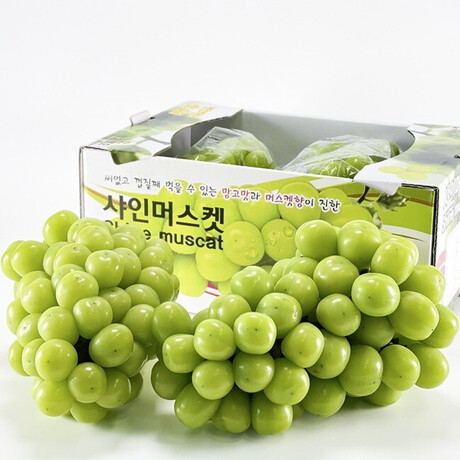


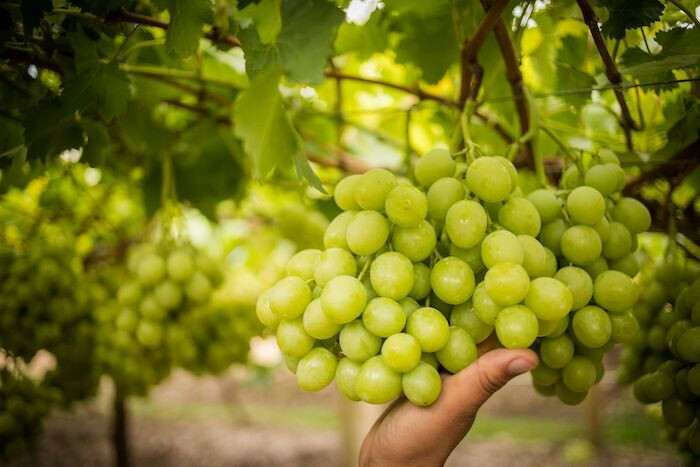
South Korea’s fresh grape exports have surpassed the $100 million mark for the first time for a single fresh agricultural product. This milestone is the result of aggressive overseas market expansion as Shine Muscat, once popular as a premium fruit, faced domestic oversupply and price drops. The surge in exports is also expected to help relieve pressure on farmers by dispersing domestic shipping volumes.
According to the Ministry of Agriculture, Food and Rural Affairs (MAFRA) on the 16th, grape exports surpassed $100 million as of today’s tally. Cumulative exports from the beginning of the year through the end of last month reached $90.65 million, marking an 85.2% increase compared to the same period last year. In October alone, when grape shipments hit their peak, exports reached $34.80 million—2.7 times the figure from the same month last year. Agriculture Minister Song Mi-ryung held a commemorative departure ceremony in Sangju, Gyeongsangbuk-do, stating, "We have achieved $100 million in exports for a single fresh agricultural product for the first time, setting a new milestone in South Korea's agricultural export history."
From January to October of this year, South Korea also recorded its first-ever trade surplus in grapes. Following the implementation of the South Korea-Chile Free Trade Agreement (FTA) in 2004, domestic grapes struggled against imported competition. In 2016, grape imports reached $145.01 million, which was 28 times the value of exports ($5.12 million). However, between January and October of this year, exports surpassed imports ($64.13 million) for the first time, resulting in a trade surplus of $26.52 million. Experts attribute this structural turnaround to grape farmers developing high-quality varieties and government support following the FTA.
The export growth was primarily driven by Taiwan and the United States. Taiwan remained the largest market, with exports surging 114.5% year-on-year to $51.30 million between January and October, accounting for over half of total exports. Exports to the U.S. also increased by 177.6% to $16.44 million, boosted by expanded distribution channels as South Korean grapes entered major retail chains such as Costco.
Shine Muscat, which accounts for the vast majority of this year's export volume, gained popularity in the late 2010s. Known as the "mango grape" due to its seedless texture, edible skin, and high sugar content, it commanded higher prices than regular grapes and emerged as a high-income crop for farmers. According to the Korea Rural Economic Institute, the cultivation area for Shine Muscat expanded from 2,913 hectares in 2020 to 6,307 hectares in 2024, more than doubling.
However, this cultivation boom led to oversupply. Rapidly rising production, coupled with the premature harvesting of unripe grapes, damaged consumer satisfaction. According to the Korea Agro-Fisheries & Food Trade Corporation (aT), the average consumer price for 2.0 kg of Shine Muscat stood at 11,791 won on the first of last month, representing a drop of about 71% compared to five years ago. As profitability deteriorated, cultivation areas began to shrink starting last year. With falling domestic prices, overseas sales grew increasingly crucial, though quarantine and quality standards remained major hurdles.
This year, the public and private sectors collaborated closely on production and distribution. Farmers and businesses established a stable supply foundation while the government supported quarantine and logistics processes. Since the beginning of the year, MAFRA worked alongside integrated organizations comprising producer groups and export companies to secure export volumes. Last month, the ministry announced it had pre-secured 12,000 tons, accounting for 93% of the annual target volume. Grapes destined for Taiwan were managed from the production stage through a pre-registration system to monitor standards like residual pesticides, while the number of designated quarantine complexes for U.S. exports increased from 31 to 41.
Efforts also focused on maintaining freshness and preventing shipment delays. MAFRA increased its support for cold chains and logistics by 53% compared to last year, providing quarantine support on weekends and holidays during the peak shipment period from October to December. Export companies expanded their sales networks to match the demands of each country—targeting the gift market in Taiwan and large retail networks in the U.S. This coordinated division of labor from production to sales served as the foundation for export growth.
Nevertheless, challenges remain, particularly ensuring that export expansion translates into tangible improvements in farm household income. The average export unit price per kilogram of grapes from January to October dropped by 21.2% year-on-year to $7.67, down from $9.73. Experts advise that long-term strategies should focus on diversifying export destinations and reducing over-reliance on Shine Muscat production. Moon Jung-hoon, a professor of agricultural economics and rural sociology at Seoul National University, noted, "Contract farming models where farmers specializing in new varieties and distributors cooperate vertically will be very helpful."
[Copyright (c) Global Economic Times. All Rights Reserved.]