![[등록] 2026-09-01 15:48:31](/support/_updata/banner2/tl181982910_6749.png)


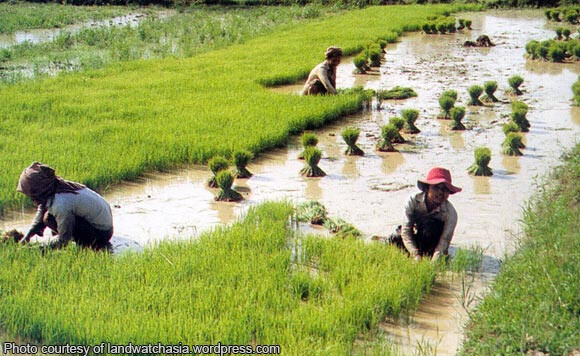
Manila, Philippines – According to a report by the Philippine Statistics Authority (PSA), the total value of the Philippine agri-fishery production reached ₱1.73 trillion in 2024, with the Central Luzon region accounting for the largest share at ₱238.51 billion (13.7% of the total). Notably, Central Luzon recorded the highest shares in the production of poultry and fisheries, driving the national agri-fishery output. This figure is a slight decrease from the previous year's ₱239.04 billion.
Covering a total area of 21,470 square kilometers, Central Luzon comprises seven provinces: Aurora, Bataan, Bulacan, Nueva Ecija, Pampanga, Tarlac, and Zambales. With its fertile plains, the region not only boasts significant production of major crops such as rice and corn but also active poultry and aquaculture industries, playing a crucial role as a major food supply base for the Philippines.
Northern Mindanao ranked second with a production value of ₱178.59 billion (10.3% of the total), although it has shown a continuous decline in production value over the past three years. Davao Region secured the third position with ₱130.13 billion (7.5% of the total), also a 1.4% decrease from the previous year's ₱131.96 billion.
Conversely, the Cordillera Administrative Region and the National Capital Region (NCR) exhibited the lowest contribution rates to the national agri-fishery production at 1.6% and 0.5%, respectively. The limited arable land due to the mountainous terrain in the Cordillera region and the minimal agricultural and fishery activities in the highly urbanized NCR are attributed to these low figures.
Looking at the production status by commodity, Central Luzon led in poultry production with a 26% share nationwide. CALABARZON (Cavite, Laguna, Batangas, Rizal, Quezon) followed with 19.5%, and Northern Mindanao with 9.2%. In fisheries production, Central Luzon also topped with a 17.4% share, followed by SOCCSKSARGEN with 10.4% and Western Visayas with 8.8%. The active fishing industry in Central Luzon, supported by its abundant water resources, appears to have significantly contributed to the increase in fisheries production.
In crop production, Northern Mindanao recorded the highest share at 12.1%. Primarily engaged in the cultivation of high-value crops such as corn, bananas, and pineapples, this region plays a vital role in the Philippine agricultural economy. Cagayan Valley followed with 10.7%, and Central Luzon with 9.7%.
For livestock production, CALABARZON ranked first with a 13.8% share, followed by Central Luzon with 11.9%. CALABARZON's geographical advantage of being adjacent to the National Capital Region is known to support large-scale hog and poultry farming.
Examining the agri-fishery production value share by major island group, Luzon accounted for the largest share at 45.9%. This is attributed to Luzon's extensive arable land and active agri-fishery activities. Mindanao contributed 36.9%, and the Visayas accounted for 17.2%. Luzon also held the highest shares in the production of livestock (45.8%), poultry (57.2%), and fisheries (48.1%), while Mindanao led in crop production with a 43% share.
The PSA stated that this regional agri-fishery production report covers all agricultural and fishery commodities, highlighting the major commodities specific to each region. In particular, for fisheries, 20 commodities were included in all regions except the Cordillera Administrative Region, which included only 9 commodities. All commodities included in the Livestock and Poultry Data System were reflected in the data for each region.
This report, providing a comprehensive overview of the agri-fishery production status of each region in the Philippines, is expected to serve as crucial basic data for formulating national food security policies and regional economic development strategies. It is also anticipated to contribute to identifying the strengths and weaknesses of each region and, based on this, exploring sustainable agricultural and fishery development plans.
[Copyright (c) Global Economic Times. All Rights Reserved.]