• 2026.03.22 (Sun)
  • All articles
  • LOGIN
  • JOIN
Global Economic Times
fashionrunwayshow2026
  • Synthesis
  • World
  • Business
  • Industry
  • ICT
  • Distribution Economy
  • Well+Being
  • Travel
  • Eco-News
  • Education
  • Korean Wave News
  • Opinion
  • Arts&Culture
  • Sports
  • People & Life
    • International Student Report
    • With Ambassador
  • Column
    • Cho Kijo Column
    • Cherry Garden Story
    • Ko Yong-chul Column
    • Kim Seul-Ong Column
    • Lee Yeon-sil Column
  • Photo News
  • New Book Guide
MENU
 
Home > Industry

Will the Luzon International Container Terminal in Batangas Become the New Heart of the CALABARZON Economy?

Eugenio Rodolfo Sanabria Reporter / Updated : 2025-08-05 19:23:11
  • -
  • +
  • Print


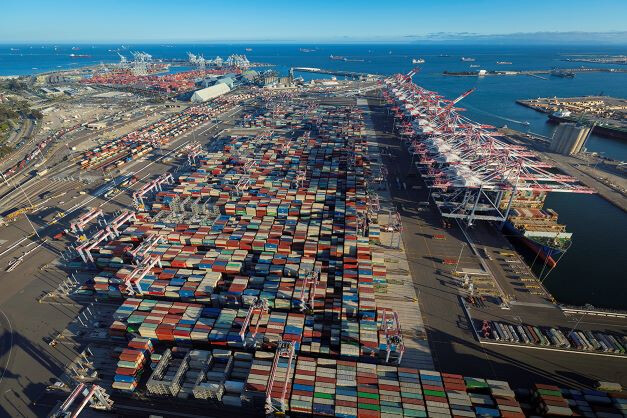
A major infrastructure project is underway in the CALABARZON region (Cavite, Laguna, Batangas, Rizal, Quezon), a key economic hub of the Philippines. The Luzon International Container Terminal (LICT), to be built in Bauan, Batangas, is expected to inject new life into the region's industrial development. This project is poised to be a significant turning point, strengthening the Philippines' economic growth engine and creating employment.

CALABARZON, the Philippines' Industrial Capital 

CALABARZON is a critical economic area, accounting for roughly 17% of the Philippines' gross domestic product (GDP). Batangas, in particular, is often called the "industrial capital" of the Philippines due to its proximity to Metro Manila and its well-established industrial parks and ports. The importance of the Batangas port, which helps alleviate the overload on Manila International Port and serves as a logistics hub for Southern Luzon, is growing daily. The LICT is strategically located to complement and expand the role of the existing Batangas port.

Mega-Terminal to Maximize Economic Ripple Effects 

Targeting operation in 2028, the LICT is being developed by International Container Terminal Services Inc. (ICTSI). ICTSI is a global company that operates port businesses in 18 countries, including the Port of Manila, and their expertise increases the project's chances of success.

The LICT, scheduled for completion in 2027, is designed to handle 2 million TEUs (Twenty-foot Equivalent Units) annually, making it the second-largest container terminal in the Philippines. With facilities capable of accommodating mega-container ships, it is expected to relieve congestion at the Port of Manila and maximize logistics efficiency.

Transportation Secretary Vince Dizon emphasized that the LICT will "further solidify the CALABARZON region's status as the country's industrial capital" and "promote the creation of new industrial estates and attract factories, generating a significant number of jobs." The expansion of port and logistics infrastructure will naturally attract investment in related industries, creating a virtuous cycle of regional economic growth.

Improving Logistics Efficiency and Alleviating Traffic Issues 

While the construction of a large-scale port can inevitably cause traffic congestion, the authorities are also preparing countermeasures. To address the concerns of Bauan residents, there are plans to build a dedicated access road from the terminal to the STAR Tollway. This road will allow trucks to enter the port directly, minimizing traffic congestion on local roads. Additionally, the LICT will help ease vessel congestion at both Manila and Batangas ports, improving the efficiency of the entire Philippine logistics system.

A Strategic Investment for the Future of the Philippine Economy 

The LICT project is part of President Ferdinand Marcos Jr.'s policy to "revitalize regional trade and strengthen supply chains." This reflects the government's determination to achieve balanced regional development by moving away from a Manila-centric economic structure. If the project proceeds as planned, the Philippines will have a more robust logistics infrastructure, allowing it to establish itself as a crucial trade hub in Southeast Asia.

Of course, large-scale infrastructure projects do not always proceed smoothly. They can face various challenges, such as environmental issues, resident displacement, and funding. However, the LICT will be a crucial test to maximize the economic potential of the CALABARZON region and provide more opportunities for the Filipino people. All eyes will be on 2028, when the LICT begins full operation, to see if it marks a new leap forward for the Philippine economy.

[Copyright (c) Global Economic Times. All Rights Reserved.]

  • #globaleconomictimes
  • #micorea
  • #mykorea
  • #Lifeplaza
  • #nammidonganews
  • #singaporenewsk
  • #Samsung
  • #Daewoo
  • #Hyosung
  • #A
Eugenio Rodolfo Sanabria Reporter

Popular articles

  • Florida Legislature Passes Bill to Rename Palm Beach Airport After Donald J. Trump

  • BMW CEO Warns: Ignoring China Threatens the Future of German Automakers

  • China’s Strategic Gold Rush: Beijing Amasses Reserves for 16th Straight Month Amid Dollar Uncertainty

I like it
Share
  • Facebook
  • X
  • Kakaotalk
  • LINE
  • BAND
  • NAVER
  • https://www.globaleconomictimes.kr/article/1065608541953082 Copy URL copied.
Comments >

Comments 0

Weekly Hot Issue

  • Coway Clinches Top Honor at "Water Taste Awards" for 7th Consecutive Year
  • HP Targets Korea as Strategic Hub for 'Edge AI' Expansion, Seeking Startup Partnerships
  • Pearl Abyss’s 'Crimson Desert' Shatters Records with 2 Million Copies Sold on Day One
  • "BTS Over Books?" Indian Academies Issue Emergency Notices as Students Plot Mass Absences for Comeback Live
  • Naver to Shut Down Men's Fashion Service 'MR.' to Launch Expanded AI-Driven Fashion Platform
  • JBNU and SKKU Researchers Achieve Breakthrough in "Dream Material" MXene, Setting New World Records in Performance

Most Viewed

1
An Open Letter to BTS On the Eve of a Historic Performance
2
From Industrial Capital to Tourism Mecca... Ulsan Makes a Bold Move with ‘Experiential Content’ in 2026
3
Ko Sang-goo, President of World Federation of Korean Associations, Elected as First Private Sector Chair of World Korean Community Leaders Convention
4
It is Time for BTS’s Fandom, ARMY, to Step Forward
5
Korean Stock Market Plunges: Circuit Breaker and Sidecar Triggered Amid Geopolitical Crisis
광고문의
임시1
임시3
임시2

Hot Issue

Vishay Unveils Ultra-Compact 0404 RGB LED with Independent Chip Control for Enhanced Color Precision

Coway Clinches Top Honor at "Water Taste Awards" for 7th Consecutive Year

AI Medical Ecosystem in Focus: KIMES 2026 Opens in Seoul as Global Healthcare Hub

Netanyahu Declares Decisive Blow to Iran’s Nuclear and Missile Programs, Signals Early End to War

Let’s recycle the old blankets in Jeju Island’s closet instead of incinerating them.

Global Economic Times
korocamia@naver.com
CEO : LEE YEON-SIL
Publisher : KO YONG-CHUL
Registration number : Seoul, A55681
Registration Date : 2024-10-24
Youth Protection Manager: KO YONG-CHUL
Singapore Headquarters
5A Woodlands Road #11-34 The Tennery. S'677728
Korean Branch
Phone : +82(0)10 4724 5264
#304, 6 Nonhyeon-ro 111-gil, Gangnam-gu, Seoul
Copyright © Global Economic Times All Rights Reserved
  • 에이펙2025
  • APEC2025가이드북TV
  • 독도는우리땅
Search
Category
  • All articles
  • Synthesis
  • World
  • Business
  • Industry
  • ICT
  • Distribution Economy
  • Well+Being
  • Travel
  • Eco-News
  • Education
  • Korean Wave News
  • Opinion
  • Arts&Culture
  • Sports
  • People & Life 
    • 전체
    • International Student Report
    • With Ambassador
  • Column 
    • 전체
    • Cho Kijo Column
    • Cherry Garden Story
    • Ko Yong-chul Column
    • Kim Seul-Ong Column
    • Lee Yeon-sil Column
  • Photo News
  • New Book Guide
  • Multicultural News
  • Jobs & Workers