![[등록] 2026-09-01 15:48:31](/support/_updata/banner2/tl181982910_6749.png)


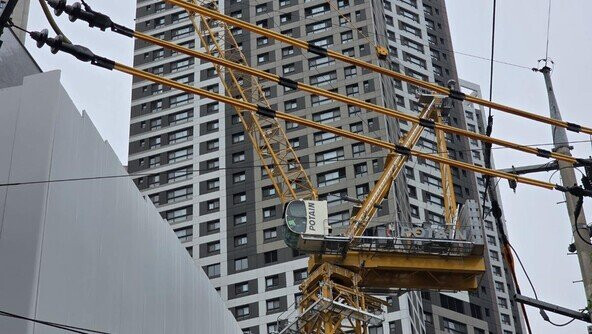
SEOUL, South Korea – South Korea's construction industry is grappling with an unprecedented downturn, triggering widespread job losses and casting a long shadow over the nation's economic outlook. Workers are facing a harsh reality, with many told to stay home as projects halt, leading to significant personal hardship and a ripple effect across related industries.
The first quarter of 2025 saw construction investment plummet by 12.2% year-on-year, marking the steepest decline since the aftermath of the 1998 Asian financial crisis. This severe contraction has ushered in what many are calling an "ice age" for construction jobs, a critical sector that serves as a vital social employment safety net due to its high proportion of daily wage earners.
Anecdotal evidence from the ground paints a grim picture. A 50-year-old signalman in Daegu, who had worked on a mixed-use officetel site for barely a month and a half, recounted being told his services were no longer needed. "Where will I work, what will I eat right away?" he lamented. Another seasoned construction worker, 63-year-old Lee Sang-moon, noted a staggering 70% reduction in job opportunities compared to six years ago, attributing it to an oversupply of housing in Daegu that has stalled new apartment construction.
Official statistics underscore the severity. According to Statistics Korea, the construction sector shed 106,000 jobs in May 2025 compared to the previous year, extending a continuous decline to its 13th consecutive month. Earlier, March recorded an even sharper year-on-year drop of 185,000 construction jobs, the largest reduction since the 2013 industrial classification overhaul. Consequently, the number of construction industry unemployment benefit recipients surged by 12.3% in May, reflecting the growing ranks of those struggling to make ends meet.
Several compounding factors are driving this downturn, including a persistent real estate market stagnation leading to an accumulation of unsold units, particularly in regional areas outside the greater Seoul metropolitan area. Cities like Pyeongtaek and Busan are experiencing price plunges and a surge in vacant, completed housing units, often termed "malignant unsold" inventory. As of February 2025, nationwide "malignant unsold" housing reached over 23,700 units, a near 100% increase year-on-year and the highest in over a decade.
Adding to the industry's woes are skyrocketing construction costs, fueled by elevated interest rates and rising raw material prices. The benchmark interest rate, holding at 3.5%, has significantly increased financing costs for real estate developers, causing the internal rate of return in the construction sector to fall below acceptable thresholds. This financial strain has led to a surge in non-performing real estate project financing (PF) loans and pushed several mid-sized construction firms, including notable names like Samjeong Enterprise and Shindonga Construction, into court-led rehabilitation proceedings or even bankruptcy. The Construction and Economy Research Institute of Korea reported a 20.5% year-on-year decrease in construction completion amounts from January to April, the largest drop since 1997, marking 12 consecutive months of decline.
The crisis extends beyond construction sites to a wide array of associated businesses. "Hambajip" (construction site restaurants), interior design firms, moving services, and cleaning companies are all feeling the pinch. A restaurant owner in Daegu, whose establishment once saw queues, reported an 80% drop in sales since a nearby construction site halted in February. Local businesses, especially in non-metropolitan areas with weaker employment bases, face a domino effect of closures and job losses when major contractors falter.
In response to the deepening crisis, the South Korean government has unveiled a comprehensive support package totaling 13 trillion won (approximately $9.5 billion USD). This includes 5 trillion won in liquidity support for construction companies and 8 trillion won in loans and guarantees from policy financial institutions. Additional measures aim to alleviate the financial burden on builders and stimulate the market, such as revising standard cost estimations for public projects, reducing development charges for new projects (halving in metropolitan areas and eliminating in non-metropolitan regions), and promoting project financing guarantee support for non-apartment and non-housing developments. Furthermore, the Korea Land and Housing Corporation (LH) plans to purchase 3,000 unsold apartment units in regional areas, and preferential interest rates are being introduced for loans to buyers of "malignant unsold" properties.
While these government interventions are aimed at stabilizing the beleaguered sector, industry experts and workers remain cautious. The structural nature of the oversupply, coupled with ongoing economic uncertainties, suggests that a full recovery will require sustained effort and time, challenging the notion of a swift rebound for the thousands of individuals whose livelihoods depend on the once-booming construction industry.
[Copyright (c) Global Economic Times. All Rights Reserved.]