![[등록] 2026-09-01 15:48:31](/support/_updata/banner2/tl181982910_6749.png)


(C) La Derecha Diario
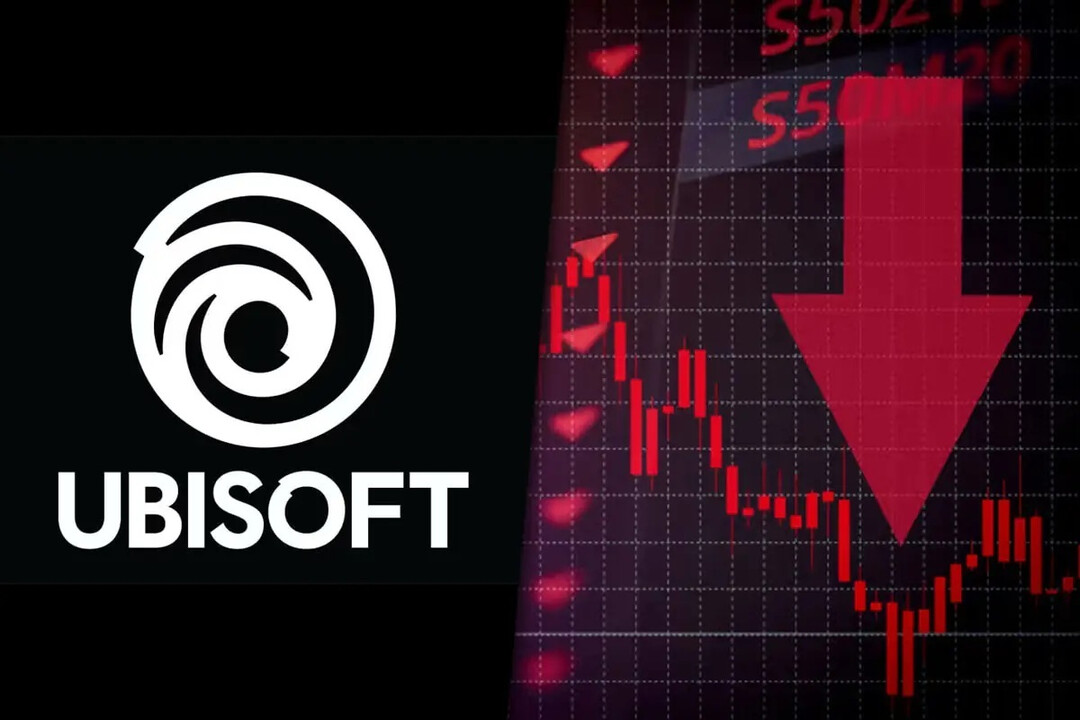
PARIS – Ubisoft, once the crown jewel of the French and European gaming industries, is facing a historic collapse. The company's stock price, traded on Euronext Paris, plummeted to a staggering €3.99 as of January 22, 2026—a 39.83% drop from the previous day’s close. This marks the first time in over 15 years that the publisher's shares have dipped below the €4 threshold, a level not seen since September 2011.
The immediate catalyst for the freefall was the company’s drastic "austerity management" declaration. On January 21, Ubisoft announced a sweeping overhaul centered on three pillars: establishing a new operating model, realigning its portfolio, and downsizing its organizational structure. The goal, according to the firm, is to regain "creative leadership and agility."
However, the human and financial cost of this pivot is immense. CEO Yves Guillemot confirmed that the company will undergo a selective closure of various studios and a group-wide restructuring. This process is expected to result in write-offs of €650 million ($700 million) and a projected operating loss of €1 billion ($1.08 billion) for the 2025 fiscal year (ending March 2026).
From Peak to Abyss
Founded in 1986, Ubisoft is a veteran of the industry approaching its 40th anniversary. It built an empire on legendary franchises such as Rayman, Prince of Persia, and AAA blockbusters like Assassin’s Creed, Far Cry, and the Tom Clancy series. In its golden era of 2018, the stock price reached a peak of €102. Even as recently as early 2021, shares maintained a healthy €80 range.
The decline since then has been nothing short of catastrophic. Comparing the February 2021 high of €84.6 to the current low of €3.99, Ubisoft has lost 95.3% of its market value in just five years.
The Roots of Failure: Nepotism and Creative Stagnation
Industry analysts point to a complex web of internal failures, with a rigid "family management" structure at the core. Co-founder Yves Guillemot has held the reins for 40 years, and the company is effectively controlled by Guillemot Brothers Ltd., the family’s holding company. This centralized power has been criticized for fostering a stagnant corporate culture unable to adapt to modern market shifts.
Ubisoft’s recent output has failed to capture the public’s imagination. New Intellectual Properties (IP) such as Immortals Fenyx Rising (2020), Skull and Bones (2024), and the shooter XDefiant were met with lukewarm receptions, suffering from a perceived lack of originality and technical polish.
Furthermore, the company has been rocked by internal scandals. In 2020, a massive misconduct probe led to the departure of several high-ranking executives, including former Chief Creative Officer Serge Hascoët, following allegations of sexual harassment and a toxic work environment.
The Great Talent Exodus
As Ubisoft struggled, its best minds fled to build success elsewhere. Sandfall Interactive, the developer behind Clair Obscur: Expedition 33—a title sweeping "Game of the Year" awards in 2025—was founded in 2020 by former Ubisoft developers.
Other industry icons have also moved on. Jade Raymond, a key architect of the Assassin’s Creed franchise, founded Haven Interactive Studios, which was subsequently acquired by Sony. Patrick Méthé, a lead developer for Far Cry, was recruited by the South Korean giant Krafton in 2022 to lead the high-profile adaptation of the fantasy novel The Bird That Drinks Tears.
The Tencent Shadow
With Ubisoft’s valuation at an all-time low, the specter of a total takeover by Chinese tech giant Tencent looms large. Tencent has been a "white knight" for the Guillemot family, investing €300 million in 2022 and another €1.16 billion (approx. $1.25 billion) in late 2025.
In exchange for this massive capital injection, Ubisoft created "Vantage Studios," a new entity dedicated to managing its flagship IPs—Assassin’s Creed, Far Cry, and Rainbow Six. Tencent now holds a 26.32% stake in this vital subsidiary. Industry observers warn that if the current leadership fails to stabilize the ship during this restructuring, the "King of France" may soon see its crown transferred to Shenzhen.
[Copyright (c) Global Economic Times. All Rights Reserved.]